South Korea's largest automaker is actively pursuing an ambitious electrification goal, placing a significant bet on electric vehicles while maintaining a strong position in the hybrid vehicle segment.
Hyundai expects hybrid vehicles to continue to outsell battery-electric models in the near future, even as the company accelerates its long-term efforts to boost electric vehicle development.
Hyundai's chief executive officer, Jose Munoz, told Channel News Asia that while electric vehicles remain central to the company's future, hybrid vehicles are experiencing strong growth momentum.
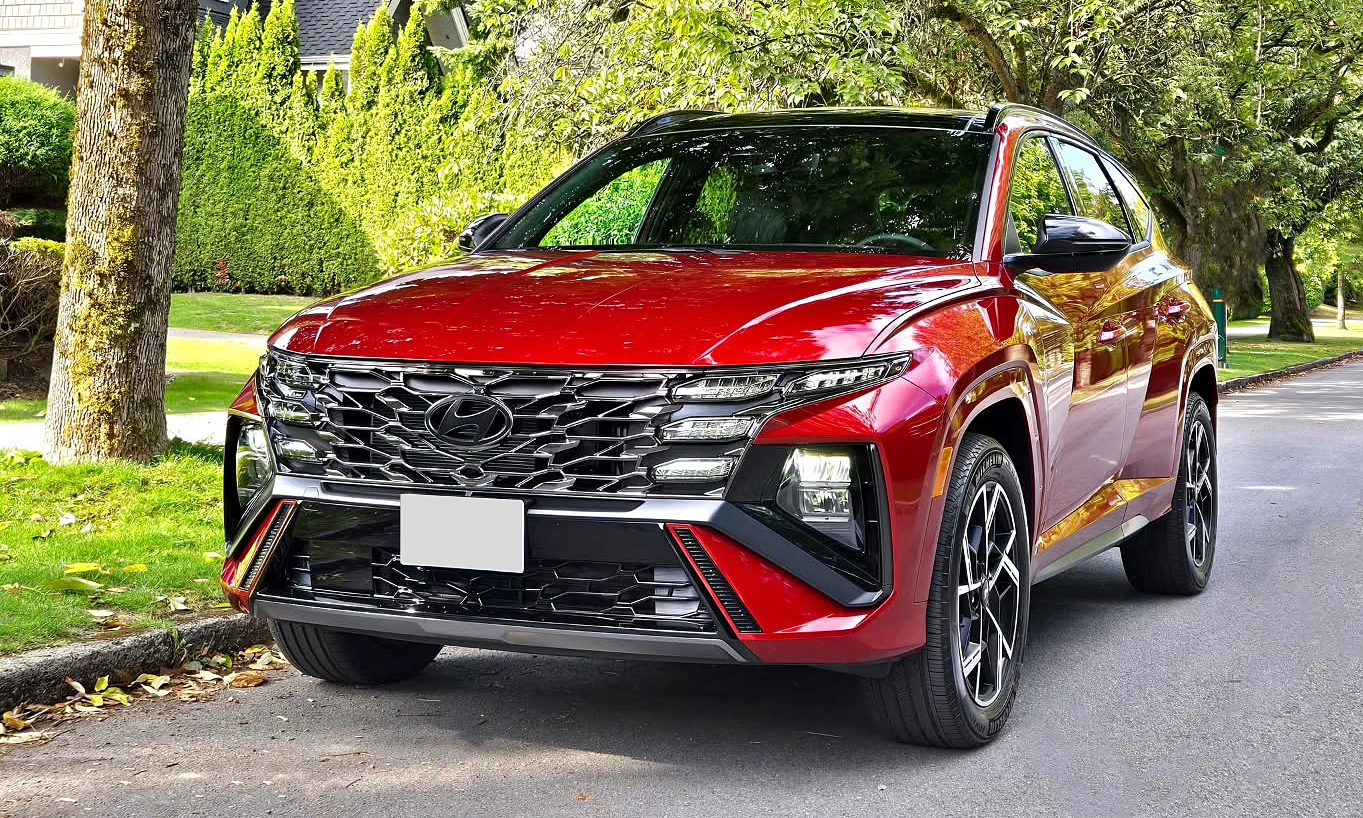 |
Hyundai Tucson hybrid 2026. Photo: AtlanticHyundai |
According to Munoz, hybrid vehicles have been very well received, with some months seeing 60%-80% growth for the company. Hyundai's challenge is a lack of supply. The chief executive added that hybrid vehicles remain popular in markets where infrastructure and policies remain inadequate, slowing the transition to full electrification, particularly in Central and South America, and some parts of Asia.
Last quarter, the company sold 158,629 hybrid vehicles, nearly double the 87,737 battery-electric vehicles sold.
However, Hyundai expects hybrid demand to gradually decline in the long term as electric vehicle technology advances. The company also recognizes the value of offering a full range of technologies to meet consumer needs and evolving regulations.
In September, Munoz unveiled Hyundai's 2030 strategy, under which 66,7% of the company's global sales will be electrified, including electric vehicles, extended-range electric vehicles (EREVs), hybrid vehicles, plug-in hybrid vehicles, and fuel cell vehicles.
The automaker aims to achieve annual global sales of 5,55 million vehicles by the end of this decade, with electric vehicle models accounting for 60% of that total.
Hyundai also aims to strengthen its position in the global mobility race through strategic product expansion, electrification technology, and software capabilities.
Hyundai anticipates significant growth in North America, Europe, and South Korea. To meet rising demand, the company has expanded its production capacity.
In China, the company recently launched the Hyundai Elexio electric vehicle, specifically designed for this market. This mid-size SUV is produced under the strategy "In China, For China, Towards Global", where brands develop models for the Chinese market before adapting and releasing them internationally.
Plans are underway to export the Elexio to other markets, such as Australia.
In March, Hyundai inaugurated a 7,6 billion USD factory near the port city of Savannah in Georgia, United States. Here, the company expects to produce 500,000 vehicles annually, exclusively for electric vehicle models. This localization effort has paid off, with North America now recording the fastest growth in electric vehicle sales among Hyundai's key regions.
My Anh