India's transition to electric vehicles (EVs) presents a mixed picture: rapidly increasing demand but an inadequate charging infrastructure. Sales of pure electric vehicles in the country, encompassing two-wheelers, passenger cars, and commercial vehicles, surpassed the 2,3 million mark in 2025, bringing the total number of EVs in circulation to nearly 5,9 million.
However, with approximately 26,000 public charging stations nationwide, India currently has only about one charging station for every 225 electric vehicles. This lags significantly behind global standards, such as in Trung Quoc, where the ratio is nearly one station for every 7 vehicles.
This disparity reflects a "chicken and egg" dilemma. Charging infrastructure requires widespread EV adoption to ensure investment efficiency, while users need a reliable charging network to commit to EVs. Industry players indicate the challenge is no longer about the sheer number of stations but rather their strategic deployment to meet actual demand.
Vivek Srivatsa, Chief Commercial Officer at Tata Passenger Electric Mobility, states that the ecosystem is continuously evolving. Data-driven expansion and collaboration between automakers and charging operators are essential to identify high-demand areas.
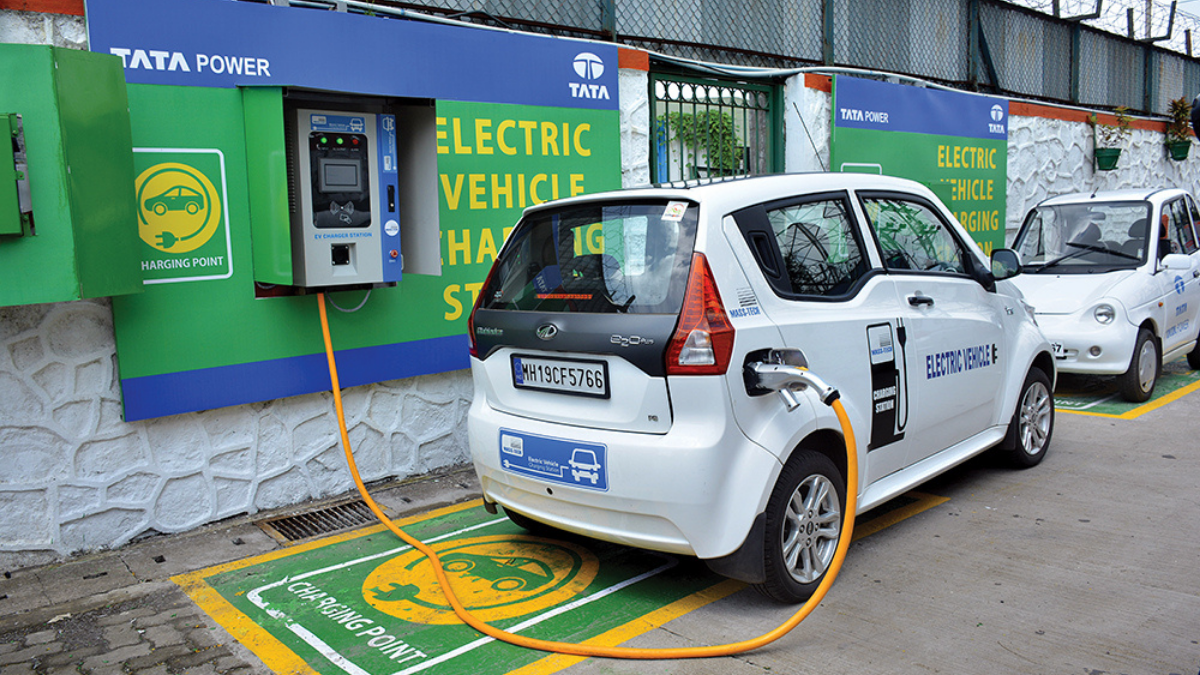 |
An electric vehicle charging station by Tata Power on a roadside in India. Photo: Economic Times |
Key highways are gradually being equipped with charging stations, making long-distance EV travel, once considered difficult, more feasible. Data from Tata Motors shows that the company's EVs cover 95% of India's road network. Nearly half of its customers undertake journeys exceeding 500 km, indicating that range anxiety is gradually diminishing. However, the challenge has shifted from "are there charging stations" to "how efficiently and reliably do these charging stations operate".
**Low efficiency and economic viability of charging stations**
The majority of India's current charging network operates at 25-30 kW, whereas newer EV models support 60 kW or more. This incompatibility limits charging speed, particularly on highways. Additionally, many early charging stations have only one to two charging points, leading to congestion and queues. Consequently, multi-port charging stations are emerging in the market to increase uptime and service capacity.
For Tata Power, one of India's largest charging network operators, the next phase involves optimizing utilization, not just expanding the network. Vijender Goyal, head of EV charging business development, notes that the average national charging station utilization rate is currently only 4-5%. Charger utilization refers to the extent an EV charging station is used compared to its idle time, typically calculated as a percentage of operational hours or electricity supplied.
The company has built over 5,600 public and private charging points in more than 630 cities, including over 450 locations on highways, along with more than 200,000 home chargers. The current strategy focuses on demand-driven deployment, relying on data and partnerships. High-power charging stations are crucial. For example, 180 kW stations on the Mumbai-Ahmedabad route can charge from 20% to 80% in just 15-30 minutes, significantly improving user experience and operational efficiency.
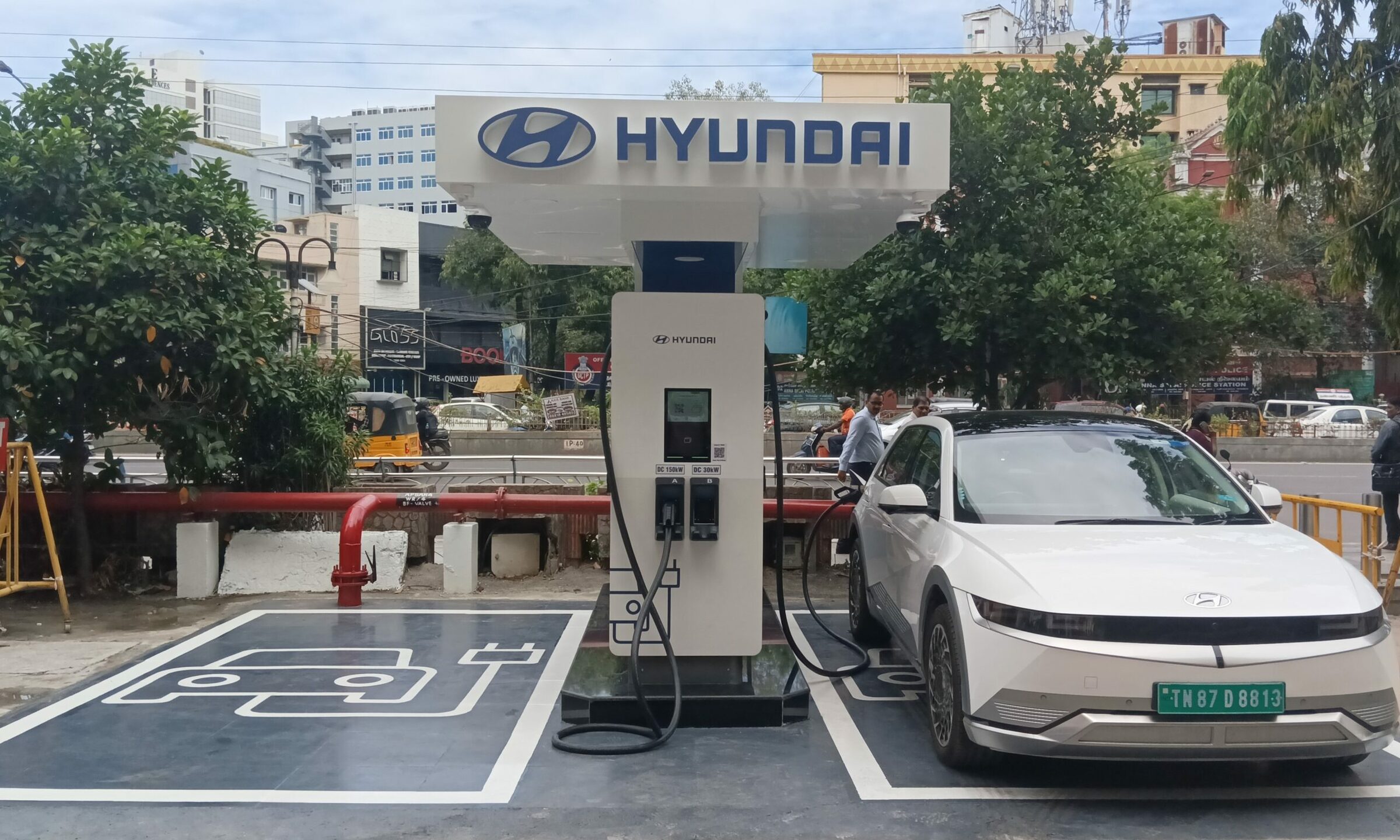 |
A Huyndai fast charging station in India. Photo: EVStory |
Despite these efforts, utilization remains uneven. Maxson Lewis, CEO of Magenta Mobility, suggests that many charging stations are not efficiently utilized due to suboptimal locations, while home and workplace charging still predominate. Similarly, Kartikey Hariyani, CEO of ChargeZone, reports utilization rates ranging from 5-35%, averaging around 12%, raising concerns about long-term financial viability.
Cost also represents a significant barrier. A 60 kW DC fast charging station can cost over 800,000 rupee (8,600 USD), not including additional infrastructure costs of 500,000-1,500,000 rupee (5,400-16,000 USD). Large-scale projects can cost tens of millions of rupee, making efficient deployment paramount.
Looking ahead, charging station development in India will be uneven. Urban areas will continue to rely heavily on slow AC charging due to prevalent home charging habits, while highways require a dense network of fast DC charging stations. Location is also critical; in cities like Mumbai, where street parking is common, public charging stations are essential for EV users.
Ho Tan (according to Economic Times)