In the first quarter of the year, the Toyota Camry achieved something it had not done in nearly a decade: outselling the RAV4, which has been Toyota's best-selling product in the US. The Camry sold 78,255 units, an 11.3% increase compared to the same period in 2025, while the RAV4 sold only 59,869 units, a 48.1% decrease.
However, manufacturers are beginning to recognize a new trend. Traditional automobiles may be poised for a comeback, and many brands are taking notice.
Crossovers and SUVs gained popularity for several reasons, including practicality, but primarily because they offered higher profit margins. Brands extensively promoted these vehicle types, convincing buyers that they were superior to conventional cars. Yet, these same automakers inadvertently created a new problem over the past decade: SUVs and crossovers are becoming prohibitively expensive, making them unaffordable for many consumers.
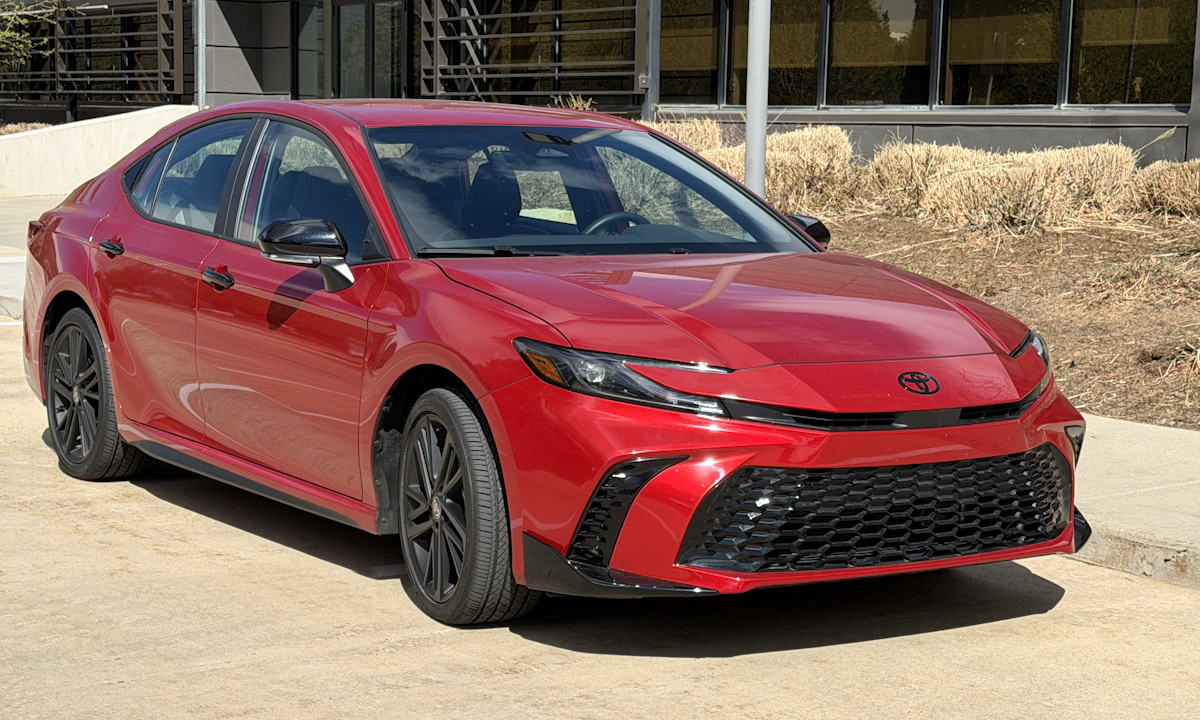 |
Toyota Camry - the best-selling sedan and the 6th best-selling car in the US in Q1. Photo: Dave Taylor
According to a new report from Auto News, this is a primary reason why executives at Ford, Nissan, Stellantis, and other companies are re-evaluating the sedan segment. Tiago Castro, Nissan's director of marketing and sales in the US, commented that sedans are "unapologetic and full of surprises," presenting "an opportunity to reconnect with the brand's roots."
Ralph Gilles, head of design for Stellantis, told Car Design News, "Many people are asking for sedans. Young designers want GTI-like hatchbacks from the 1980s. They want a personal car that is fun to drive and easy to park."
Jim Farley, Ford's CEO, stated at the Detroit auto show in January that a market for sedans still exists, but manufacturers have yet to find a profitable way to compete within it.
Automakers have long resisted fuel economy standards, which they deemed too difficult to meet (a target of 4.67 liters/100 km). Now, the federal government is preparing to relax those regulations (to a target of 6.8 liters/100 km), but this shift could have a side effect. Part of the reason SUVs and crossovers were highly profitable was their classification as "light trucks."
This classification allowed manufacturers to bypass fuel economy targets that would otherwise apply to cars. The new fuel economy regulations will reclassify many crossovers and small SUVs as cars. If this occurs, it will reduce the incentive for companies to produce as many crossovers.
Among American brands, the Chrysler Pacifica is the best-selling minivan. However, a car company cannot sustain itself long-term with only a single model in its lineup. Chrysler is in urgent need of a second model, and recently, the company hinted at a sedan revival. An adaptation of the Charger-based 300 could be successful, according to Autoblog.
Ford offers the Taurus and Mondeo for the Chinese and Middle Eastern markets. The Taurus continues to sell well, while the Mondeo maintains steady sales. Both are essentially updated versions of the Fusion. Another possibility is that Ford could utilize the Explorer's rear-wheel-drive platform to develop a large sedan.
General Motors (GM) has not made an official announcement, but it is likely that at least one of its brands will introduce a sedan version. Buick appears to be adding a sedan to its product line after several years of absence. This model could be developed from the Cadillac CT5, utilizing the Alpha 2 platform.
GM may also leverage its resources in China to import the Lacrosse. Production of the Lacrosse ceased in the US in 2019, but it remains a strong seller in China. The Chinese-market Lacrosse is likely the most cost-effective solution if GM intends to launch a Buick sedan soon.
The current question is whether these planned and rumored future sedans in the US will still attract customers. It remains to be seen whether current cost pressures, including initial purchase price and operating expenses, will push US consumers – who traditionally favor high-riding and large vehicles – towards lower-riding cars. Time and market realities will provide the answer.
My Anh