The announcement comes as India grapples with alarming air pollution, particularly in Delhi and the National Capital Region (NCR). Despite government programs and incentives for electric vehicle (EV) manufacturing and sales, most luxury cars sold in India still run on petrol or diesel engines.
Justice Surya Kant noted that while electric vehicles offer comparable luxury to petrol/diesel models, wealthy customers and companies continue to opt for internal combustion engine (ICE) vehicles. He emphasized that the proposed ban would not hinder ordinary citizens, as it would only apply to high-end petrol or diesel models. The goal is to incrementally encourage electric mobility, gradually achieving broader acceptance across all budget levels and market segments.
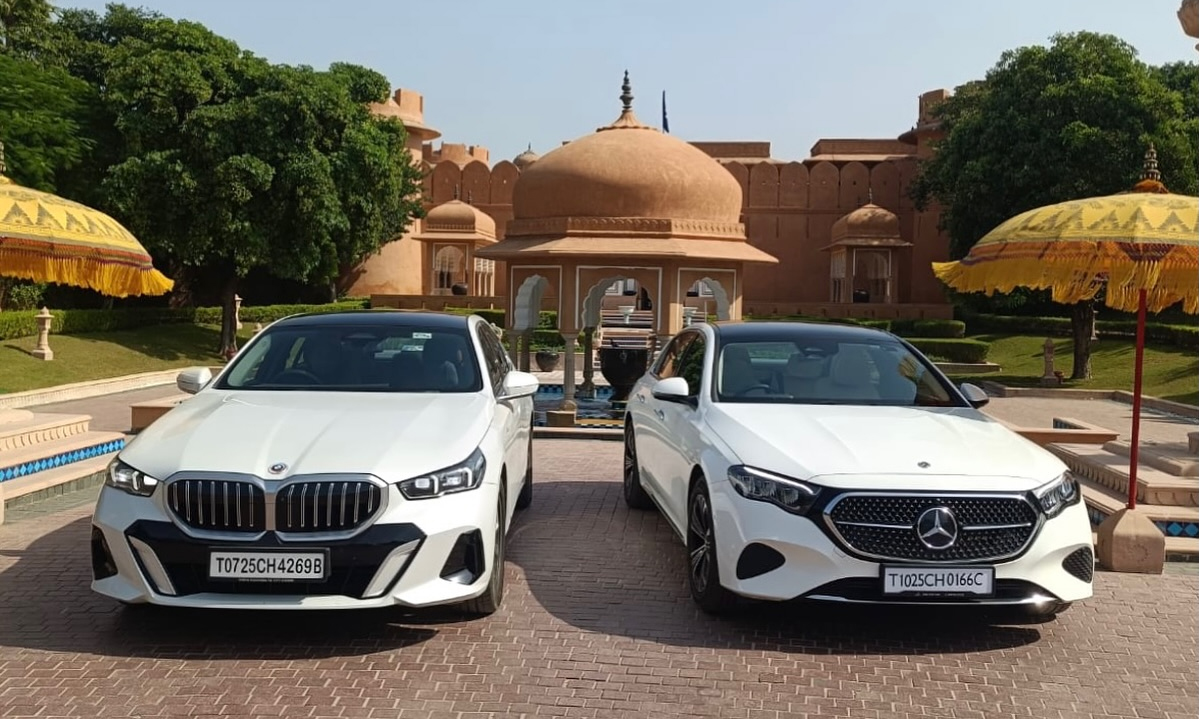 |
BMW and Mercedes are the two best-selling luxury car brands in India. AK Luxury Cabs.
If implemented, the ban would compel the premium customer segment to consider switching to electric vehicles. This decision would impact luxury automakers, who currently boast extensive portfolios of internal combustion engine products, even though some luxury brands already offer electric models in India.
The proposed ban currently has no fixed timeline and remains under theoretical consideration. However, the court has questioned several ministries regarding the need to re-evaluate the framework under which current electric vehicle policies are formulated and implemented. A detailed report addressing all Supreme Court inquiries is expected from the government in December.
In India, the electric vehicle market share within the luxury segment stands at 12%, significantly higher than the 2-3% in the mass-market segment. This disparity partly explains why BMW and Mercedes have seen booming electric vehicle sales in the first half of this fiscal year. While some mainstream electric vehicles have arrived in the Indian market, luxury models priced over 10 million rupees (more than 112,000 USD) are attracting buyers faster than ever.
By My Anh (according to Autocar)