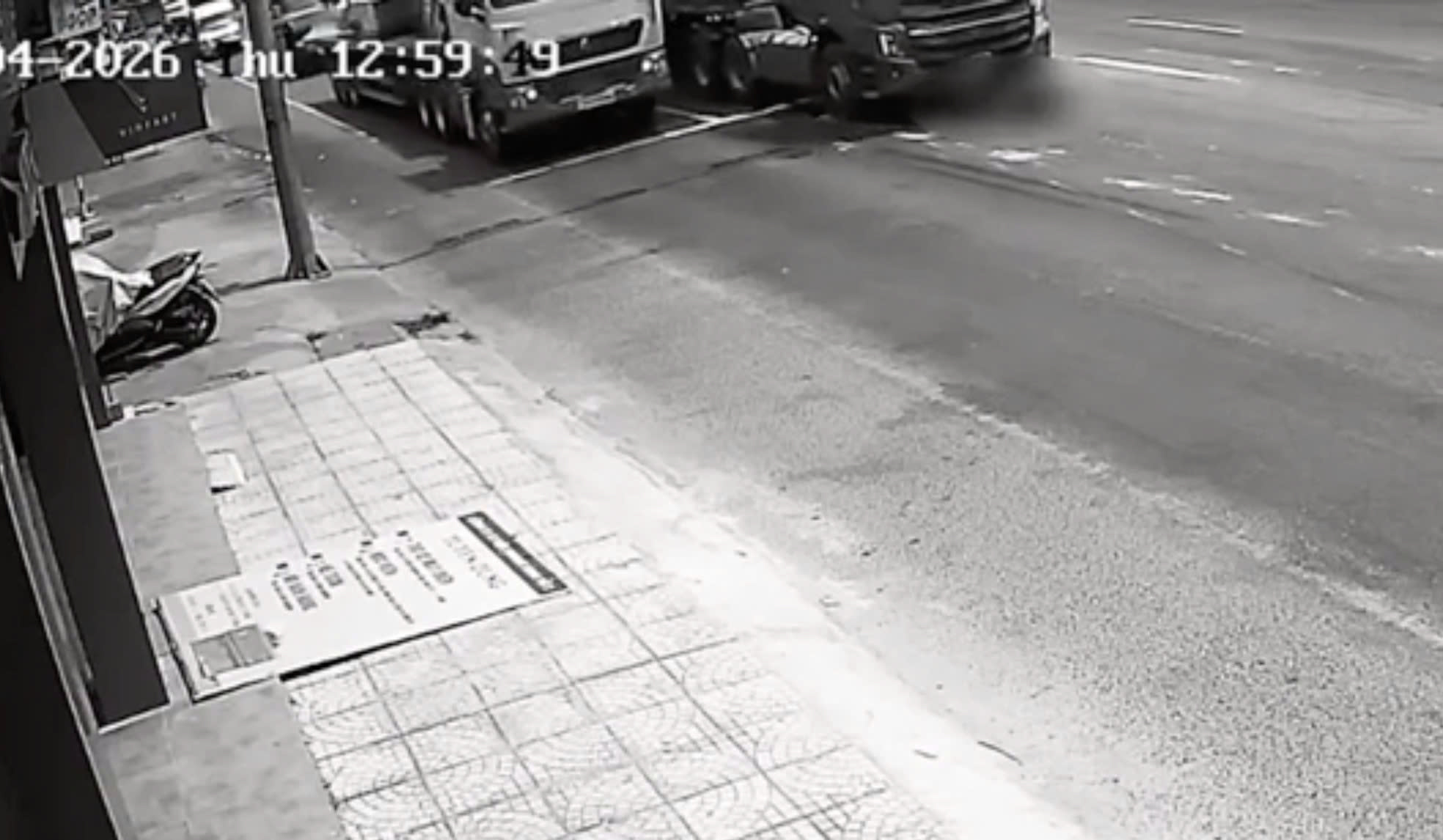
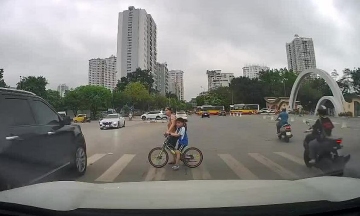
I watched a video of a truck reversing quickly, crushing a pedestrian. The time from when the vehicle started reversing until the accident occurred was only a few seconds. This is not a rare situation. Many fatal accidents involving trucks and passenger buses reversing have happened in narrow alleys, parking lots, and in front of homes.
 |
Image clipped from the accident video. Photo: CTV |
Behind large vehicles lies a huge blind spot. Rearview mirrors offer some assistance but cannot replace direct visibility. Pedestrians, children, and even motorbikes near the rear of the vehicle can easily fall into this blind spot. When a driver reverses, everything behind them is left almost to chance.
Currently, cameras are common devices, costing only a few million dong. This is a fraction of the repair costs after a collision, not to mention human casualties. Meanwhile, many passenger car models have had this equipment as standard for years, yet large vehicles with a high risk of causing injury, such as trucks and passenger buses, are not yet mandated to have them.
There is already a regulation requiring the installation of dash cameras on commercial transport vehicles, as mandated by the Ministry of Transport, to monitor drivers and passengers. So why has a rearview camera, a device that directly helps prevent fatal accidents, not become a mandatory standard? This appears to be a significant loophole.
Some argue that the responsibility lies with the driver, who should get out to observe or have someone guide them when reversing. However, in real-world operations, drivers do not always have assistance. Many drivers work alone, delivering goods in narrow alleys and crowded residential areas. Just one moment of inattention or a pedestrian unexpectedly stepping out from behind the vehicle can lead to tragedy.
If seatbelt use and dash camera installation are mandatory, then requiring rearview cameras for trucks and passenger buses, especially those operating in residential areas, should certainly be considered.
A human life cannot be equated to a few million dong for equipment. In my opinion, the question is not whether it is necessary, but when mandatory rearview cameras for vehicles will become a requirement.
Reader Vu Vu