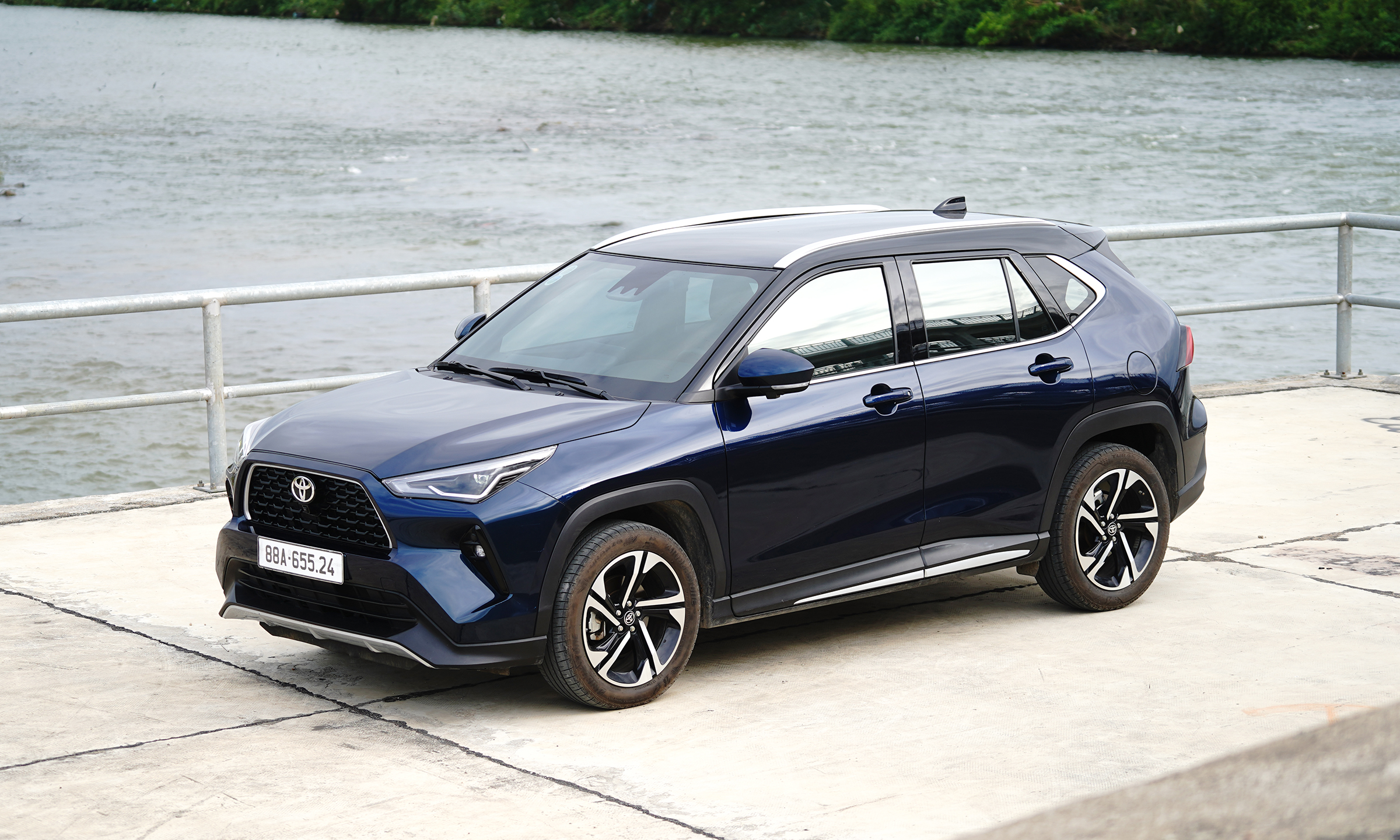
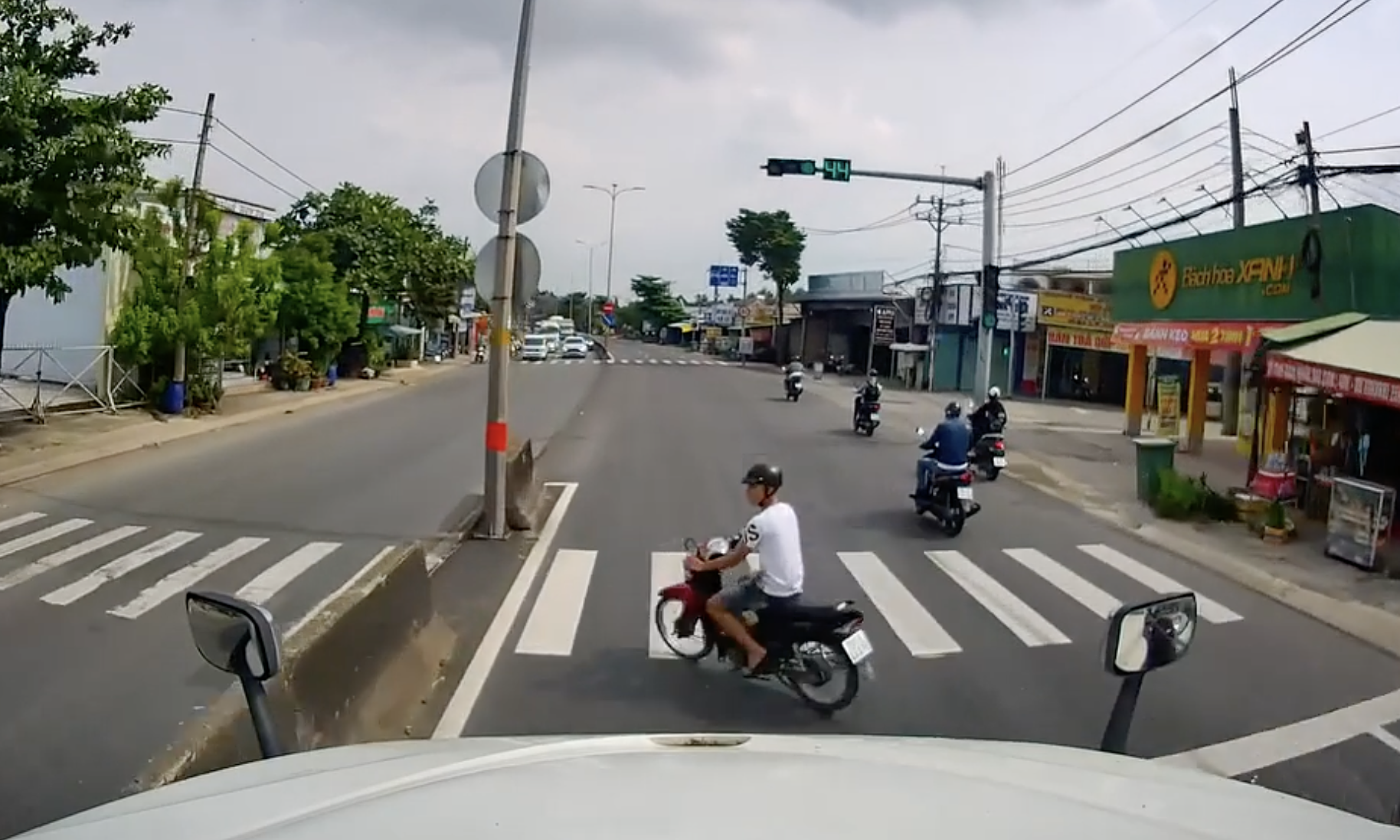
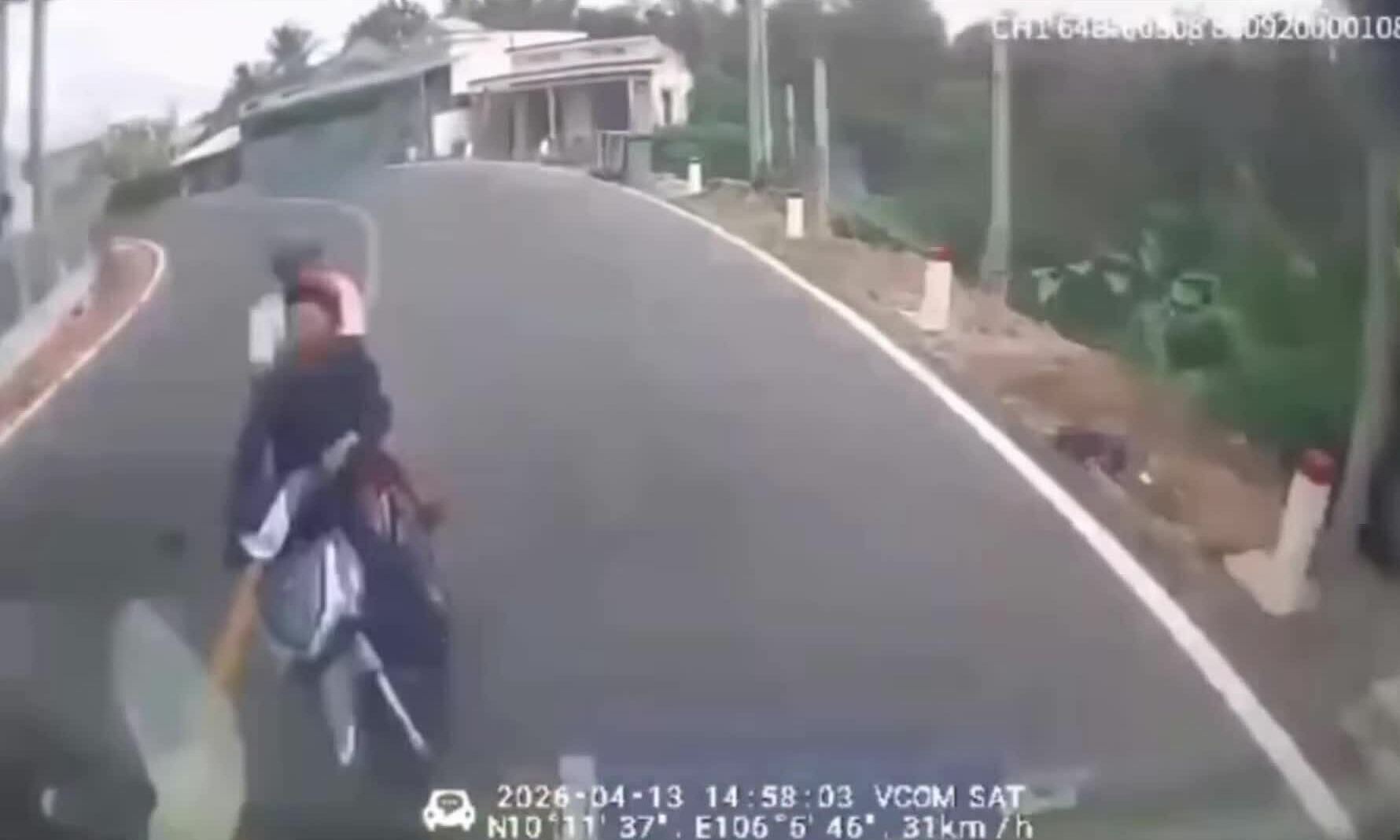
On the morning of 16/4, I commuted to work and took my child to school as usual. Approaching the entrance of Cau Giay Park in Hanoi, I saw two elderly people and a child hesitating, unsure how to cross the busy road. I slowed down to yield. The two slowly made their way across. Suddenly, a large SUV sped past from the left, its driver accelerating to get ahead of them. I found this action perplexing.
I am unsure if that driver saw the two elderly people and the child, but regardless, attempting to change lanes and overtake at an intersection just seconds after the car in front had stopped reveals a certain impatience and unwillingness to wait. This behavior is quite common among Vietnamese drivers, at least from my daily observations.
This scene exemplifies "the fear of crossing the street", where pedestrians should rightfully have priority. Instead of crossing the road safely, pedestrians often have to stop, be wary, and even step back to yield to vehicles speeding towards them.
My own experiences crossing the street are no different from those two elderly people and the child. The moment I step onto the road, a stream of motorbikes and cars rushes forward. Those large vehicles feel like giants to me, and I, a tiny person. Some cars zoom past, while others wait until they are right at my feet before braking, as if to intimidate me. Why? I was crossing in my designated area, so why the hostile attitude? Why are car drivers willing to threaten pedestrians? Is it simply because their vehicles are larger than people?
This situation creates a paradox in traffic. Pedestrians, even when following traffic laws, become the most vulnerable group. The absence of a yielding culture stems not only from a lack of awareness among some drivers but also from a habit of prioritizing speed and personal convenience over the safety of others. Many drivers assume that "pedestrians will get out of their way", leading to reckless overtaking at intersections.
This is particularly concerning as efforts are made to encourage more people to walk for health benefits and to reduce traffic congestion, yet these very individuals are left vulnerable. I believe that in addition to other traffic offenses, there should be increased enforcement of fines via AI cameras for failing to yield to pedestrians. Concurrently, it is important to cultivate an ethic of "yielding to the vulnerable" as a driving standard.
Without a change in mindset behind the wheel, crosswalks will remain invisible lines, and pedestrians will continue to plead for the right-of-way on their own priority path.
Reader Hai Duong