Not reducing speed before entering a puddle is one of the most common mistakes drivers make. Many drivers maintain their speed, or even accelerate, to quickly pass through puddles. However, this action directly leads to a loss of control.
When a vehicle moves at high speed over water-covered roads, the water does not have enough time to escape through the tire treads. This creates a thin film that separates the tires from the road surface, a phenomenon known as aquaplaning. When aquaplaning occurs, the steering wheel becomes ineffective. Drivers may turn the wheel, but the car will not respond, causing it to veer off its intended path. Reducing speed allows tires sufficient time to displace water and gives drivers more time to react to unexpected situations.
It is important to reduce speed gradually and with control. Drivers should prioritize releasing the accelerator before applying the brakes.
Braking suddenly when the car starts to slide often worsens the situation.
On a slippery, rainy road, a black car overtaking skidded and spun on 23/3 at intersection 18 of the Hanoi - Thai Nguyen expressway. Video: Xuan Bac
When driving through a puddle and sensing the car float or the steering become unusually light, some drivers instinctively brake hard to slow down immediately. However, on a slippery surface, this action exacerbates the situation. Sudden braking can lock the wheels, especially in vehicles without an anti-lock braking system or if the driver brakes incorrectly.
When the wheels stop rotating but the car continues to slide due to inertia, control is almost impossible, and the vehicle can slide in any direction. Even with ABS, sudden braking reduces stability, making the car prone to fishtailing or veering off course. In this situation, the correct response is to release the accelerator, keep the steering wheel steady, and only brake gradually once road grip is restored (when the steering no longer feels loose).
Sudden steering when encountering a puddle is another common reflex. On dry roads, quick steering adjustments can help avoid obstacles, but on slippery or wet surfaces, any abrupt maneuver carries significant risk.
When tires lose or reduce grip, turning the steering wheel sharply will not help the car regain its path. Instead, it can cause the vehicle to lose balance, leading to fishtailing or spinning sideways. This risk is particularly pronounced in rear-wheel drive vehicles or those with a high center of gravity. The correct approach is to keep the steering wheel stable and make gentle adjustments in the direction of the slide, though this requires the driver to remain calm and experienced in handling such situations.
On a slippery road, a speeding Zace lost control and plunged into a field on 22/2 in Vinh Loc. Video: CTV
Not observing and assessing puddle depth is a critical error. Puddles can conceal many hidden dangers, such as potholes, open manholes, or damaged road surfaces. When one wheel falls into a deeper section of water or hits a hidden obstacle, the uneven force on both sides of the car can cause a sudden jerk of the steering wheel. In this situation, if the driver is unprepared or reacts incorrectly, the car can easily swerve into another lane, endangering surrounding vehicles. Therefore, drivers need to observe, reduce speed, and if possible, avoid driving into puddles of unknown depth to ensure safety.
Worn tires with insufficient tread depth significantly increase the risk of hydroplaning. Beyond human factors, the technical condition of the vehicle, especially its tires, plays a crucial role in road grip when driving through water. Tire treads are designed to channel water away from the contact patch between the tire and the road, helping to maintain grip even in rain. However, when tires are worn, these drainage grooves become shallow or disappear, preventing water from escaping quickly and creating a cushion between the tire and the road. This increases the risk of aquaplaning even at moderate speeds. Regular inspection and timely tire replacement are essential for maintaining optimal road grip.
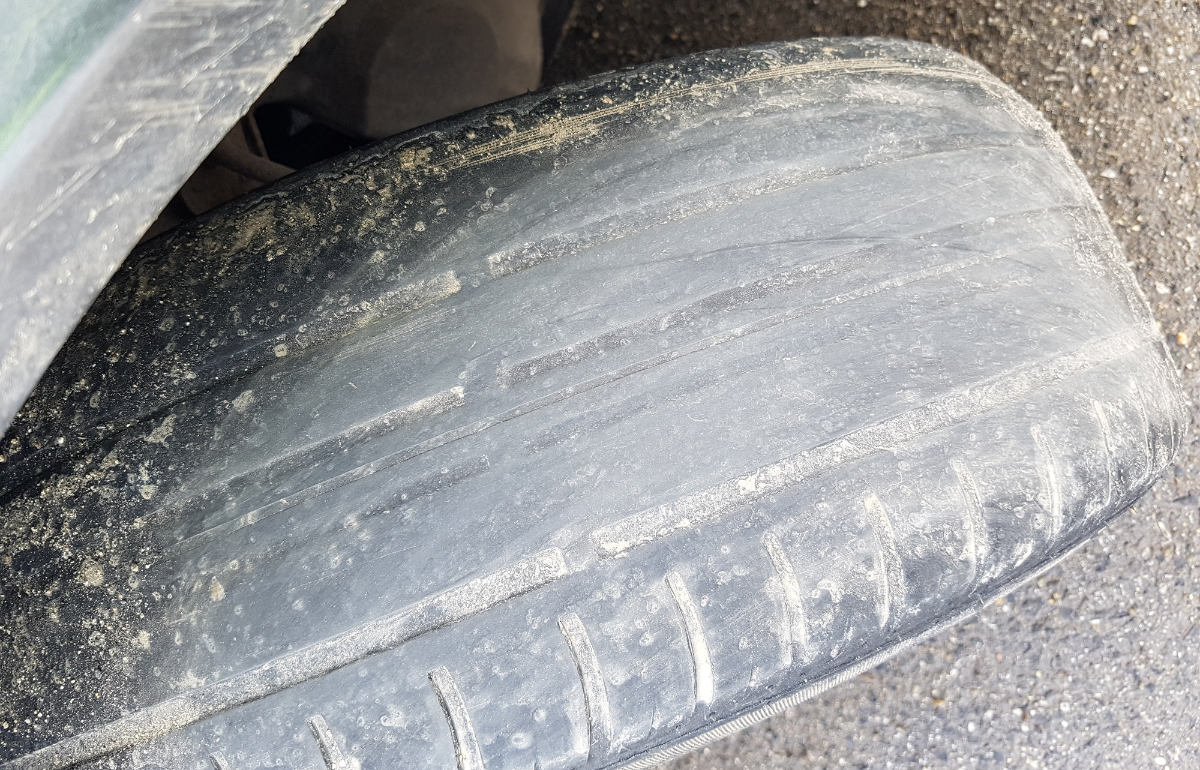 |
Worn tires with no remaining drainage grooves. Photo: RCMP Photo
Incorrect tire pressure also affects vehicle stability and grip. When tires are underinflated, the contact patch with the road may be uneven, reducing water displacement and causing the car to react more slowly to steering inputs. Conversely, overinflated tires reduce the contact area, making the wheels more prone to losing grip when driving through water. In both cases, drivers may feel the car is less stable, especially when needing to handle sudden situations. Therefore, drivers should regularly check tire pressure, ensuring it meets the manufacturer's recommendations before each trip. This information is typically printed on the driver's side door jamb of each vehicle.
Ho Tan