Prolonged hot weather in major cities not only causes discomfort for commuters but also directly impacts the performance of battery-powered vehicles, including electric motorcycles. While electric vehicles are praised for being economical and environmentally friendly, they have limitations when operating in high temperatures, especially if users have not adopted proper usage habits.
Charging immediately after riding in the sun
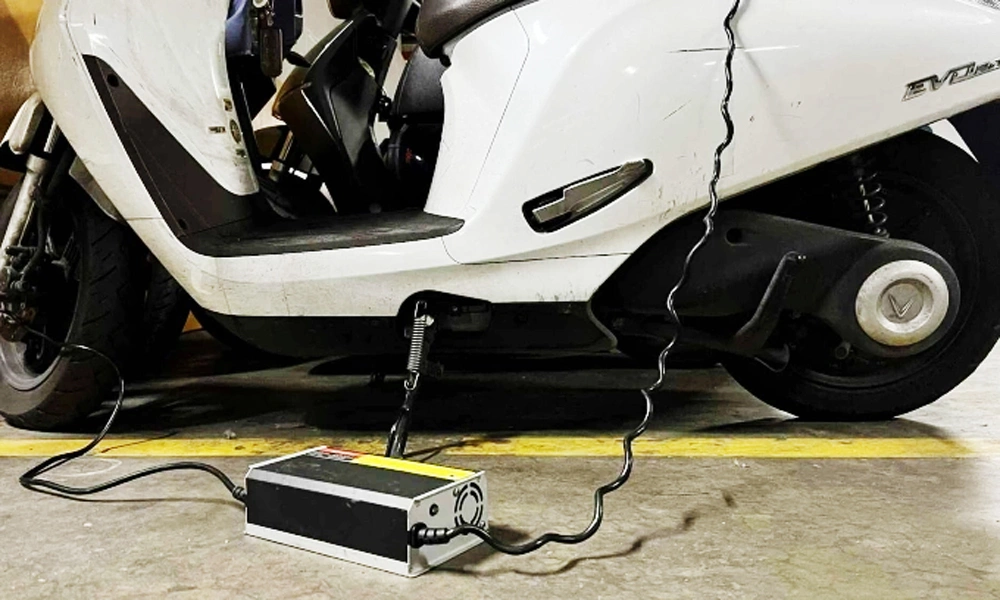
This is one of the most common mistakes electric vehicle users make during summer. After operating under intense sun, the battery is typically at a high temperature due to both its activity and heat absorption from the environment. Plugging it in for charging at this moment will cause the battery's temperature to rise further, leading to overheating.
In the long term, this can reduce battery capacity, cause premature aging, and significantly shorten travel range. Therefore, users should allow the vehicle to rest for about 15-30 minutes before charging to help the battery stabilize its temperature and ensure safety.
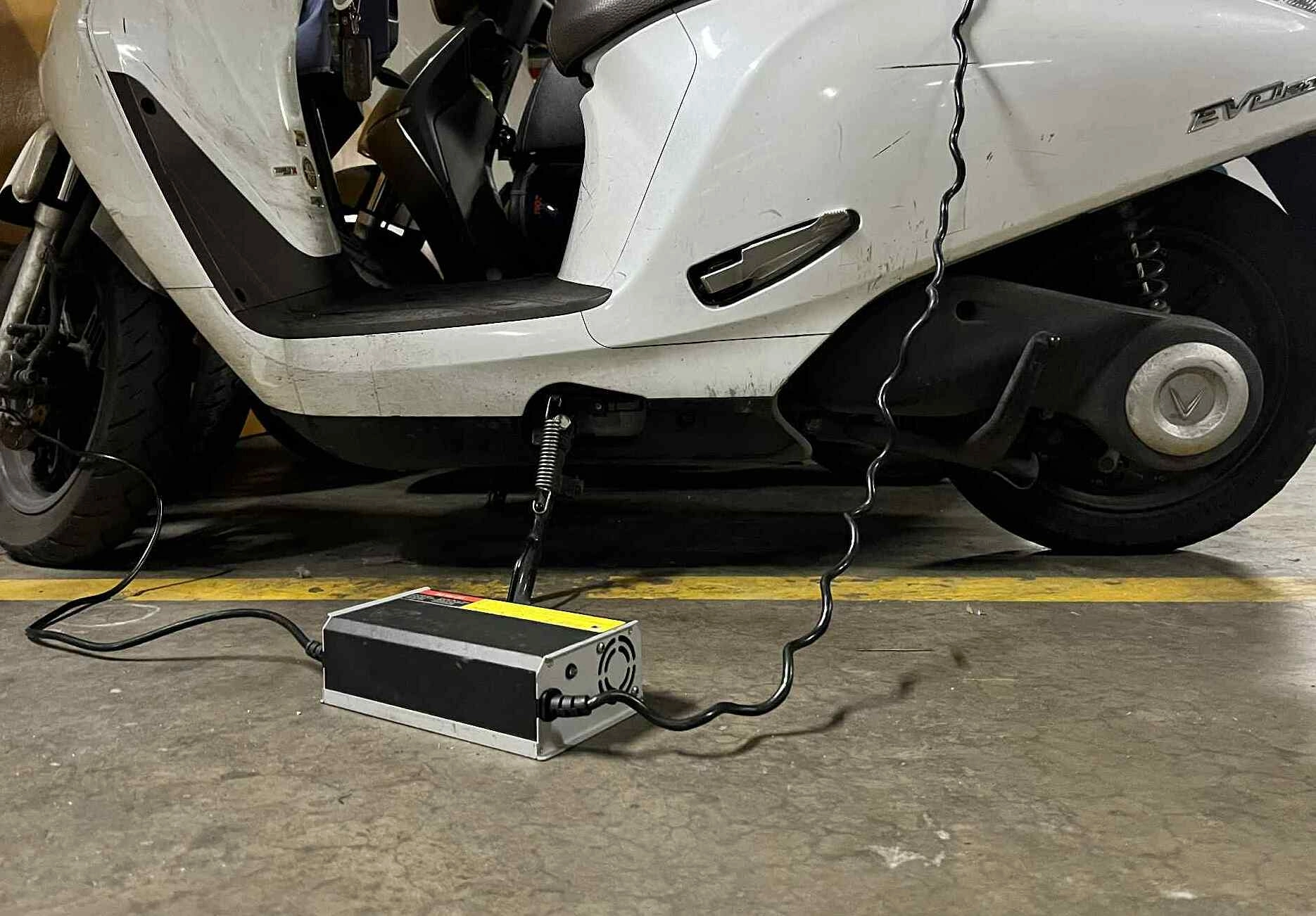 |
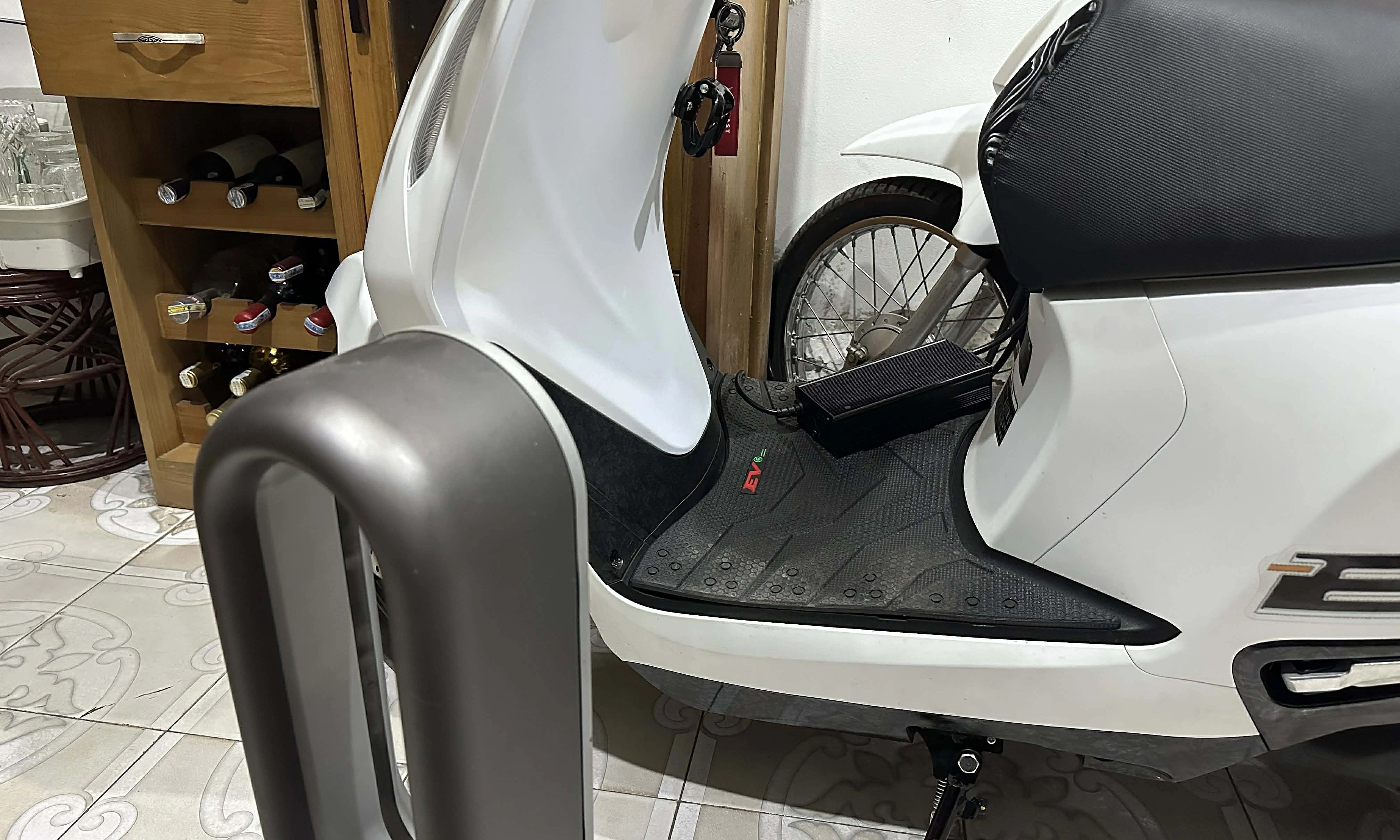
VinFast Evo200 electric motorcycle charging adapter. Photo: Pham Hai |
Leaving the vehicle in direct sunlight for extended periods
Many people habitually park their vehicles outdoors without cover, especially at midday when temperatures are highest. High road surface and air temperatures can cause the vehicle body and battery to heat up beyond safe levels. When this situation occurs frequently, internal battery components are affected, reducing performance and lifespan.
Beyond the battery, other parts like the seat, plastic casing, or electrical wires can also degrade faster. Therefore, finding a shaded parking spot or using a cover is a simple yet effective solution to extend component lifespan.
Charging the battery overnight in an enclosed space
Many users choose to charge their vehicles overnight for convenience the next day; however, this can pose risks if the charging area is not well-ventilated. In an enclosed, hot environment, heat generated during the charging process is not dissipated effectively, leading to heat buildup in the battery. If this happens frequently, the battery will degrade quickly and may even pose safety risks. To mitigate this, users should charge their vehicles in a cool, well-ventilated area, avoiding enclosed or high-temperature zones.
 |
Battery on a Honda ICON E: electric motorcycle. Photo: Luong Dung |
Using the battery until it is completely depleted
A habit that severely harms the battery is using it until it drops below 10% before charging. For lithium batteries, common in electric vehicles today, deep discharging reduces lifespan and charge retention. In hot weather, batteries must operate under more strenuous conditions, making them more prone to wear and faster degradation. Maintaining a stable battery level, charging when the battery is around 20-30%, will better protect the battery and maintain long-term performance.
Riding continuously for long periods under intense sun
Not only charging habits, but also how the vehicle is used directly impacts battery durability. When a vehicle operates continuously in high temperatures, the battery must work intensely while simultaneously being exposed to the hot environment. This causes the battery temperature to rise rapidly, reducing operational efficiency and accelerating the aging process. On long trips, making appropriate stops to allow the vehicle to cool down is essential to protect the battery.
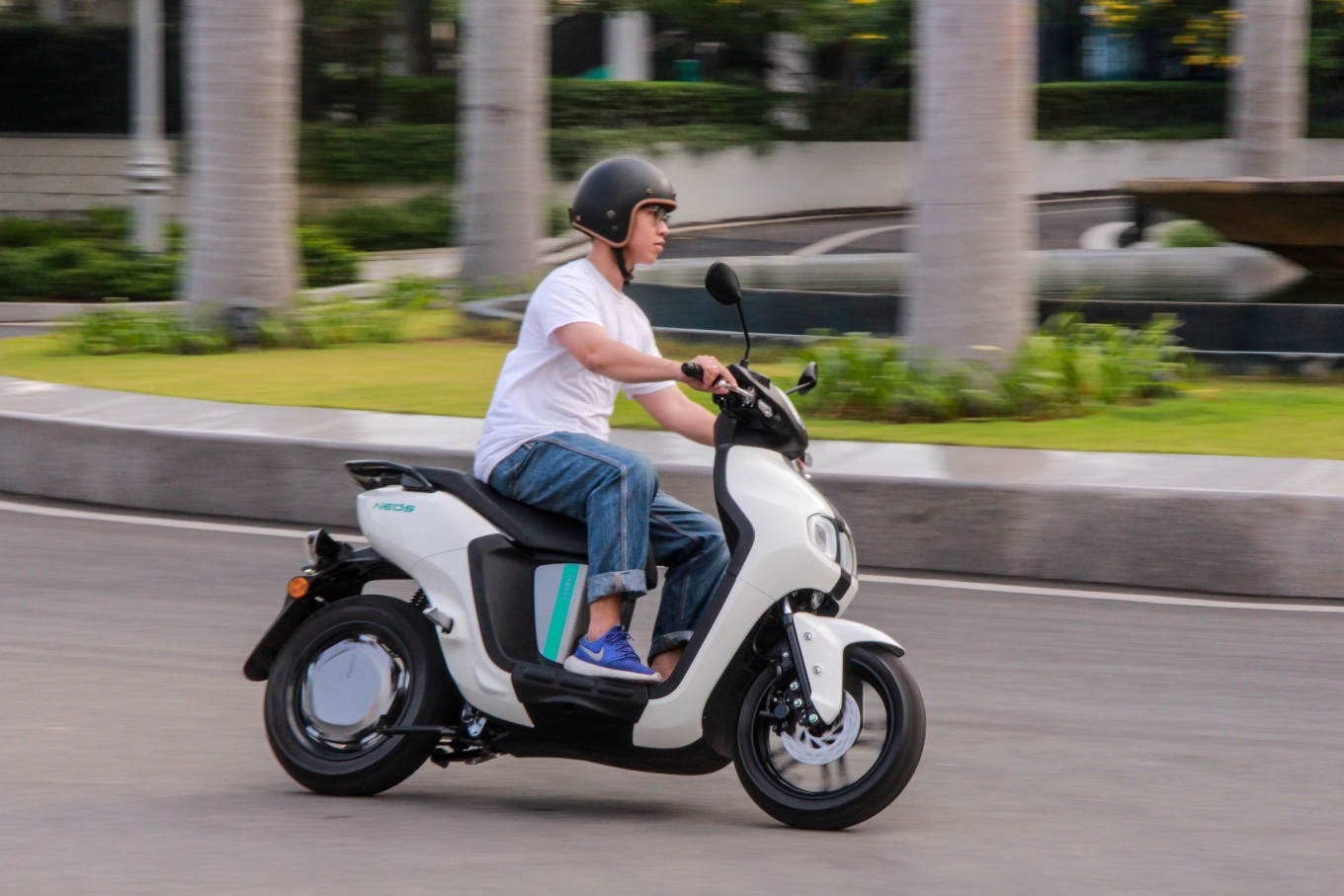 |
Yamaha Neo's electric motorcycle. Photo: Thanh Nhan |
Overall, mistakes in using electric vehicles during summer do not stem from complex technical factors but primarily from users' daily habits. Adjusting small behaviors such as charging time, parking location, or battery usage can significantly extend battery lifespan.
Pham Hai