Across many countries, vehicle license plates serve not only as identification markers but also as a crucial component of traffic management systems. The general requirement is that license plates must always be clear, easily readable by the naked eye, and readily identifiable by automatic camera systems.
Therefore, in most situations, a license plate obscured by mud, snow, or dirt can still lead to penalties, regardless of whether the cause stems from weather conditions or the driving environment. However, enforcement often considers specific circumstances.
Lighter penalties for dirty plates than intentional concealment
In the UK, the law demands strict adherence to size, font, color, reflectivity, and legibility for license plates. If a plate becomes so dirty it is difficult to read, drivers may be fined 100 British pounds (137 USD) on the spot. If the violation is handled through the courts, the maximum fine can reach 1,000 British pounds (1,370 USD). According to Parkers, a reputable UK automotive advisory site, this regulation targets not only intentional plate concealment but also applies to plates obscured by mud during transit.
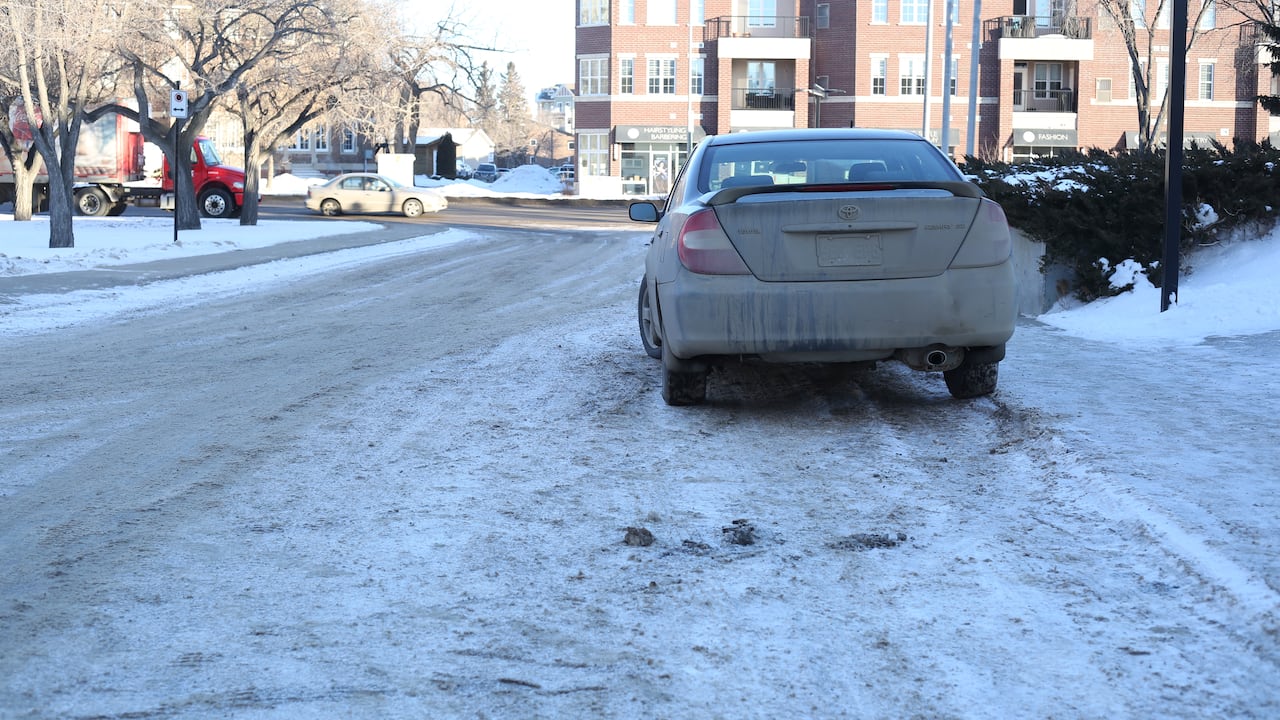 |
License plate covered by mud and snow in Canada. *Photo: CBC*
In Germany, if a license plate is obscured by mud, making it difficult to read—often due to rain, snow, or road conditions—the vehicle owner may face a minor fine of around 5 euros (6 USD), along with an immediate request to clean it. Higher fines, around 65 euros (77 USD), are only applied when the plate is covered by glass, film, or other artificial materials that hinder identification, which is considered intentional interference.
A similar approach is observed in Australia, although penalties and enforcement vary between states. According to NRMA, a traffic advisory organization in Australia, in the state of New South Wales, traffic law requires license plates to always be readable from a certain distance. When a license plate is dirty to the point of being unidentifiable, drivers can be fined hundreds of Australian dollars and incur demerit points on their driver's license.
In the US, license plate regulations are issued by individual states and cities, but the general trend is to tighten enforcement against obscuring or blurring plates to combat evasion of surveillance cameras. For instance, according to the New York City Department of Transportation, new license plate regulations are designed to distinguish between ordinary violations and intentional fraudulent acts. Accordingly, vehicle owners with obscured or unreadable license plates, including those due to dirt, may face a basic fine of around 50 USD, intended to compel owners to ensure plates are always clear when driving.
If law enforcement determines that a driver intentionally obscured a plate to evade traffic cameras, fines can increase to 500 USD, also leading to demerit points on their license and increased insurance premiums. New York officials emphasize that higher penalties target intentional fraudulent acts, while cases arising from weather conditions are still handled with lighter measures.
Objective factors considered in enforcement
Thus, most countries have strict regulations and clear penalty frameworks for obscured license plates, aiming to prevent intentional fraud as surveillance camera systems become more common.
However, in the enforcement phase, authorities are empowered to consider objective factors to assess specific circumstances. For cases where license plates are dirty due to rain, snow, or road conditions, police often prioritize warnings or requests for immediate rectification, rather than applying the maximum penalty. Stricter sanctions are primarily reserved for intentional plate concealment, such as attaching covers or allowing prolonged obscuration, which directly affects vehicle identification.
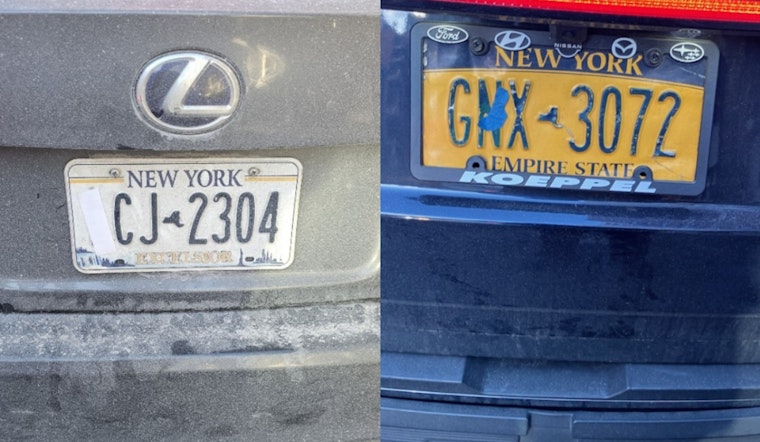 |
Intentionally obscured license plates in New York, US. The left image shows white tape covering the first letter, the right image shows blue tape. *Photo: Hoodline*
This approach helps balance strict legal management requirements with practical reasonableness. Empowering enforcement agencies to assess allows for a clear distinction between unavoidable risks arising during traffic participation and intentional fraudulent acts. This is also how many countries maintain traffic management effectiveness while limiting negative public reactions when regulations are applied flexibly and appropriately to circumstances.
Ho Tan