On 3/10 in Shenzhen, a passenger's three fingers were trapped in the door of a Pony.ai robotaxi. Video footage, recorded by a bystander, showed the man's pale fingers caught in the driver's side door. He was in distress and unable to open the door, despite the two passenger-side doors being open.
Pony.ai, a technology company licensed to operate in major Chinese cities like Beijing, Guangzhou, Shenzhen, and Shanghai, stated this situation was unusual and unprecedented. A company representative explained the incident resulted "due to the passenger accidentally closing the door manually", and Pony.ai provided medical assistance to the man afterward.
Police investigated the incident, classifying it as a normal accident, not a traffic accident. Pony.ai is monitoring the situation and will take further action based on the injured individual's medical examination results.
The vehicle is equipped with an emergency button and a tablet for contacting customer service. Pony.ai cooperated with the investigation, providing all video evidence. It remains unclear why the man's hand became trapped between the driver's door and the rear door.
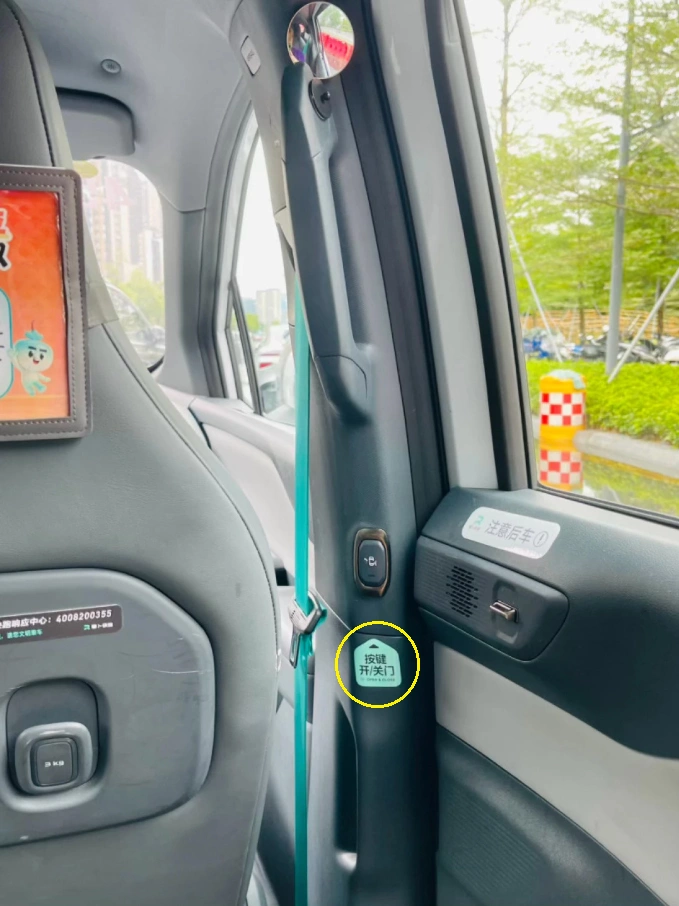 |
Instructions for opening/closing doors on a robotaxi in China. A reminder to be careful when opening doors is on the window sill. Photo: smzdm |
Robotaxis, including those from Pony.ai, are designed not to allow the driver's side door to be opened by passengers, reserving it for mechanical emergency situations only. Passengers typically enter the vehicle through the rear right door.
This incident draws attention to user experience with self-driving cars. Many online comments highlighted that while automatic doors often stop upon encountering resistance, the robotaxi door in this case did not, suggesting a failure in the emergency safety mechanism.
This serves as a reminder for current robotaxi users that these doors operate differently from conventional car doors. Users should ensure the door is properly closed and understand how to open it from both inside and outside before entering. When traveling with elderly people or children, allow them to enter or exit first before closing the door.
My Anh