The Ministry of Construction is currently seeking public feedback on a draft national technical standard for road vehicle inspection, which will replace QCVN 122:2024/BGTVT. This draft includes significant changes, notably the reclassification of many existing defects and the introduction of new criteria. These revisions aim to elevate numerous existing defects and deficiencies to the category of serious defects (MaD), meaning vehicles will fail inspection and require rectification before re-inspection.
One major proposed change is the elevation of several minor defects (MiD) to serious defects (MaD). Several issues previously classified as minor advisories are now proposed to be serious defects. For instance, the absence of an emergency glass-breaking hammer, once a minor defect, has been reclassified as a serious defect. This means vehicle owners must equip their cars with this tool to pass inspection. According to the Vietnam Register, the lack or improper placement of this safety device can have severe consequences for vehicle occupants during an accident.
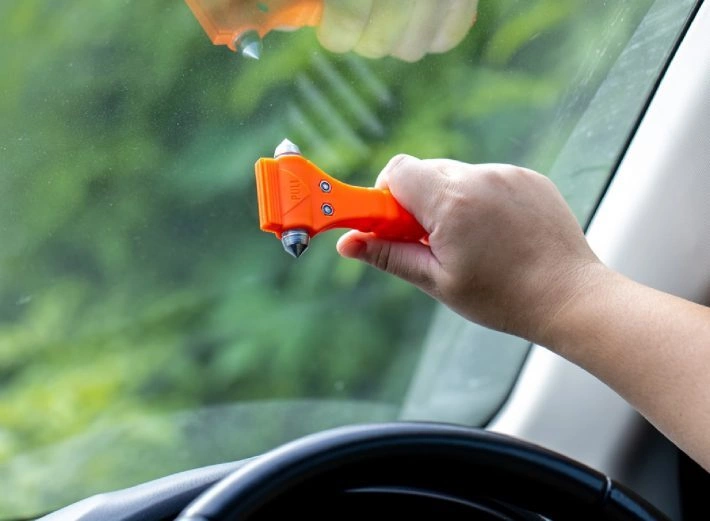 |
A traditional emergency hammer used for oto. Photo: OldCarsWeekly |
Similarly, vehicles missing wipers will no longer pass inspection. Under current regulations, wiper-related issues such as loose installation, abnormal operation, or impaired visibility are considered minor defects. The Vietnam Register highlights that missing wipers pose a significant safety risk when a vehicle operates in rainy conditions.
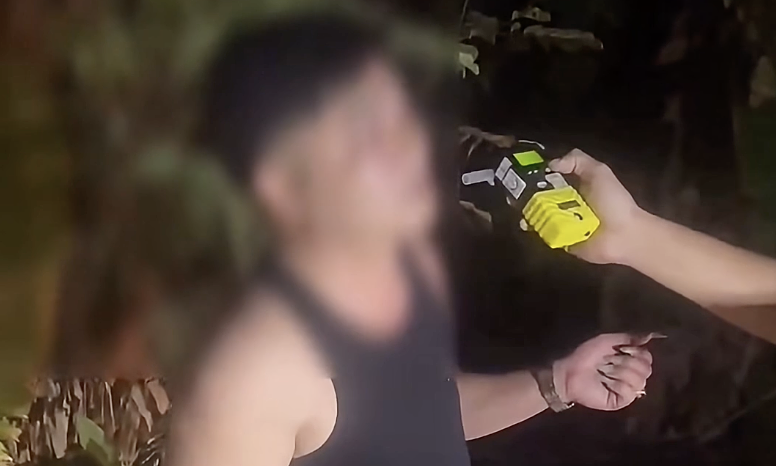
Another revision concerns horn volume. The draft standard stipulates that oto horns emitting sounds below 87 dB(A) or above 112 dB(A) will result in inspection failure. This issue is currently classified as a minor defect.
The draft also introduces several new inspection criteria. A key addition is that oto with license plates installed incorrectly, not according to the manufacturer's design, will be rejected for inspection. The Vietnam Register notes that many vehicles currently have license plates that are improperly positioned, obscured, or difficult to observe, hindering identification and enforcement. Existing regulations only address missing, loosely installed, or unclear license plates.
For the first time, the draft includes criteria for checking lubricant oil and coolant levels. Vehicles with oil or coolant levels not matching manufacturer recommendations will fail inspection. The current QCVN 122:2024/BGTVT only requires the coolant temperature gauge to be operational, without specifying a check of the coolant level itself.
Furthermore, vehicles whose actual curb weight exceeds the documented specifications beyond the permissible tolerance will also be classified as having a serious defect. This measure aims to control unauthorized modifications and structural alterations to vehicles.
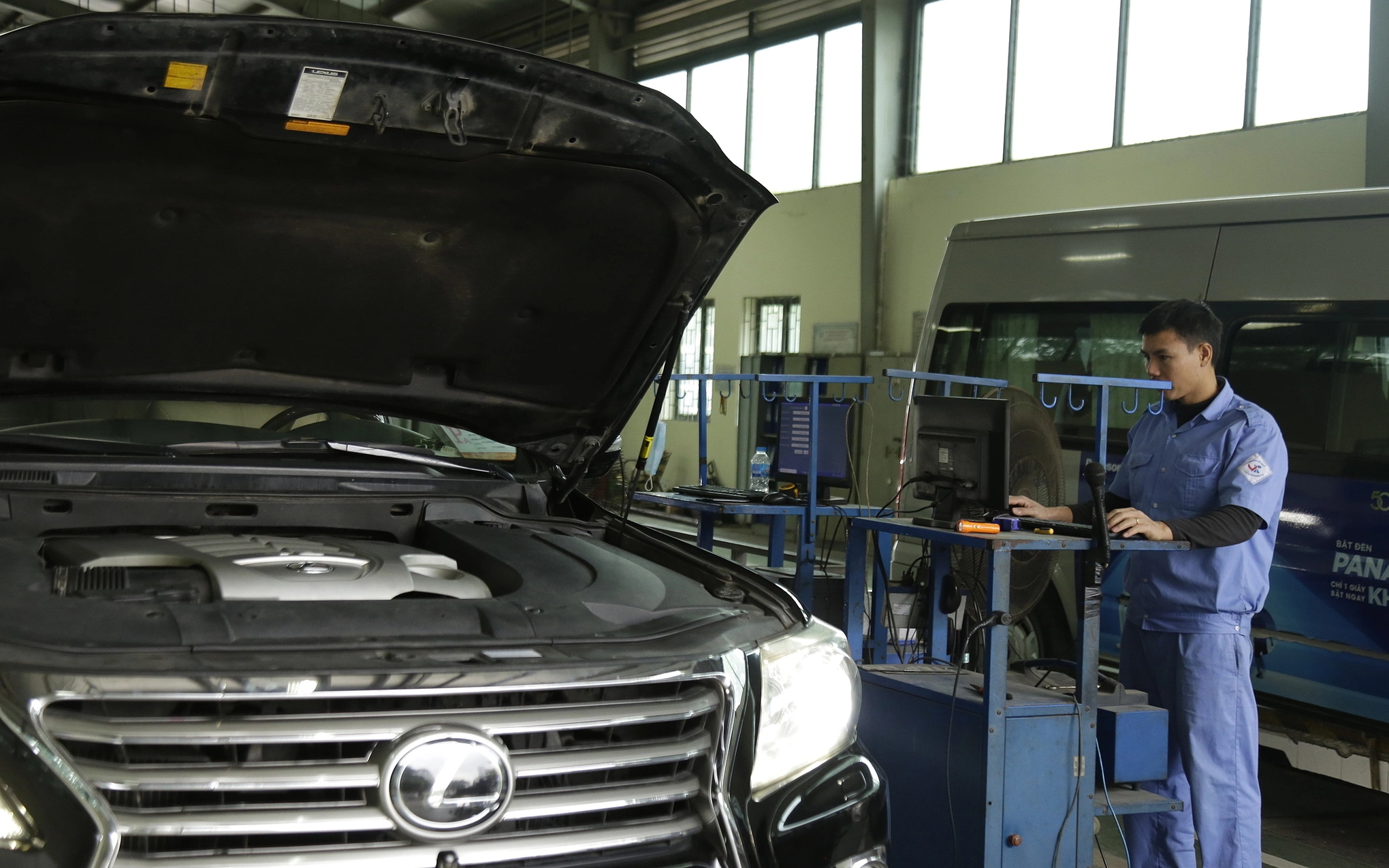 |
Vehicle inspection in Hanoi. Photo: Pham Chieu |
In addition, the draft adds numerous new defects related to lighting systems and safety equipment. This includes hazard lights not flashing simultaneously, brake lights not shining brighter than tail lights, and rear barriers with sharp or pointed edges, all of which will be considered serious defects.
Regarding vehicle glass, vehicles will fail inspection if their side, rear, or roof glass is punctured or broken. A front windshield with a light transmittance coefficient below 45% will also be deemed a serious defect. This is intended to limit the use of films or materials that reduce driver visibility. To facilitate emission testing, a non-functional or faulty engine speed gauge is also proposed as a serious defect.
For vehicles legally required to install cameras under the Road Traffic Safety Law, the draft mandates the presence of complete recording equipment for the driver, passenger compartment, and areas designated for preschoolers and students. Vehicles lacking these devices or having non-functional cameras that cannot store data will fail inspection.
According to the Ministry of Construction, these revisions aim to update current legal provisions, improve inspection quality, and strengthen the control of vehicle technical safety before they are allowed on public roads.
Pham Hai