


Lithium-ion batteries are a primary power source in most electric vehicles and electric motorcycles. Their high energy density and rechargeable nature enable efficient vehicle operation, but they also present risks if an internal cell malfunctions, overheats, or is damaged. The core issue stems from the inherent chemical properties of lithium-ion batteries.
Electric vehicle batteries, in both motorcycles and automobiles, are typically structured with numerous lithium-ion cells arranged in large packs. If a single cell is damaged or overheats, it can initiate a phenomenon known as thermal runaway. This rapid temperature increase causes adjacent cells to ignite or explode, leading to an uncontrollable chain reaction.
Unlike fires involving other fuels, which rely on oxygen for combustion, lithium-ion batteries can generate their own heat and oxygen internally. This inherent property renders traditional firefighting methods, such as water or foam, less effective. Even if flames are temporarily extinguished, the internal chemical reaction persists, posing a significant risk of re-ignition.
Battery fires can reach temperatures exceeding 1,000 degrees C, releasing toxic gases such as hydrogen fluoride (HF) and endangering individuals near the source. Moreover, pressure accumulation within battery cells can result in explosions, making direct access to the fire significantly more hazardous for rescue personnel.
Experts indicate that fully extinguishing an electric vehicle battery pack fire demands significantly more water than a conventional gasoline vehicle fire. This is because the goal extends beyond merely dousing the flames; it requires cooling the entire battery pack to halt the chain reaction. In numerous instances, electric vehicles involved in fires must be submerged in water for hours to prevent re-ignition.
Specialized water-based fire extinguishers for electric vehicle batteries have also entered the market. These solutions are engineered to create an oxygen-isolating layer, absorb heat, and rapidly cool the battery pack's surface, helping to control flames and limit propagation. However, because the thermal reaction of lithium-ion batteries originates internally, these extinguishers primarily assist with external flame suppression and heat reduction, often requiring deep cooling in conjunction to mitigate re-ignition risks.
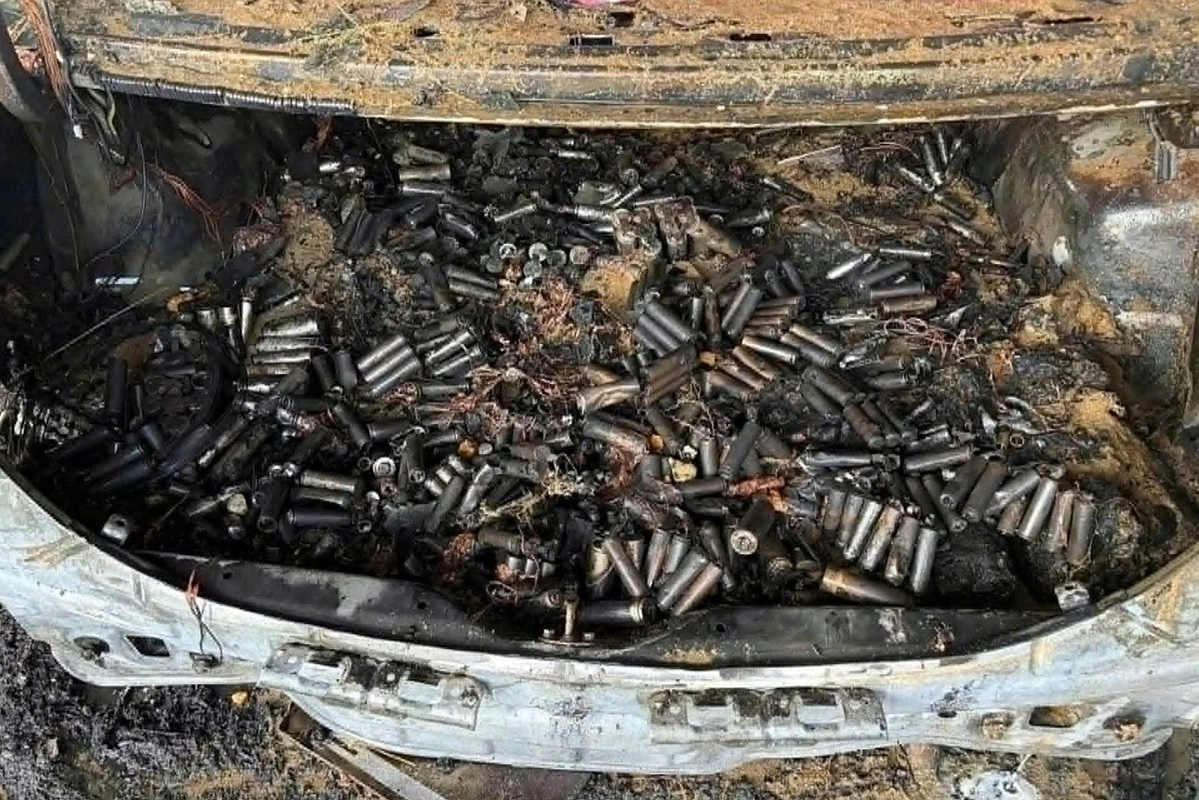 |
An automobile carrying tens of battery packs caught fire at a gas station in Da Nang on 1/5. Photo: Nam De |
The automotive industry is developing technologies to mitigate these risks, including smart battery management systems, improved insulating materials, and battery designs that minimize thermal propagation. Concurrently, fire departments are updating their specific response protocols for electric vehicles. Despite this, statistics indicate that electric vehicle fires remain a rare occurrence relative to the overall vehicle population. A clear understanding of these inherent risks is vital for implementing effective prevention and response strategies.
Ho Tan



