The Ministry of Public Security recently issued Circular 70/2026, which regulates driving license examinations, issuance, and the issuance and use of international driving licenses. This circular replaces Circular 12/2025. A key change in the new circular is the elimination of the computer-based simulated traffic situation test, effective 1/7.
This change is based on the Law on Road Traffic Order and Safety and Decree 94/2026, which governs driving training and testing activities and also takes effect on 1/7. Decree 94/2026 replaces Decree 160/2024. Consequently, new regulations regarding the infrastructure requirements for testing centers no longer mandate simulation equipment or dedicated simulation testing rooms. This directly led to the removal of the simulated traffic situation test from the examination content.
 |
Applicants taking the simulated driving test in Hanoi in 4/2026. Photo: Viet An |
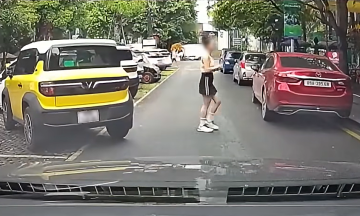
The simulated traffic situation test was introduced in mid-2022. Its question bank comprised 120 scenarios, from which each applicant randomly received 10 questions. Applicants would watch simulated video clips on a computer and press the spacebar at the precise moment a dangerous situation appeared to earn points.
During its implementation, this test section garnered mixed reactions. Many trainees and training facilities contended that the scoring method, which relied on the exact timing of a key press within the video, did not accurately reflect a driver's actual ability to handle real-world situations. For instance, some individuals might recognize a hazardous situation earlier than the software's programmed detection point, yet pressing the key too soon would prevent them from achieving the maximum score.
With the simulated test removed, the car driving license examination now consists of three components: a theory test, an in-figure practical test, and an on-road practical test.
This adjustment is one of several recent changes to driving training and testing procedures. Previously, in May, applicants were required to watch videos depicting traffic accident situations before their examinations.
These videos, approximately 15 minutes long, combine real footage with simulations to recreate common accident-causing scenarios, such as incorrect turns, driving under the influence, and unsafe overtaking. According to the Traffic Police Department, this content aims to help trainees identify dangerous behaviors, enhance their awareness of legal compliance, and protect their own lives, health, and property, as well as those of other road users.
Ho Tan