When discussing timed traffic lights, the "green wave" effect often comes to mind. This system synchronizes signals on major roads, allowing drivers to encounter continuous green lights at subsequent intersections if they maintain the designated speed.
However, a different strategy, dubbed "rest in red," is currently undergoing trials. This approach, understood as "waiting at a red light," is believed to improve traffic flow and curb speeding, thereby reducing accidents in cities where it is implemented.
Unlike the "green wave" that encourages faster movement, "rest in red" sets red as the default state on busy roads. The light cycle activates only when vehicles approach. Drivers exceeding the speed limit will find the light still red upon arrival, forcing them to decelerate or stop. Conversely, those maintaining the designated speed will encounter a green light at the opportune moment.
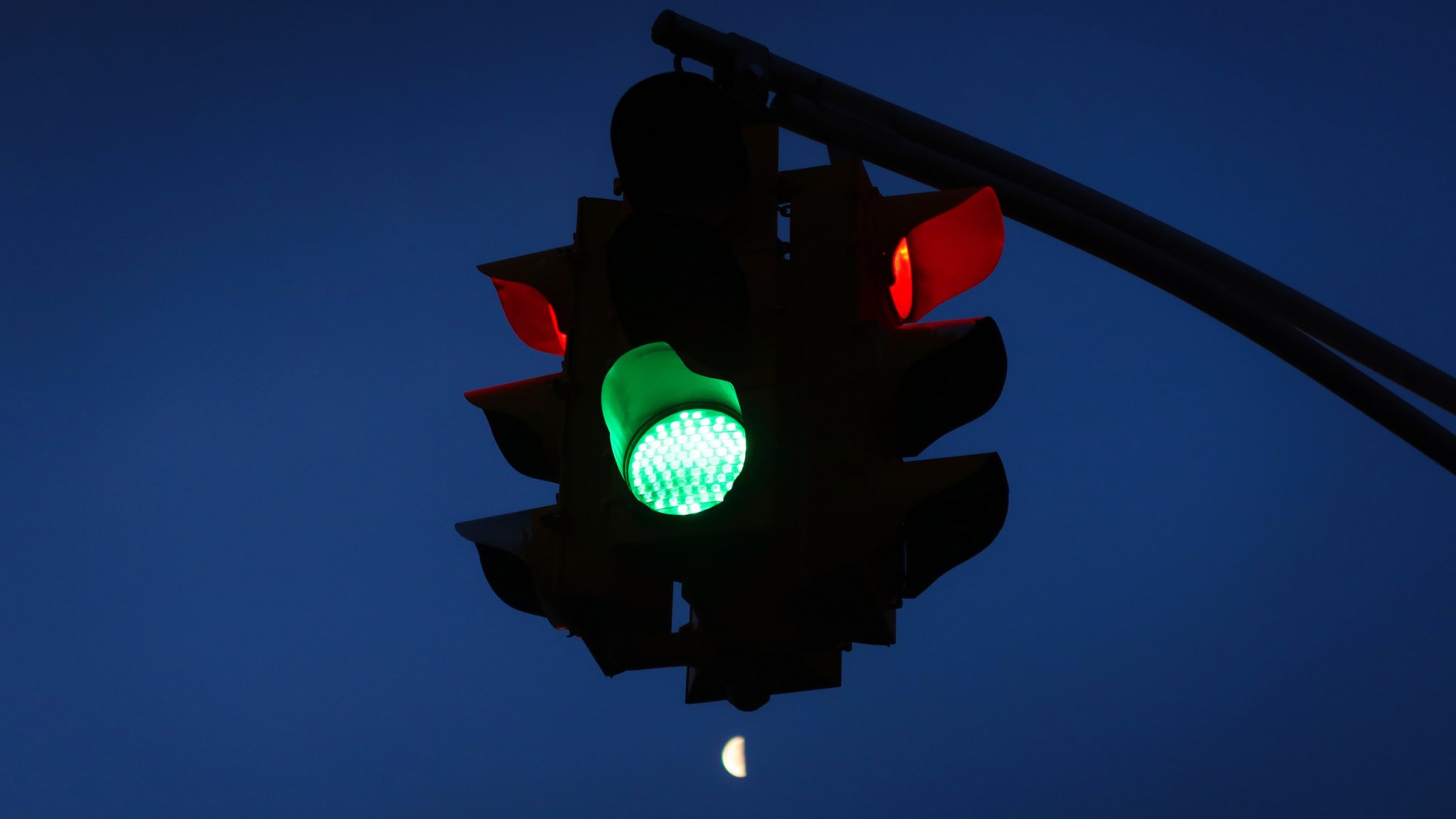 |
Traffic lights in the US. *Photo: Gary Hershorn*
In essence, drivers adhering to the speed limit are "rewarded" with continuous green lights, while speeders face more frequent red lights. According to Jennifer Turner, Urban Development Director for Albuquerque, New Mexico, where this system is undergoing trials, drivers quickly learn the pattern and adjust their speed.
"If you visit Albuquerque and drive on one of these routes, you will quickly realize that speeding means stopping," Turner stated.
While some raised concerns that this method might increase red light violations and other infractions, initial pilot programs have shown positive impacts.
In Portland, Oregon, the "rest in red" program reduced average speeds from 39 mph (63 km/h) to 30 mph (48 km/h), aligning with the speed limit. A pilot in North Carolina reported a 43% decrease in total collisions after the system was implemented 24/7.
This method proves most effective on roads designed for heavy daytime traffic but become nearly deserted at night. Here, the default red light status helps prevent speeding on empty stretches.
Similar trials have also been conducted in Long Beach, California, and Boulder, Colorado. The California study included warning signs for speeders, helping them understand the system's mechanics.
This trial began in 2012, though its results do not appear to be publicly available online. By 2017, Los Angeles was still documented as utilizing the "rest in red" strategy.
Hai Dang (according to The Drive)