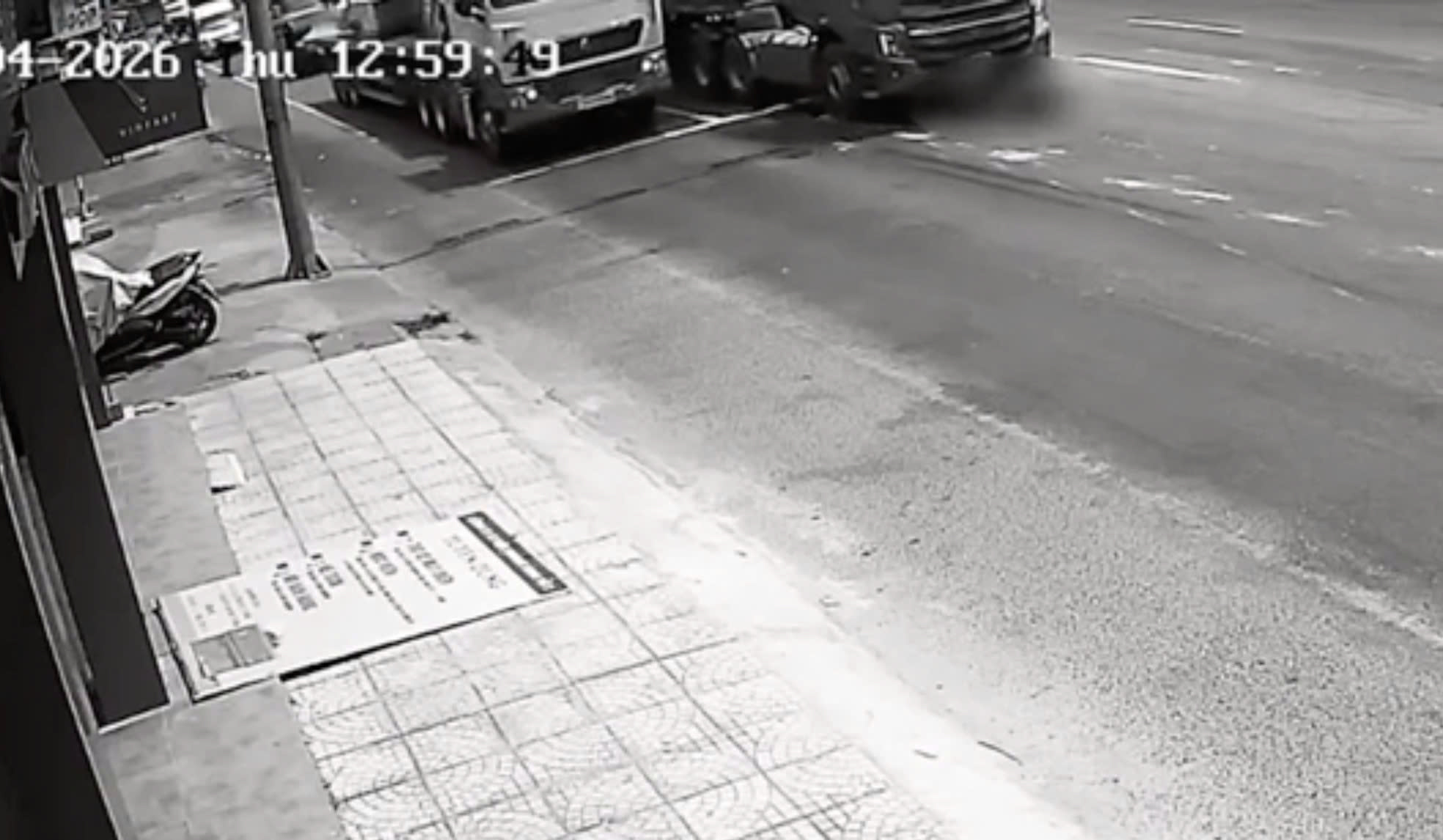
During the morning rush hour on 9/4, a large street-cleaning tanker truck slowly moved along Tan My street, a section of road heavily used by vehicles entering the city center from southwestern Hanoi. Initially, seeing the truck and the mud-covered road, I thought it was a street-cleaning operation, given the nearby construction. However, even for street cleaning, this was an inappropriate time; such work should be done between 4 and 5 in the morning.
Upon closer inspection, I witnessed that instead of spraying clean water to wash away dust, the nozzles discharged a thick, yellowish stream of muddy water. Within minutes, a long stretch of road, not particularly dirty before, became slippery and muddy, as if it had just endured a flash flood. The difference before and after the tanker passed was clearly visible. I couldn't tell if they were cleaning the road or "mud-dyeing" it.
This situation not only creates unsanitary conditions but also poses a high risk of traffic accidents. The yellowish water mixed with road dust, forming a slimy film that made the road slippery. Many motorcyclists had to brake suddenly or swerve to avoid the splashing water.
Furthermore, reduced visibility from dirty water splashing onto windshields and mud clinging to vehicle bodies also created difficulties for oto drivers. A freshly washed car could become stained within seconds of following this "environmental sanitation" vehicle.
I question the source of the water these vehicles use. If this is a street-cleaning truck, why is a task meant to beautify the urban area carried out so carelessly, offensively, and dangerously for commuters? If it's not a street-cleaning vehicle, why is a tanker truck spraying dirty water onto Hanoi's streets operating so brazenly?
Reader Nhat Minh