The year 2025 marks a significant milestone for Vietnamese drivers as new policies, technologies, and traffic management changes are implemented. Among these, three major issues have been widely discussed by readers on Dien Dan Xe/VnExpress regarding their impact on driving behavior: increased fines, AI cameras, and the removal of traffic light countdown timers.
Increased Fines
One significant issue is the enforcement of Decree 168/2024, which substantially increases penalties for numerous traffic violations. Common offenses such as running red lights, speeding, and improper lane changes now carry fines of tens of millions of VND, and can lead to long-term driving license revocation.
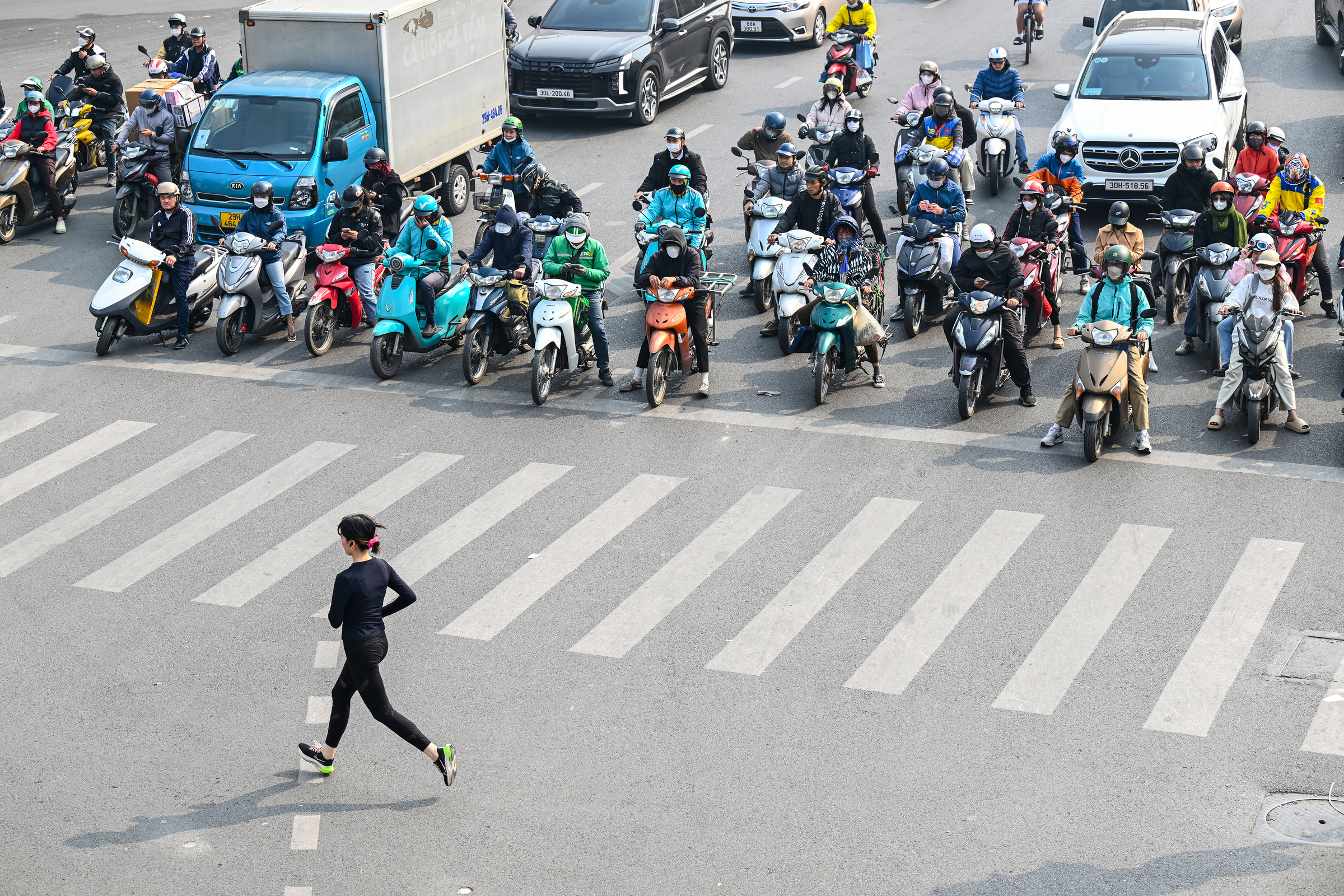 |
People stopping at a red light on Chua Boc street, Ha Noi. Photo: Giang Huy |
Driver reactions are largely apprehensive. Many believe current fines are too high relative to income, creating psychological pressure. However, some support the changes, arguing that only 'financial pain' will lead to a change in awareness and behavior.
Since Decree 168/2024 took effect on 1/1, initial statistics from traffic police and reader feedback indicate a notable adjustment in driving behavior. Drivers now stop earlier at red lights and avoid prematurely advancing when the light is about to turn green. Some drivers have even adopted overly cautious behavior, stopping when the light still shows 4-5 seconds, which can impede smooth traffic flow.
The reason for concern extends beyond just the monetary penalties; it also involves inconsistencies in infrastructure, road signs, and traffic organization in many areas. Experts propose that alongside increased fines, there is a need to standardize road signs, ensure transparency in penalty data, and implement a phase of reminders and warnings before imposing severe penalties.
AI Traffic Cameras
Ha Noi and Ho Chi Minh City are intensifying automated traffic enforcement using AI cameras, with over 1,800 cameras in Ha Noi and over 200 cameras in Ho Chi Minh City deployed at key intersections from late 2025. These systems automatically detect over 20 types of violations, including running red lights, not wearing helmets, and improper lane usage, with high accuracy.
Drivers acknowledge a feeling of 'being monitored constantly' with this system, while their main concerns revolve around technical errors, wrongful fines, or difficulties in filing complaints. Conversely, many support the initiative, believing that cameras help reduce corruption and ensure fairer enforcement.
Following the initial deployment period, the most frequent violations among motorcyclists are driving against traffic and not wearing helmets. One lawyer noted that with AI camera systems, reckless motorcyclists will 'learn to fear' and adjust their behavior to be more compliant.
However, some worry that AI cameras might incorrectly issue red light violations if a vehicle stops slightly past the stop line, or if the front wheels cross the line on a green light but the rear wheels cross after the light has turned red.
To address these concerns, road users hope for clear public access to violation images, easy online lookup and complaint mechanisms, and a swift correction process for misidentified violations.
Removal of Traffic Light Countdown Timers
The removal of countdown timers at many traffic lights has disoriented drivers, especially during the initial implementation phase. Many who were accustomed to 'timing the seconds' now have to estimate instinctively, leading to sudden braking or narrowly running red lights.
There have been numerous instances where lights unexpectedly turned red when still showing many seconds of green, or changed erratically, causing confusion for many drivers.
Currently, Ha Noi is implementing a hybrid system at signalized intersections, combining both countdown and non-countdown lights. Specifically, there will be no countdown during the main light phase; the timer will only appear when there are 8 seconds remaining for either the green or red light, to help drivers prepare to stop or proceed.
Nguyen Vu