


A proposal drafted by the US Department of Transportation (DOT) and sent to the White House Office of Management and Budget (OMB), obtained by Politico, aims to ban speed cameras, red-light cameras, and stop sign cameras citywide as part of an upcoming highway bill. The US Congress is expected to approve the proposal this year.
The DOT's proposal specifically seeks to prohibit the operation of automatic traffic enforcement camera systems in the District of Columbia. Following the article's publication, Nate Sizemore, a DOT spokesperson, stated in an email that the agency constantly reviews various preliminary policy options concerning traffic issues, with many options currently under internal consideration.
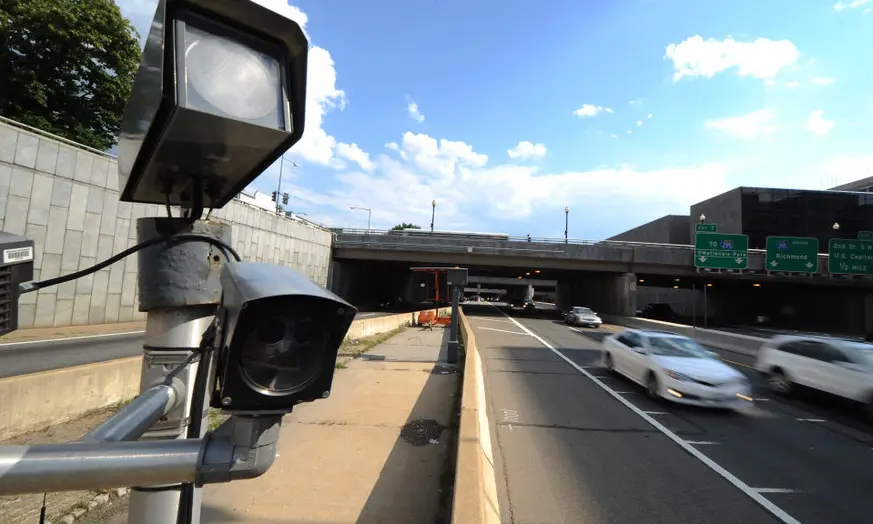 |
A speed camera location in Washington D.C. Photo: Fox5 |
A speed camera location in Washington D.C. Photo: Fox5
Since red-light cameras were first deployed in 1999, the city's use of these and other camera types has surged. Currently, 546 surveillance cameras are active in the District. The automatic safety camera program processes numerous traffic violations, including vehicles prohibited from operating in bus lanes and on truck-restricted routes.
Fines range from 100 to 500 USD. Higher fines apply to offenses such as passing a school bus with flashing lights or exceeding the speed limit by more than 25 miles per hour (40 km/h).
While efforts to restrict the use of automatic traffic cameras in Washington have occurred, none have passed into law. For instance, a 2026 budget spending bill aimed to prohibit the city government from using funds for automatic traffic enforcement but was never brought to a floor vote.
Critics argue that automatic traffic enforcement serves primarily as a revenue generator, functioning as a tax on commuters rather than a means to enhance safety. Conversely, some studies indicate that cameras do improve safety.
A recent study, for example, demonstrated that automated speed cameras improved traffic safety in New York City. The New York Metropolitan Transportation Authority (MTA) announced on 6/1 that automated camera enforcement would expand to more bus routes across New York.
While Washington authorities state that their program aims to create safer roads for all users in the District of Columbia, it also serves as a significant revenue source.
Washington collected 139,5 million USD from automatic traffic enforcement cameras in fiscal year 2023, 213,3 million USD in fiscal year 2024, and 267,3 million USD in fiscal year 2025.
Early in her tenure, Mayor Muriel Bowser launched Vision Zero, an initiative aimed at reducing road injuries and fatalities to zero. The deployment of cameras formed a part of this strategy.
My Anh




