Since the Middle East conflict erupted in late February, the Strait of Hormuz – a shipping lane transporting 20% of global oil and gas supplies – has been almost paralyzed. However, the situation recently shows signs of change.
On 10/6, US President Donald Trump announced that over 100 million barrels of crude oil from Gulf nations had been exported, thanks to a "secret mission" supporting more than 200 vessels through the Strait of Hormuz. "This success was achieved because the US is controlling the Strait of Hormuz, not Iran," he declared.
Analysts also acknowledge that an increasing amount of oil from the Gulf has passed through the strait to reach world markets. According to commodity market tracking firm Kpler, approximately 96 million barrels of non-Iranian crude oil have been exported since early May, either through the Strait of Hormuz or alternative routes in the Gulf of Oman.
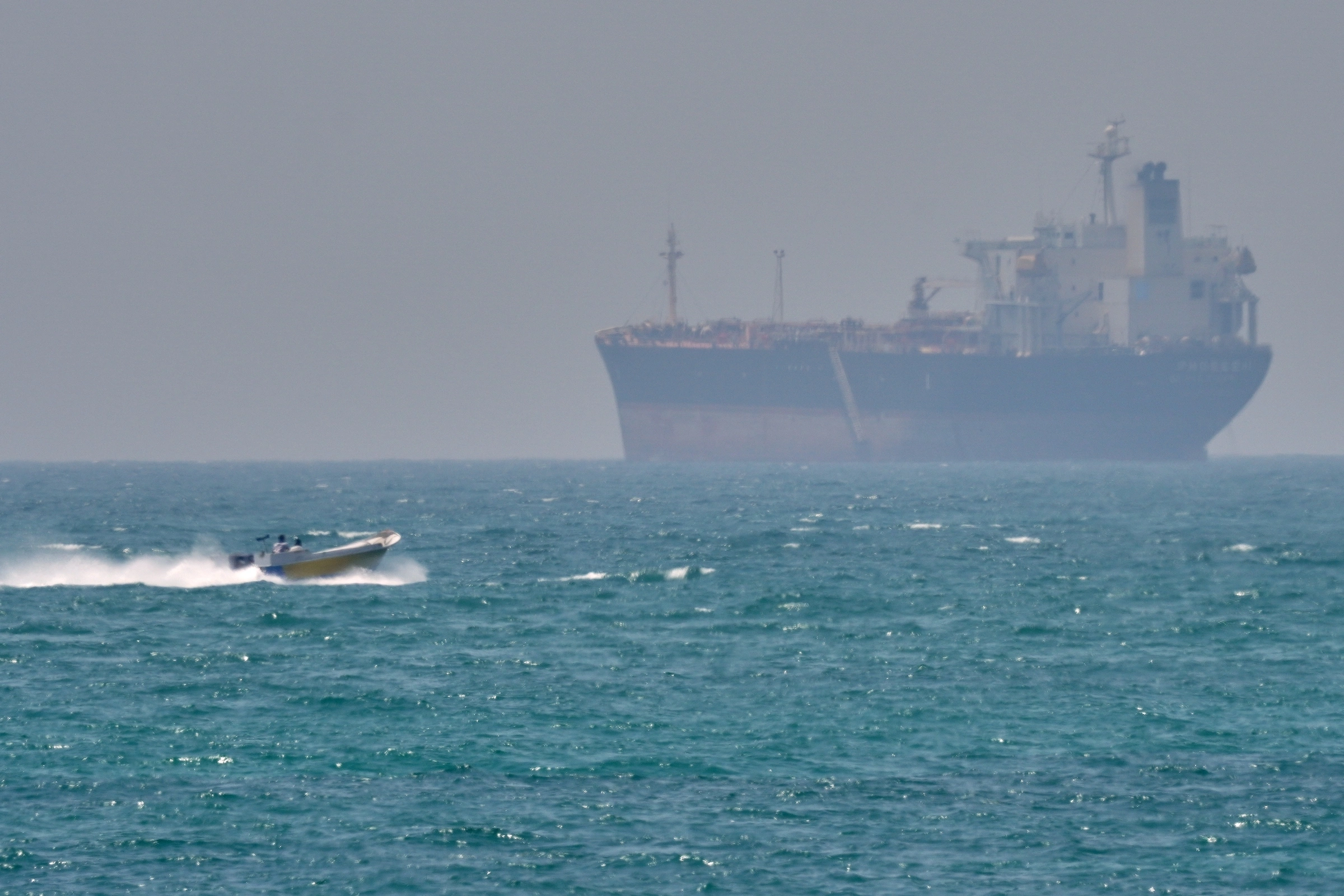 |
A boat passes by an oil tanker anchored in the Strait of Hormuz off Qeshm Island, Iran, on 18/4. *Photo: AP* |
Amena Bakr, an analyst at Kpler, stated that if shipments currently being unloaded are included, the figure could exceed 100 million barrels, which "aligns relatively with Trump's statement".
Reopening the Strait of Hormuz and restoring oil flow was a top priority for President Trump, even though he was at times hesitant in his approach. Initially, he said the Strait of Hormuz "is not America's problem" and allies should "take care of their own oil supplies".
However, he later threatened to use all available measures. In recent weeks, growing confidence in US military protection, coupled with urgent supply needs, has prompted shipping companies to accept the risks of transiting the Strait of Hormuz.
Experts suggest that vessels likely turned off their navigation and tracking systems while in transit. Concurrently, Gulf nations have transferred oil from ship to ship, with assistance from the US military, according to the vessel information company TankerTrackers.
Richard Meade, editor-in-chief of maritime data provider Lloyd's List Intelligence, stated that the US military is conducting a "limited surveillance operation," using autonomous vehicles, aircraft, and drone escort teams to support vessels transiting the southern Strait of Hormuz, near the Omani coast. He added that the US military's AH-64 Apache attack helicopter that crashed off Oman this week "was likely involved in that very operation".
Although over 100 million barrels of oil successfully transited the Strait of Hormuz, the circulating volume remains significantly lower than the approximately 15 million barrels that once passed through this route daily. This means the supply is still insufficient to calm the global energy market.
Oil prices currently remain below USD 100 per barrel, partly due to Trump's statements about potential peace agreements, and because many countries are utilizing oil reserves and reducing energy consumption.
While assisting Gulf oil tankers, the US continues to prevent Iranian oil from exiting the Strait of Hormuz. Facing export difficulties, Iran is maximizing its onshore storage facilities and dozens of vessels anchored off Kharg Island to hold oil.
Iran is also reportedly reducing production. Energy research firm Wood Mackenzie estimates the country's oil output has decreased by approximately 800,000 barrels per day since the US began imposing blockades. Meanwhile, onshore oil inventories are estimated to have reached 69 million barrels, the highest since 2020.
According to Alexandre Araman, an expert at Wood Mackenzie, declining production pressure, restricted exports, and dwindling storage capacity could prompt Tehran to seek a diplomatic solution. "For Iran, a temporary diplomatic breakthrough could also help alleviate immediate pressure," he commented.
Phien An (according to AP)