Unlike traditional training models, Future Makers 2026 focuses on interactive sessions, group discussions, and practical case studies. This approach helps participants grasp modern management thinking and translate knowledge into tangible changes in business operations. Experts from NUS Business School designed the content around core competencies such as: talent development, building succession teams, leading change, and making decisions in volatile environments. The program also emphasizes building corporate culture and applying artificial intelligence (AI) in management.
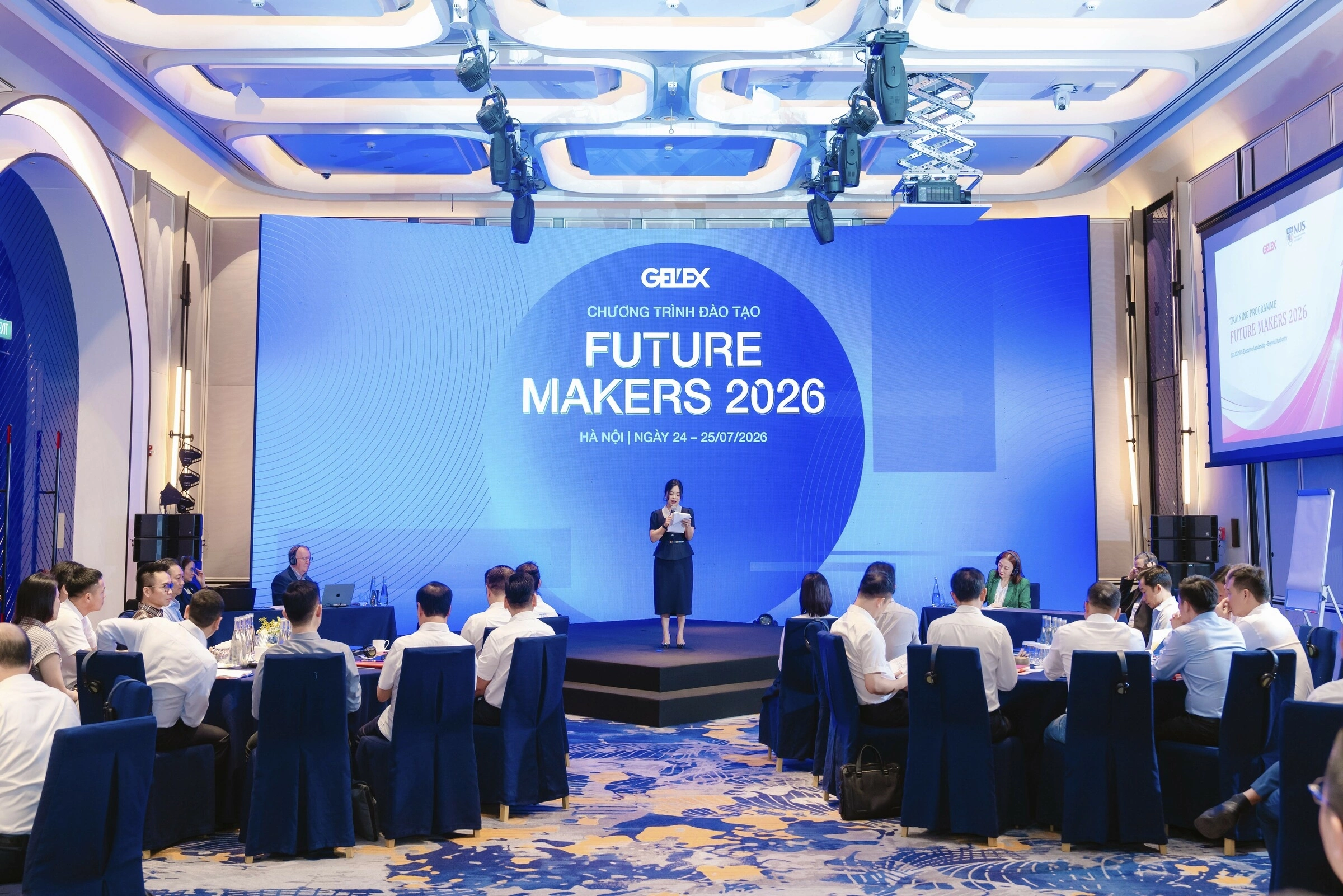 |
Opening ceremony of the Future Makers 2026 training program. *Photo: Gelex* |
NUS Business School (Singapore), a leading institution in Asia for management, directly designed the content based on Gelex's development orientation and the practical management challenges faced by the group's leadership team in realizing the Gelex 2030 Strategy.
Speaking at the opening ceremony, Nguyen Van Tuan, Chairman of the Board of Directors of Gelex, noted that the accelerating pace of market change means advantages in asset scale or capital are no longer the sole determinants of success. According to him, a company's strength largely depends on the quality of its leadership team and organizational capacity. Therefore, the group identifies human development as a strategic priority and will continue to invest to ensure its team has access to advanced management philosophies from global experts. "This is an investment in the long-term competitiveness of the entire system, rather than just for individuals," the Gelex leader emphasized.
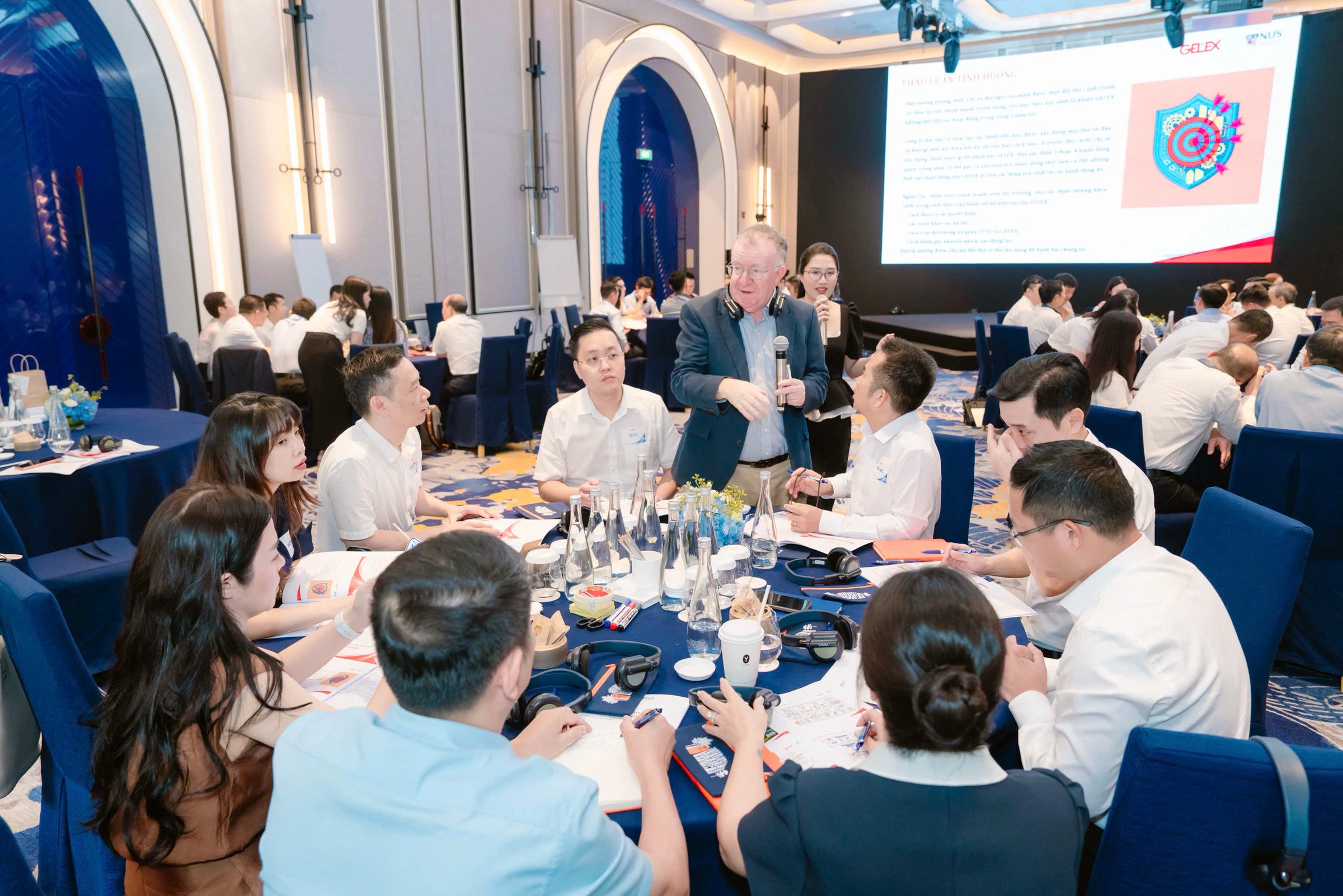 |
Professor Jonathan Briggs, lecturer at NUS Business School during the training session. *Photo: Gelex* |
Aligned with its 2030 vision, Gelex is gradually transitioning to an investment group model. This model requires stronger empowerment for subsidiaries and member units. Consequently, leadership capabilities and execution capacity at each unit will be crucial for the effective implementation of the overall strategy across the entire system.
Professor Jonathan Briggs, a lecturer at NUS Business School, praised the learning spirit and openness of the group's leadership team. He was impressed by the group's serious commitment to realizing its 2030 vision. According to the expert, major global corporations currently view leadership development as a strategic investment to enhance organizational capabilities. He believes the success of a program is not measured by learning hours or certificates, but by the tangible changes in management practices when participants return to their units.
After the course, nearly 50 senior leaders of the group received completion certificates and developed specific action commitments. Key objectives include: promoting empowerment, strengthening data-driven decision-making, fostering artificial intelligence (AI) technology application, and building a work environment that encourages critical thinking.
A Gelex representative stated that Future Makers is an important part of the company's overall human resources strategy, aiming to build a solid organizational foundation and prepare leadership resources for a new development phase. Collaboration with a prestigious international educational institution like NUS Business School demonstrates the group's determination to standardize team capabilities according to global standards.
Thanh Thu