On 30/7, Vietnam's Department of Crop Production and Plant Protection, under the Ministry of Agriculture and Environment, announced that India has added Vietnam to the list of countries permitted to export fresh durian fruit to its market. The decision took effect in mid-July.
India has not imposed special import conditions or required additional quarantine declarations for Vietnamese durian. This market opening, a result of technical exchanges between the two nations, offers access to 1.4 billion people. It is poised to help Vietnamese agricultural export businesses diversify their outlets and lessen reliance on traditional markets.
Despite this opportunity, the regulatory agency noted that India remains a new market. Initially, durian may primarily be consumed in major cities via high-end retail, restaurants, hotels, and e-commerce platforms. Therefore, businesses must thoroughly research consumer preferences, product specifications, transportation, and distribution systems to devise appropriate market entry strategies.
This opening comes as Vietnam's durian industry seeks to diversify its export destinations following a challenging period. Earlier this year, durian exports to Trung Quoc, the largest consumer market, saw a sharp decline. This was due to tighter quality controls, increased inspections for chemical residues, and stricter traceability requirements. Consequently, many shipments faced extended customs clearance times, and domestic purchase prices plummeted.
Domestically, durian supply continues to rise as more cultivation areas enter their harvesting stage. Data from the Ministry of Agriculture and Environment shows that in the first half of this year, national durian output reached 603,300 tons. This marks a 12.7% increase compared to the same period in 2025, positioning durian as the highest-performing among key fruit crops.
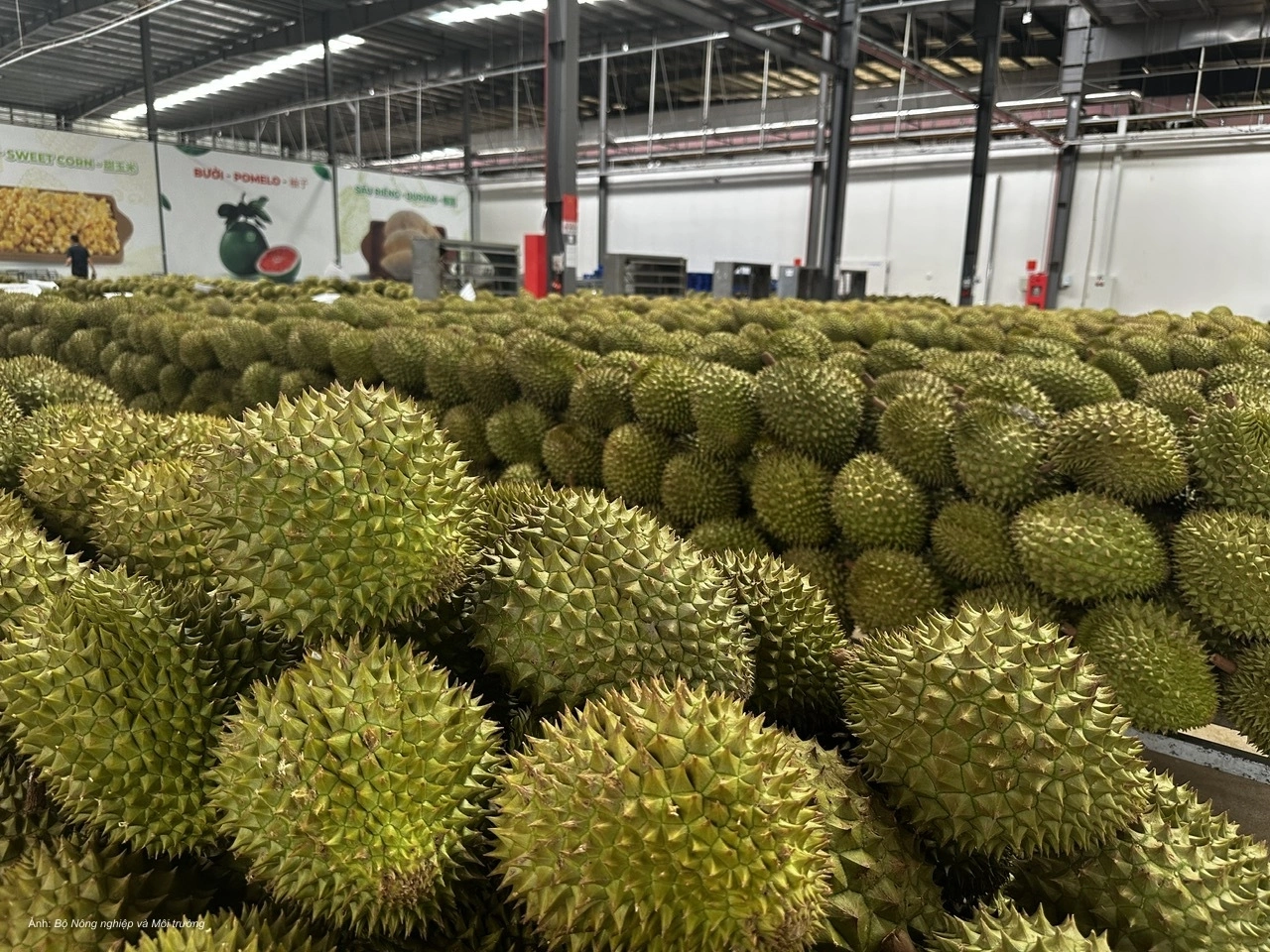 |
Fresh durian fruit being purchased by a factory. *Photo: MAE* |
Gia Chinh