On 9/7, the Asian Development Bank (ADB) updated its economic growth forecast for Asia-Pacific, lowering expectations for the region and most subregions.
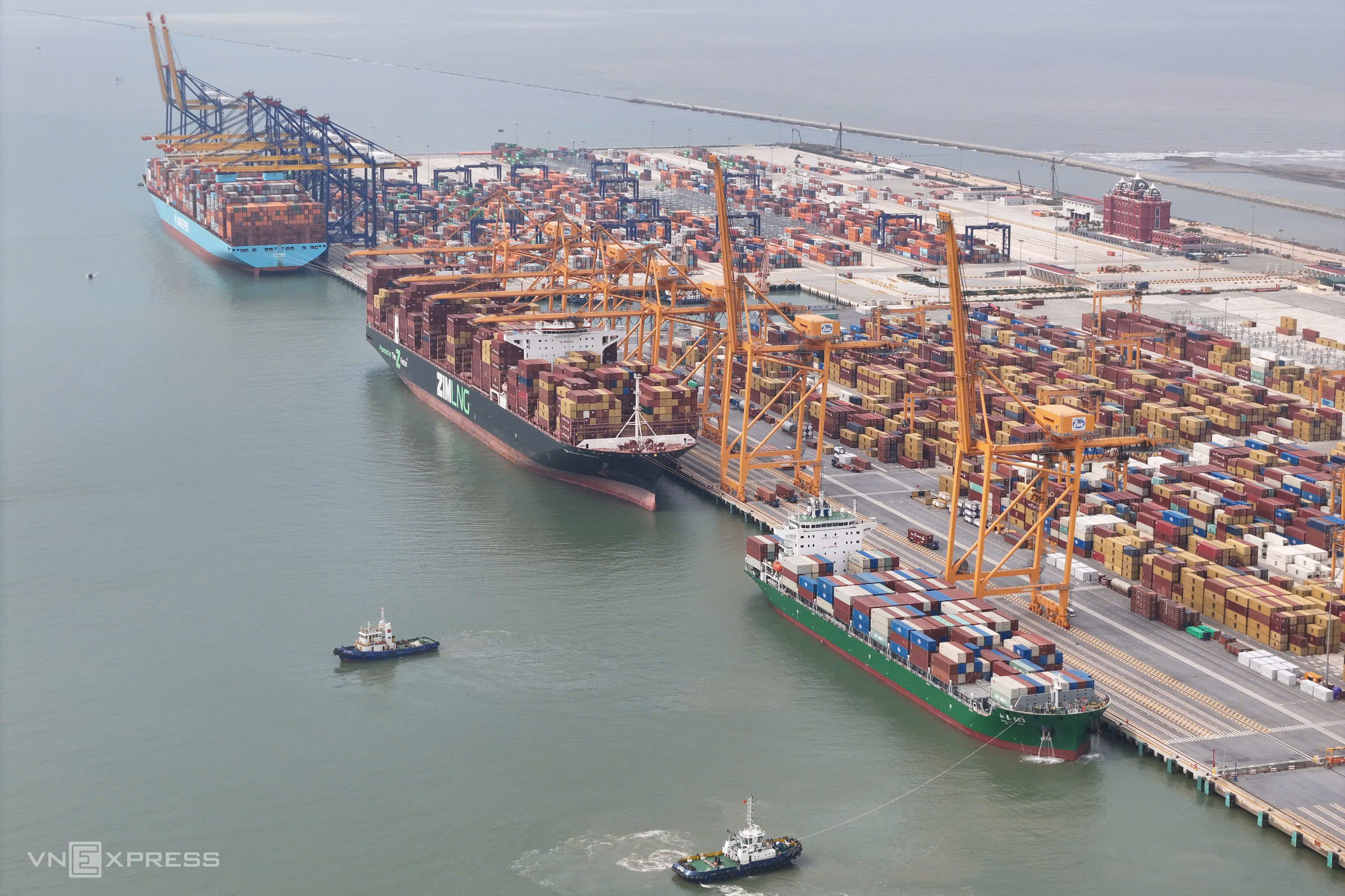 |
Lach Huyen deep-water port cluster, Hai Phong city, 23/6. Photo: Le Tan |
The Middle East conflict has extended into its 5th month, exceeding the positive scenario ADB outlined in late March. Recently, US President Donald Trump announced that the ceasefire with Iran had concluded, expressing a desire to "resolve the issue definitively" rather than pursue diplomatic efforts with the country.
Due to the persistent conflict, ADB lowered its growth forecast for Southeast Asia to 4,5%, a 0,1% reduction from its report three months prior. Concurrently, regional inflation is projected to surge to 3,8%, an increase of 0,7%.
Experts from ADB state that prolonged energy disruption from the Middle East conflict is having a more severe impact on the regional economy than anticipated. This impact spreads from energy to fertilizers, other commodities, and supply chains, prolonging inflationary pressure.
Additionally, high fertilizer prices are increasing input costs for the agricultural sector. The strong El Nino phenomenon worsens food security issues, which are already indirectly affected after the Iran war.
Meanwhile, the US, a major buyer for the region, also saw its 2026 growth momentum reduced from 2,3% to 2,1%, reflecting decreased demand due to high inflation and tightened consumer spending. This growth rate will continue to decline to 2% next year, amid high geopolitical instability. New tariff policies from the US are also a destabilizing factor for the region's exports.
Within Southeast Asia, the Philippines and Cambodia experienced the largest reductions in growth forecasts. The Philippines' growth is expected to be 3,8%, and Cambodia's 4,1%, reductions of 0,6% and 0,5% respectively compared to previous forecasts. Thailand maintained its modest growth rate of 1,8%. Brunei is the sole case where growth was raised from 1,6% to 1,8%, benefiting from rising oil prices.
According to ADB, Vietnam continues to be the fastest-growing economy in the region, with its GDP growth forecast maintained at 7,2% for 2026 and 7% for the following year.
For developing Asia and the Pacific, the growth forecast for 2026 is 4,9%, a 0,6% reduction compared to 2025. While China maintained its economy, India's GDP growth is projected to decrease to 6,6% (a 0,3% reduction) in 2026, due to increased energy costs weakening domestic demand.
ADB warns of the risk of escalating conflict and prolonged geopolitical instability. These factors could continue to tighten energy markets, increase risk premiums, and exacerbate inflationary pressures.