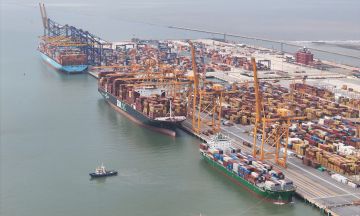
The Vietnam Administration of Seas and Islands (VASI), under the Ministry of Agriculture and Environment, has proposed adding superior specific preferential and support mechanisms to the revised Law on Marine and Island Resources and Environment, aiming to promote sustainable marine economic development.
 |
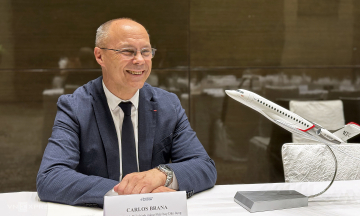
Nguyen Quoc Toan, director general of Vietnam Administration of Seas and Islands, at the event. *Photo: Thuy Truong*
At a policy development workshop on 9/7, Nguyen Thanh Tung, deputy director general of VASI, stated that the proposed support mechanisms include tax incentives, along with policies on infrastructure, procedures, green finance, and risk sharing. Projects eligible for incentives must apply green, advanced technology, protect the marine environment, or have a widespread impact.
Accordingly, three groups of activities are proposed to benefit from special mechanisms: green projects (offshore wind power, high-tech marine aquaculture, logistics); new model projects (sea encroachment urban areas, business and service zones on the sea); and projects supporting marine economic development.
Current policies offer incentives for businesses, but these are primarily designed for land-based projects. In contrast, marine investment involves high risks, large costs, and long capital recovery periods, making it especially vulnerable to natural disasters and climate change.
Therefore, marine projects are proposed to receive incentives equivalent to those for specially incentivized industries or projects in areas with extremely difficult socio-economic conditions. The draft specifies several preferential financial policies such as: exemption or reduction of corporate income tax, sea usage fees, and access to green finance.
Administrative procedures for marine projects are also streamlined, such as: allocating sea areas without auction, and approving investment policies concurrently with investor approval. The proposed sea allocation period is 70 years, 20 years longer than for incentivized land-based projects.
As a developer of a sea encroachment urban project in Da Nang, a Sungroup representative argued that sea encroachment activities expand land area and should therefore receive incentives. They requested prioritized access to raw materials, including construction sand.
Vulnerability to natural disasters is the greatest risk for businesses operating at sea. After seven years of supporting marine transport operations, Bui Khac Binh, chairman of the Members' Council of Nghi Son Technical Services Company Limited, estimated they could only operate for 7-7,5 months per year. For example, in 2025, their operations faced difficulties when Vietnam experienced 15 typhoons, 6 tropical depressions, and 8 monsoon periods.
"After seven years of operation, we incurred a loss of 18 billion VND", Binh stated. Meanwhile, sea area usage costs are higher than land. He proposed applying financial support policies and allocating sea areas equivalent to land allocation.
Dau Anh Tuan, deputy secretary general of the Vietnam Chamber of Commerce and Industry (VCCI), noted that many domestic and foreign investors are interested in high-tech marine aquaculture and sea encroachment infrastructure, but are concerned about legal overlaps and stability. The business community expects incentives to be truly superior and predictable.
"An attractive incentive policy that depends on a discretionary approval mechanism and navigating numerous bureaucratic hurdles will reduce businesses' investment motivation," Tuan stated. He added that incentives must be accompanied by streamlined procedures and effective inter-agency coordination mechanisms, while also establishing property rights over sea areas.
Businesses also requested the issuance of "green books", which are sea usage rights certificates, similar to "red books" for land and housing. This "green book" would establish property rights, allowing transfer and mortgage for capital loans.
Vietnam has 21 out of 34 provinces and cities with coastlines. Designing specific preferential policies will contribute to boosting local economies, moving towards a double-digit growth target. Nguyen Quoc Toan, director general of VASI, stated that this draft law will be submitted to the National Assembly in October.
Thuy Truong