On 8/7, US President Donald Trump announced he had directed Treasury Secretary Scott Bessent to cut off all trade relations with Spain. "We no longer want to conduct trade with Spain," Trump stated upon arriving at the NATO summit in Ankara, Turkey.
This statement came amidst intense disputes between Washington and Madrid over defense spending and Spain's lack of support for the US in its conflict with Iran. According to a US government official speaking to Reuters, the Treasury Department, Commerce Department, and the Office of the United States Trade Representative (USTR) will collaborate to present Trump with a "list of Spanish products expected to be sanctioned in the coming days." This information suggests that the trade ban might be partial rather than comprehensive.
In February, the US Supreme Court ruled that Trump could not use the International Emergency Economic Powers Act (IEEPA) to impose import tariffs. However, trade lawyers indicate he could still employ this act to implement trade embargoes or economic sanctions against a nation.
To utilize the IEEPA, Trump must declare a national emergency due to an "unusual or extraordinary threat" to national security, foreign policy, or the economy. The US has previously used this act to restrict trade with Iran, Russia, and North Korea. It has also been used to block US dollar transactions of thousands of companies, individuals, and organizations deemed involved in terrorism or threatening national security.
Nevertheless, Peter Shane, a law professor at New York University, finds it "difficult to imagine" a NATO member state failing to meet defense spending targets in peacetime would constitute an emergency for the US.
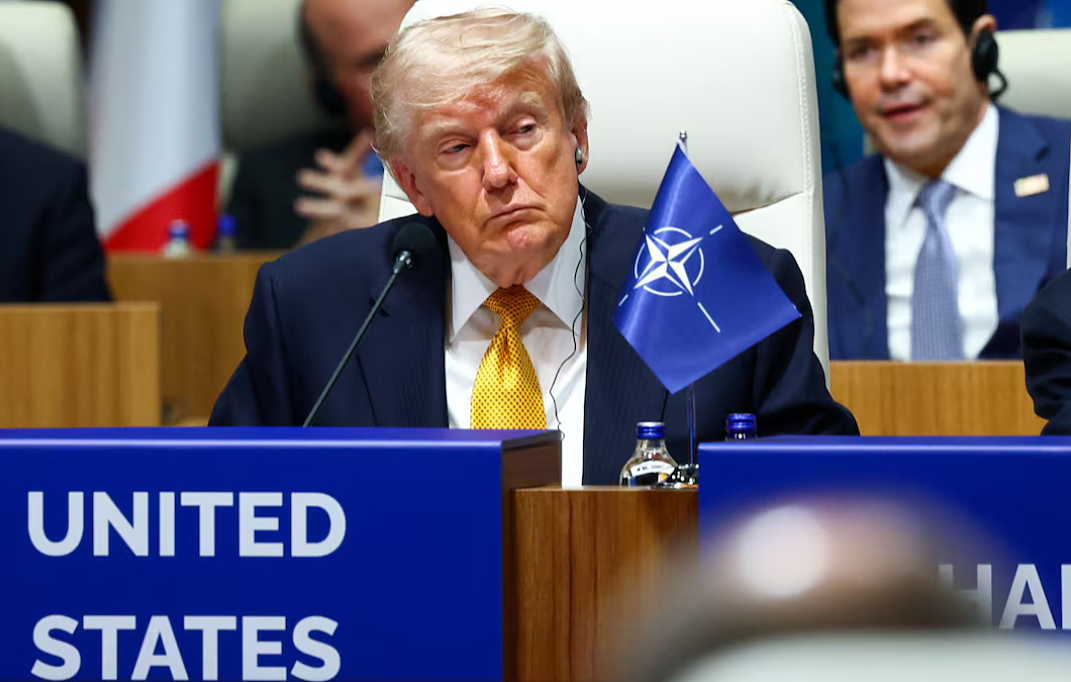 |
US President Donald Trump at the NATO summit on 8/7. *Photo: Reuters* |
However, the Supreme Court's February ruling did not specify the nature of the emergency Trump could invoke to impose tariffs. This means he could still declare a national emergency, according to Mayur Patel, former Republican trade counsel for the US Senate Finance Committee.
"The IEEPA would allow Trump to impose sanctions," Patel stated, even if the decision could later be challenged in court.
According to Patel, the IEEPA also permits Trump to impose selective sanctions by exempting essential goods, similar to how he and his predecessor Joe Biden handled Russia. In Moscow's case, exempted essential products included enriched uranium, fertilizers, and palladium.
Trump previously exempted aircraft components from import tariffs. Therefore, jet engine turbine components from Spain, manufactured by ITP Aero and used by General Electric or Pratt & Whitney, could be exempted.
Additionally, Trump possesses other tools for imposing tariffs or trade retaliation, including Section 301 of the Trade Act of 1974. This section targets unfair trade practices and is currently proposed by the US administration to levy taxes on goods linked to forced labor from 60 partners.
He could also use Section 232 of the Trade Expansion Act of 1962. This Cold War-era act was previously used by him to protect the automobile, steel, aluminum, and other sectors deemed vital to national security.
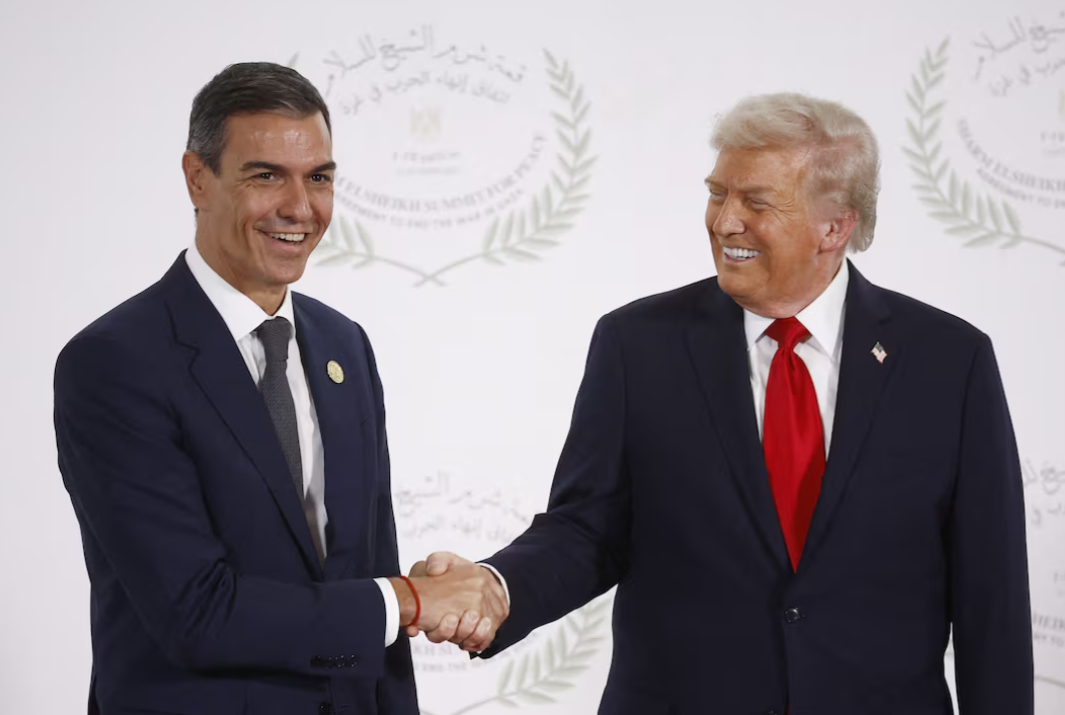 |
US President Donald Trump and Spanish Prime Minister Pedro Sanchez in Egypt, 10/2025. *Photo: Reuters* |
A complicating factor for any trade measures against Spain is that the European Union (EU) sets common trade policy for its member states. Despite this, the US has previously threatened to impose separate tariffs on EU countries related to their digital services tax.
The US Commerce Department could also target certain imports from Spain through anti-dumping and anti-subsidy investigations. During his first term, at the request of the California olive industry, the Trump administration imposed 30% anti-dumping duties on Spanish black olives under the Tariff Act of 1930. The US Commerce Department then launched a separate investigation, concluding these products received unfair subsidies.
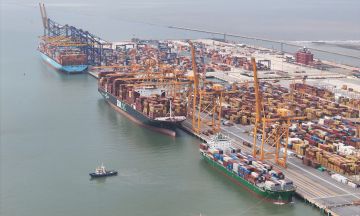
According to data from the US Census Bureau, total goods trade turnover between the US and Spain reached over USD 47,9 billion last year. Including services and tourism, this figure rises to USD 74,5 billion, as per the Bureau of Economic Analysis under the US Commerce Department. These figures make Madrid Washington's 23rd largest trade partner.
The US sells more goods to Spain than it buys. Last year, it exported USD 26,6 billion in goods to Spain while importing only USD 21,35 billion, resulting in a trade surplus of USD 5,25 billion.
The most imported US goods include pharmaceuticals, transformers and power converters, petroleum products, ceramic tiles, and olive oil. Conversely, the US exports pharmaceuticals, crude oil, civilian aircraft, and corn to Spain.
Beyond trade, sanctions could also disrupt bilateral investment. Spanish businesses have invested EUR 97,2 billion (USD 111 billion) in the US, according to Eurostat data. The US is currently Spain's largest global investment destination.
Conversely, the US is Spain's largest foreign investor, with over EUR 116 billion (USD 132,4 billion) in manufacturing investment, creating jobs for about 200,000 people.
It remains unclear how Trump would restrict Spanish citizens from traveling to the US. He has also not indicated whether US citizens would be banned from traveling to Spain. Spending by this group is considered a service import for the US.
According to the Spanish statistical agency, about 4,45 million Americans visited Spain and stayed for more than one day last year, an increase of 4,3% compared to 2024. Data from the Bank of Spain shows Americans were the fourth largest source of tourism revenue for Spain in 2024, contributing EUR 6,15 billion. The agency noted that, compared to other visitor groups, Americans typically stay longer and spend more per trip.
This is not the first time Trump has threatened trade sanctions against Spain. In 10/2025, he mentioned imposing import tariffs on the country for refusing to commit to raising defense spending to 5% of GDP at a previous NATO summit. By March this year, he instructed Bessent and Trade Representative Jamieson Greer to begin an investigation to embargo all goods from Spain. However, no such investigation has been announced to date.
By Ha Thu (Reuters, AFP)