AP reported on 16/2 that airfares from Singapore's Changi International Airport are set to rise due to the island nation's new sustainable aviation fuel (SAF) tax policy. This tax will apply to tickets sold after 1/4, with passengers incurring a surcharge based on travel distance and class.
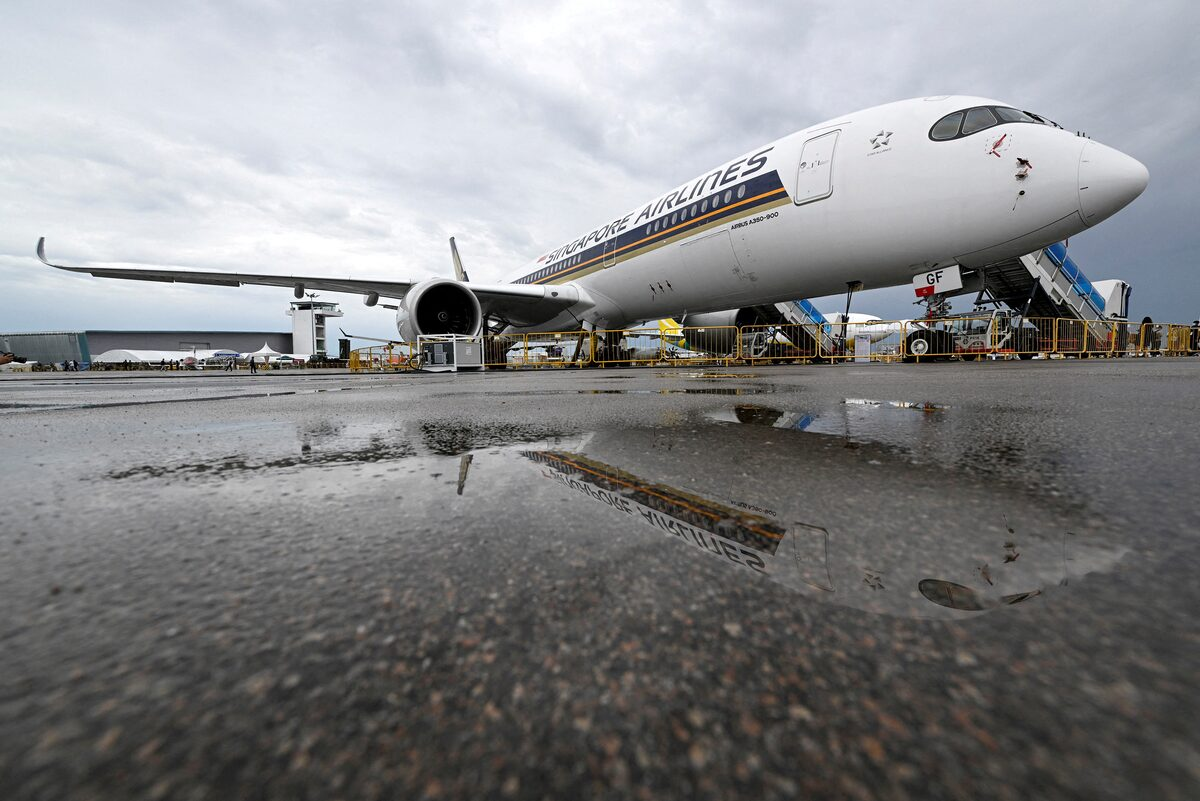 |
A Singapore Airlines aircraft at the Singapore Airshow, 16/2/2022. Photo: Reuters |
The lowest surcharge, 1 Singapore dollar (approximately 75 US cents), will apply to economy class flights to Southeast Asian countries. Conversely, business class tickets to the Americas will face the highest increase, 41,6 Singapore dollars (around 32 USD). For cargo, the tax rate is determined by distance and weight. To ensure transparency, this tax will be clearly shown on air tickets and shipping contracts.
Daniel Ng, Director of Sustainability at the Civil Aviation Authority of Singapore, stated that this tax allows "all aviation users to contribute to sustainable development, at a cost that aviation hubs can manage". SAF, produced from used cooking oil or agricultural waste, is promoted by the global aviation industry to reduce growing emissions.
The aviation industry contributes about 2,5% of annual global carbon emissions and is projected to grow faster than any other transport sector, according to the International Energy Agency (IEA). In response, the International Civil Aviation Organization (ICAO) has set a net zero emissions target by 2050. SAF use can cut around 65% of the industry's emissions, prompting some airlines and countries to mandate its use.
Southeast Asia, with its abundant agricultural and forestry by-product resources, is considered "a gold mine that can scale up production" for sustainable fuels, according to Tat Chuan Goh, a representative of Aether Fuels, a sustainable fuel development company based in Chicago. Singapore already hosts the region's largest SAF production plant and is commencing construction of a new technology facility this year, with supply agreements for JetBlue and Singapore Airlines. Thailand inaugurated an SAF production plant in Bangkok in 2025.
Malaysia and Vietnam achieved domestic SAF production milestones last year, supplying local airlines like VietJet Air and Malaysia Airlines. Indonesia plans to boost its domestic SAF output, while the Philippines is working to streamline administrative procedures to attract fuel developers. Aung Soe Moe, an air transport representative for the Association of Southeast Asian Nations (ASEAN), highlighted the region's potential: "If managed responsibly, we can help the SAF production industry become competitive and scalable". The region is estimated to produce 8,5 million barrels of SAF daily by 2050.
Despite these efforts, some experts remain skeptical about SAF production capacity meeting industry demand. This skepticism partly stems from the administration of US President Donald Trump, which reversed many clean energy initiatives. Global SAF production has grown steadily, with US output nearly doubling and reaching record levels last year. However, Trump's reversal of climate policies reduced SAF production, which had been on a strong upward trend under former President Joe Biden. In 2025, SAF production nearly doubled the previous year, but this growth is projected to slow in 2026, reaching an estimated 2,4 million tons, according to the International Air Transport Association (IATA).
Bao Bao (according to AP)