


When the Middle East conflict erupted in late February, tightening global energy supplies, many Asian governments immediately responded by conserving electricity, prioritizing gas for households over industrial production, and utilizing national reserves.
However, these measures were based on the assumption that the conflict would be brief and energy flows would quickly resume. The war now shows no clear signs of ending, the Hormuz Strait remains closed, and the fuel crisis is spreading.
According to experts, simultaneous increases in airfares, transport costs, and utility bills threaten economic growth. The United Nations Development Programme (UNDP) warns that the conflict could cause economic damage of up to 299 billion USD for Asia-Pacific, with approximately 8,8 million people at risk of falling into poverty.
"Nations with the fewest resources to respond or consumers with the least ability to pay will be the first to feel the impact", said Samantha Gross, an expert at the Brookings Institute (US).
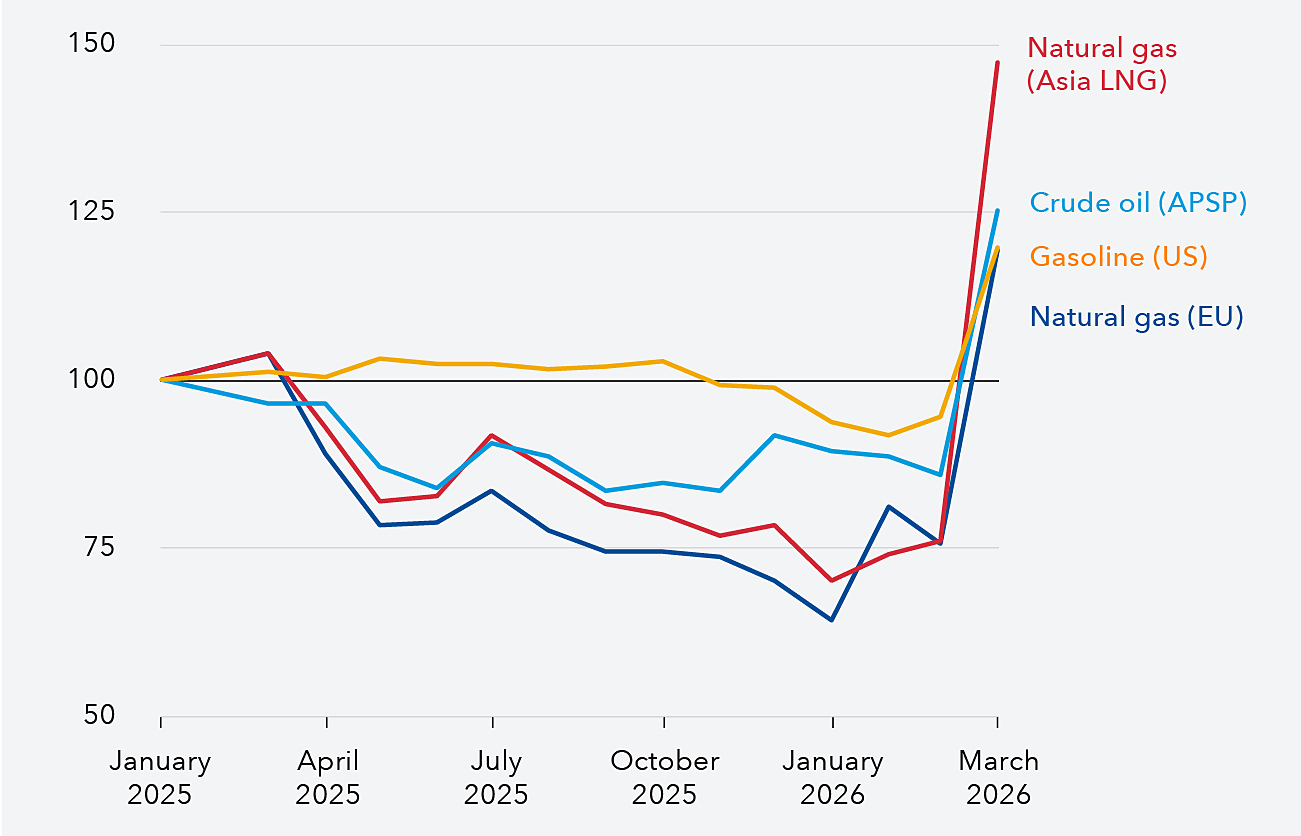 |
Fluctuations in gas prices in Asia (red), crude oil (light blue), gasoline in the US (orange), and European gas (dark blue), using January as the baseline (100). Source: IMF
Many Asian governments had constructed this year's budgets assuming an average oil price of around 70 USD per barrel and maintaining subsidies to stabilize domestic markets. However, the conflict has pushed Brent crude prices to approximately 120 USD at times.
According to independent energy analyst Ahmad Rafdi Endut in Kuala Lumpur, governments face a difficult choice: continue subsidies, leading to budget deficits, or transfer the cost burden to citizens, risking public backlash.
In India, prioritizing gas supply for approximately 330 million households has led to a decline in fertilizer input for factories. Sharply rising fertilizer prices, coupled with the risk of low rainfall due to El Nino, threaten the rice cultivation sector. To date, this South Asian nation continues to maintain subsidies to protect its 1,4 billion people from fuel price shocks.
However, on 10/5, Prime Minister Narendra Modi urged citizens to prioritize domestic goods, limit foreign travel to save foreign currency, work remotely, and use public transport to reduce fuel consumption. He also asked farmers to reduce their fertilizer use by half.
Neighboring countries like Pakistan and Bangladesh, facing foreign currency shortages, must purchase oil and gas at spot prices. These prices are often volatile and higher than long-term contracts, increasing import costs and putting pressure on already limited foreign exchange reserves.
According to Endut, governments can maintain subsidies by cutting welfare programs or increasing borrowing. Conversely, reducing subsidies could lead to negative reactions from voters. He warned, "When subsidies run out and inflation begins to accelerate, countries could face a 'fiscal bomb'".
In Southeast Asia, the Philippines adopted a four-day work week to save fuel and implemented subsidies for low-income groups. However, Fitch Ratings reported that most consumers still bear higher energy costs, slowing business activity in major cities like Manila.
Last month, the International Monetary Fund (IMF) lowered its growth outlook for the Philippines this year to 4,1%, from a 5,6% forecast in January. This revision was attributed to the energy shock combined with a negative base effect from the 2025 economy.
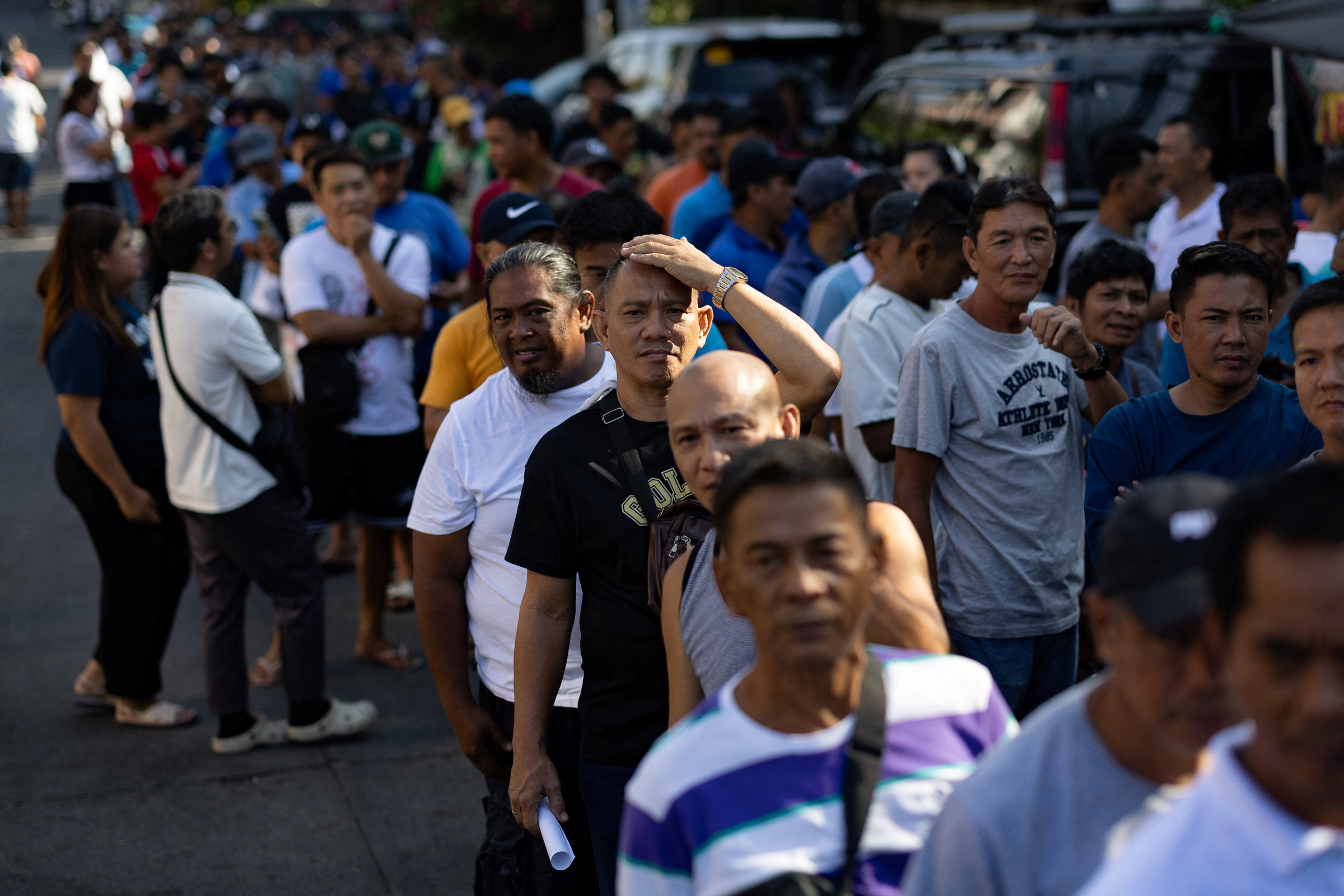 |
Public utility Jeepney drivers queue to receive fuel subsidies in Manila, Philippines on 15/4. Photo: Reuters
Thailand decided to remove its diesel price cap less than a month into the conflict, as its subsidy budget was depleted. To balance its finances, the government is cutting other expenditures to offset increasing energy costs.
Albert Park, Chief Economist and Director General of the Economic Research and Development Department (ERDI) at the Asian Development Bank (ADB), noted that the Middle East situation is slowing Southeast Asia's growth. He stated, "The longer the conflict lasts, the greater the negative impact".
The IMF's updated economic forecast in April slightly adjusted the 2026 GDP growth projection for the ASEAN-5 group (Indonesia, Malaysia, Philippines, Singapore, Thailand), from 4,2% to 4,1%.
Maria Monica Wihardjam, an expert at the ISEAS-Yusof Ishak Institute (Singapore), said the energy shock will gradually reshape Southeast Asian economies. This includes changes in the labor market and how countries prepare for future energy crises. Across Asia, she highlighted that the crisis exposes the fragility of the middle class, with many at risk of falling back into poverty.
According to the IMF, this year's growth for developed and emerging economies in Asia will reach 4,9%, a 0,1 percentage point decrease from the pre-conflict forecast. The IMF's April report stated, "In some South Asian and Southeast Asian economies, disruptions in the Middle East are projected to reduce tourism and remittance revenues, thereby weakening domestic demand".
Even if the conflict ends, Asia will not quickly escape pressure. Samantha Gross noted that global oil and gas supply chains cannot recover immediately. Repairing damaged infrastructure, restarting plants, and transporting fuel from the Middle East could take weeks or months.
In the long term, countries in the region have begun discussing and implementing solutions, such as diversifying fuel sources, developing nuclear power, and renewable energy like solar power.
Phien An (according to AP, IMF)


