Vietnam is entering a pivotal phase of a new development cycle, with the Government targeting 10% annual GDP growth for the 2026-2030 period. To achieve this goal, infrastructure, energy, and institutional reform are identified as strategic drivers to expand economic development opportunities.
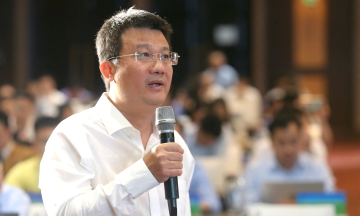
Associate Professor Doctor Nguyen Thuong Lang, Senior Lecturer at the Institute of International Trade and Economics, National Economics University, stated that developing modern, synchronized infrastructure is one of the three strategic breakthroughs outlined in the 14th Party Congress Resolution, aiming to create a foundation for rapid and sustainable growth. Within this, aviation infrastructure is positioned as a key sector, not only serving transportation but also establishing new economic development poles.
"Today's airports are more than just runways and passenger transport operations; they are economic development ecosystems. Around airports, logistics centers, commercial hubs, financial districts, educational institutions, medical facilities, and entertainment complexes can form, creating a new generation of economic centers that drive regional growth," Lang said.
This aviation economic model has been successfully adopted by many economies, notably Singapore's Changi Airport and Hong Kong's Chek Lap Kok Airport. These complexes generate revenue not only from aviation activities but also from effectively leveraging commercial services, logistics, tourism, and real estate.
 |
Changi Airport (Singapore) has been recognized as the world's best airport. *Photo: Aerotime* |
In Vietnam, the aviation economic model also shows significant development potential due to the market's high growth rate and the country's strategic position in the regional supply chain.
According to the Civil Aviation Authority of Vietnam, despite impacts from the global economy and geopolitical factors, Vietnam's aviation industry experienced strong growth in the first four months of the year, serving over 46 million passengers, an increase of nearly 18% compared to the same period last year. Cargo volume reached approximately 616,000 tons, up 17%.
The aviation sector currently creates about 100,000 direct jobs and contributes USD 1.9 billion to the national GDP. Including indirect impacts, the industry's total contribution is estimated at USD 17.5 billion, equivalent to 4.1% of GDP, and generates approximately 2.5 million jobs.
Air cargo volume in Vietnam increased from about 1.3 million tons in 2023 to over 1.5 million tons in 2024. Vietnam currently ranks 20th globally in air transport market size and 22nd in international trade related to air transport.
 |
The aviation industry contributes a significant proportion to the national GDP. *Photo: MAI* |
However, to establish an effective aviation economic hub, the synchronization of planning, policy, and connecting infrastructure is considered a prerequisite.
On 8/5, Permanent Deputy Prime Minister Pham Gia Tuc chaired a meeting on adjusting the National Airport System Master Plan for the 2021-2030 period, with a vision to 2050. At the meeting, the government leader emphasized the requirement to develop a strategic, synchronized, and long-term airport system master plan, while also strongly developing air cargo transport linked with tourism, services, and connecting infrastructure.
According to experts, this direction opens opportunities for forming new-generation aviation economic centers, where airports serve as the core connecting logistics, commerce, services, and urban areas.
In this context, Gia Binh International Airport is being developed by Masterise Group with the aim of becoming a "new generation aviation economic hub 2.0" – an integrated model combining aviation, logistics, commerce, and urban development to serve the production-export chain and attract high-quality human resources for long-term work.
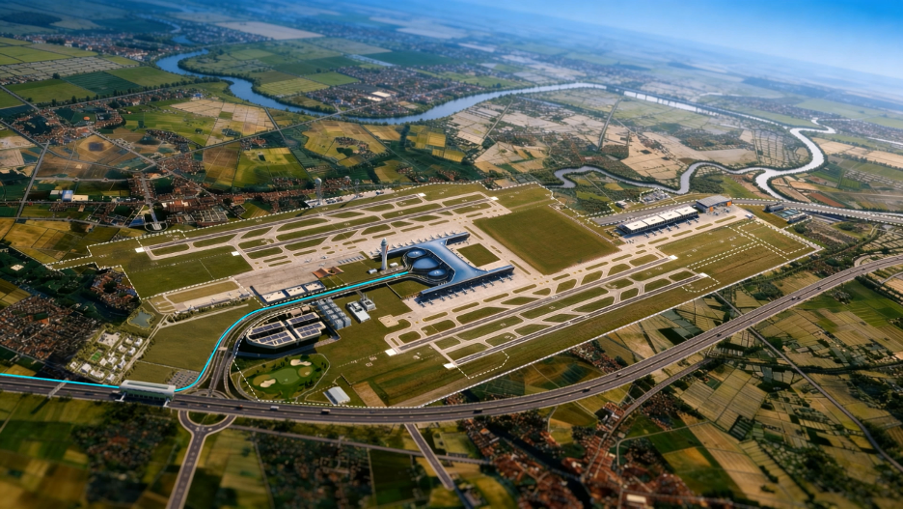 |
Perspective of Gia Binh International Airport. *Photo: MAI* |
The central core of this model is an international airport combined with logistics, cargo transport, and a system of commercial facilities, hotels, and offices to support transit activities.
Surrounding this core is an economic ecosystem operating as a free trade zone, concentrating commercial centers, financial hubs, R&D facilities, offices for high-tech enterprises, along with educational, medical, and innovation amenities. Integrating manufacturing and service activities around the airport aims to help businesses optimize logistics costs and enhance supply chain connectivity.
The outermost layer is planned for modern urban development, featuring residential areas, green spaces, and cultural, tourism, and entertainment services for the community of experts, engineers, and high-quality workers.
The project is planned to connect with several strategic infrastructure axes, such as the Ha Noi - Gia Binh expressway, Ring Road 4 Capital Region, and the Gia Binh - Hai Phong expressway connecting Lach Huyen deep-water port. Additionally, future strategic railway lines like Ha Noi - Quang Ninh and Ha Noi - Lao Cai - Hai Phong are expected to create a multimodal transport network integrating aviation, road, rail, and seaports.
According to experts, this connectivity advantage positions Gia Binh to become a new hub for cargo transit, logistics, and services in the northern region, while also creating development potential for related economic sectors such as cross-border e-commerce, high-tech industry, logistics, and aviation services.
As Vietnam aims for double-digit growth, projects like Gia Binh International Airport are expected to expand new development opportunities, gradually realizing the aviation economic model – where airports are not just transport gateways but also become drivers of economic growth.
Minh Ngoc