The program is built on three pillars: knowledge, skills, and networking. It aims to equip successors with management foundations, leadership thinking, and opportunities to connect with local and international entrepreneurs and experts before they assume important future roles.
A key activity of the program is the workshop "Founders and Successors: Parallel Paths or Seamless Transition on the Journey to Global Reach". During this event, experts discussed the process of intergenerational transfer in family businesses and the new demands arising from global integration and competition.
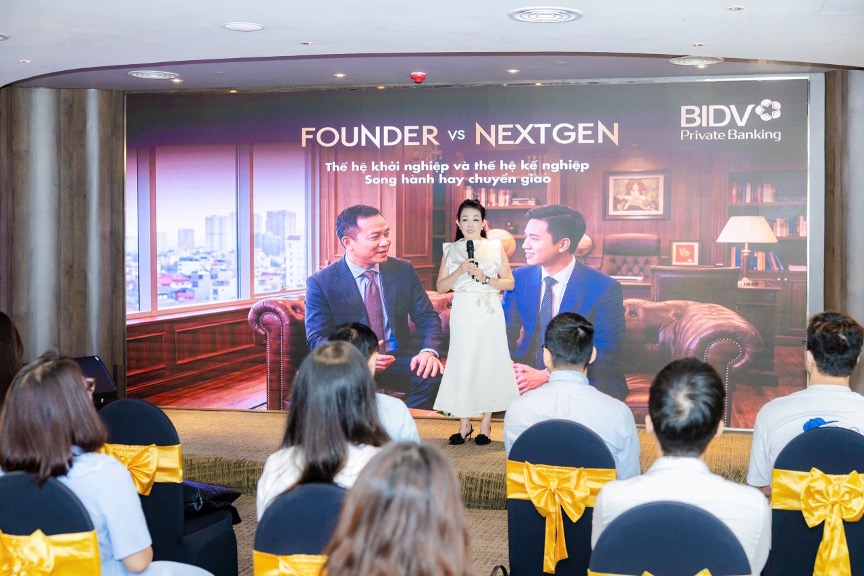 |
Guests attending the workshop "Founders and Successors: Parallel Paths or Seamless Transition on the Journey to Global Reach". *Photo: BIDV* |
According to speakers, the founder generation established businesses with their experience, resilience, and market adaptability. Beyond tangible assets, they also leave behind significant values such as brand reputation, corporate culture, relationship networks, and accumulated management experience.
In contrast, the successor generation is growing up amidst significant business and societal changes. Early exposure to international education and work environments, digital technology, data, and modern management thinking provides advantages that drive innovation, digital transformation, and expand business competitiveness in the global market.
Drawing from real-world examples, experts suggest that sustainable business development does not depend on choosing between parallel paths or a complete handover. Instead, it lies in the ability to build an appropriate succession roadmap. This involves effectively transferring the experience of the preceding generation while creating space for the next generation to develop their capabilities and generate new growth momentum.
According to observations at the workshop, the significant challenge for many family businesses today is not merely transferring operational control. It lies in the transition from an individual-based management model to a system-based one, from local advantages to global competitiveness, and from the success of one generation to a sustainable development foundation for many generations to come.
In this context, the roles of the founding and successor generations must complement each other. One preserves the established core values, while the other brings innovative thinking and adaptability to market changes.
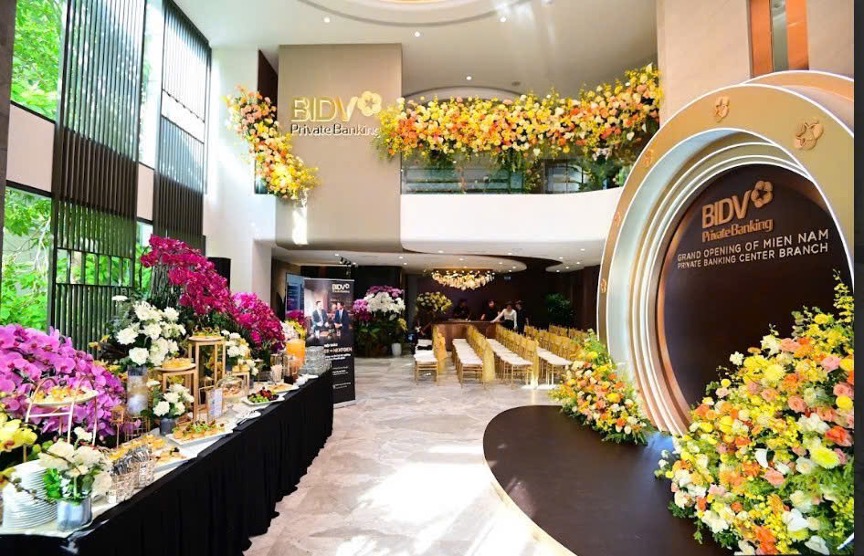 |
Interior of BIDV's Southern High-Net-Worth Individual Customer Center branch. *Photo: BIDV* |
Through the Next-gen Future Leader program, BIDV Private Banking continues to expand its role from a financial solutions provider to a partner supporting clients in long-term decisions. Beyond asset management, investment, and financial planning, the bank is gradually completing a value ecosystem for clients and their families, encompassing everything from wealth succession to future generation capability development.
A BIDV representative stated that as more Vietnamese businesses aim to expand into international markets, preparing successor teams is essential to create a sustainable foundation for businesses for decades to come.
Minh Ngoc