On 19/6, the US dollar's appreciation pushed the yen to a near 40-year low, trading around 161,455 yen per dollar.
The yen has received little support, even after the Japanese Ministry of Finance intervened by selling US dollars earlier this year and the Bank of Japan (BOJ) raised interest rates to a 30-year high on 16/6.
Investor confidence is waning due to concerns over Japanese Prime Minister Sanae Takaichi's spending plans, fueling speculation about further interventions. Analysts at DBS noted, "Speculative short positions on the yen have not decreased, despite the BOJ's rate hike this week."
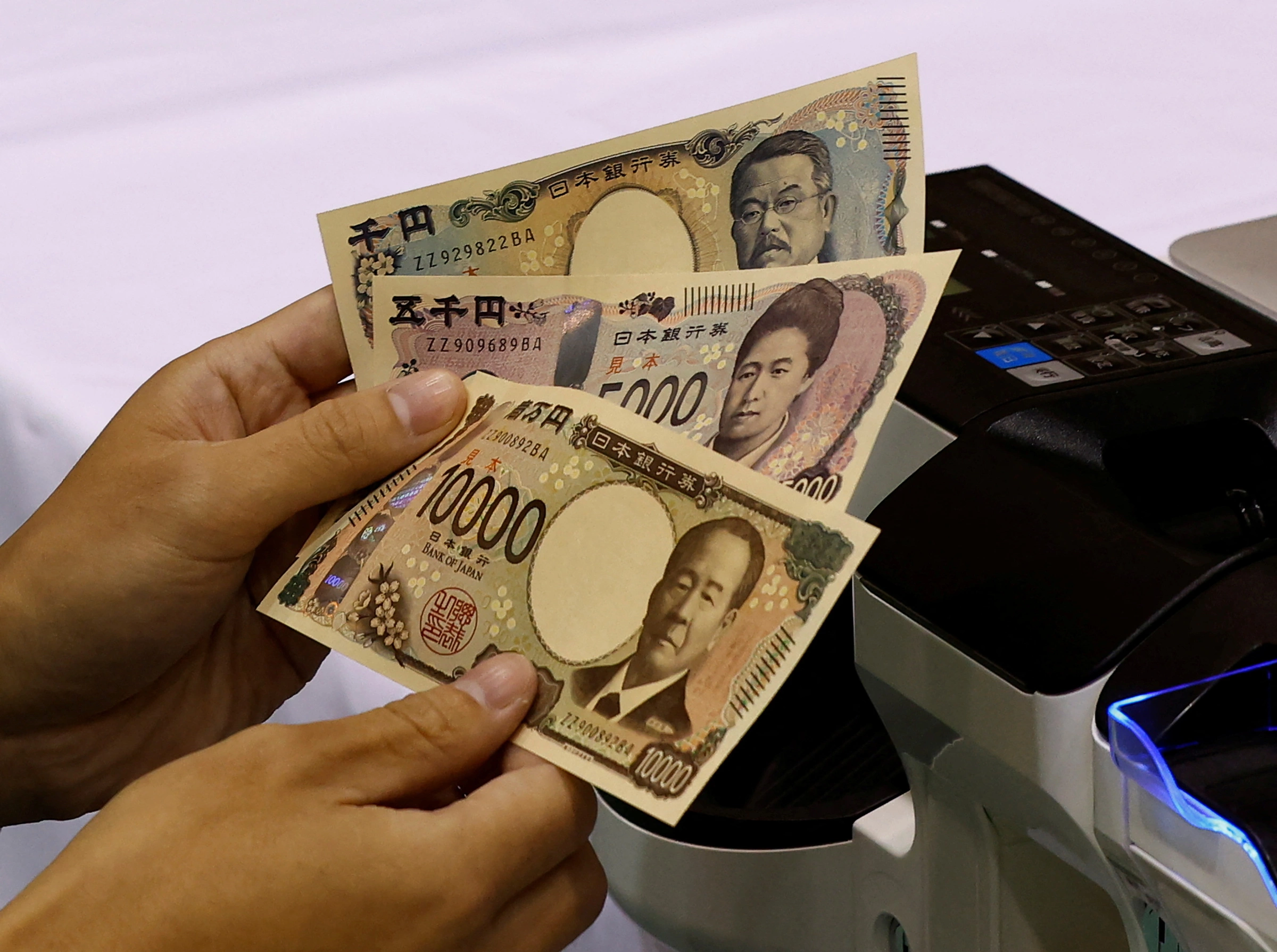 |
Japanese yen banknotes photographed at an event in Tokyo. *Photo: Reuters* |
Analysts believe that the market's tolerance for yen weakness is approaching its limit. DBS suggests that Japanese policymakers might adopt a firm stance and continue interventions to halt the depreciation.
Tony Sycamore, a market expert at IG in Sydney, anticipates that the Japanese Ministry of Finance will likely defend the 161,95 yen per dollar level. He expects intervention similar in scale to April and May, involving the purchase of approximately 11,700 billion yen.
Sycamore noted that this intervention would represent about 11-12% of Japan's total short-term foreign exchange reserves, yet yield limited impact. Consequently, Tokyo would need to proceed cautiously with future interventions to preserve policy flexibility, credibility, and adequate reserve resources.
Last week, the dollar index, which measures the US dollar's strength against six major currencies, rose 1,1%, peaking at 101,07 points—a one-year high—and remains above 100. The US dollar continued to strengthen as markets adjusted expectations for the US Federal Reserve (Fed)'s monetary policy.
On 17/6, the Fed announced it would maintain its basic interest rate at 3,5-3,75%. Many investors now anticipate the Fed might act sooner than expected to curb inflation, potentially as early as next month. CME Group's FedWatch tool indicates a 39,6% market probability of a 0,25 percentage point rate hike at the July meeting, a significant rise from 8% just a week prior.
Phien An (Reuters)