Tensions in the Middle East, leading to the blockade of the Strait of Hormuz—a transit point for 20% of global crude oil—have caused gasoline prices to escalate in many countries. In the UK, the RAC, an automotive organization, reported that average gasoline prices have risen by 9,5 pence since the conflict began, reaching 142,29 pence (1,9 USD) per liter. Japan also recorded record-high gasoline prices, at 190,8 yen (1,2 USD) per liter.
Rising fuel prices are a concern for automakers, dealerships, and owners of internal combustion engine vehicles. However, for Martin Miller, owner of a used electric vehicle dealership in southwest London, this presents a significant opportunity. On 14/3, he experienced his busiest business day ever. “We are selling cars very quickly”, he said.
According to UK government data, as of 16/3, average gasoline prices in the UK have increased by 7% per liter since late February, when the Middle East conflict began. Dealerships are now scrambling to replenish their inventory, anticipating further price hikes. Martin noted that his staff are “frantically” acquiring electric vehicles at auctions.
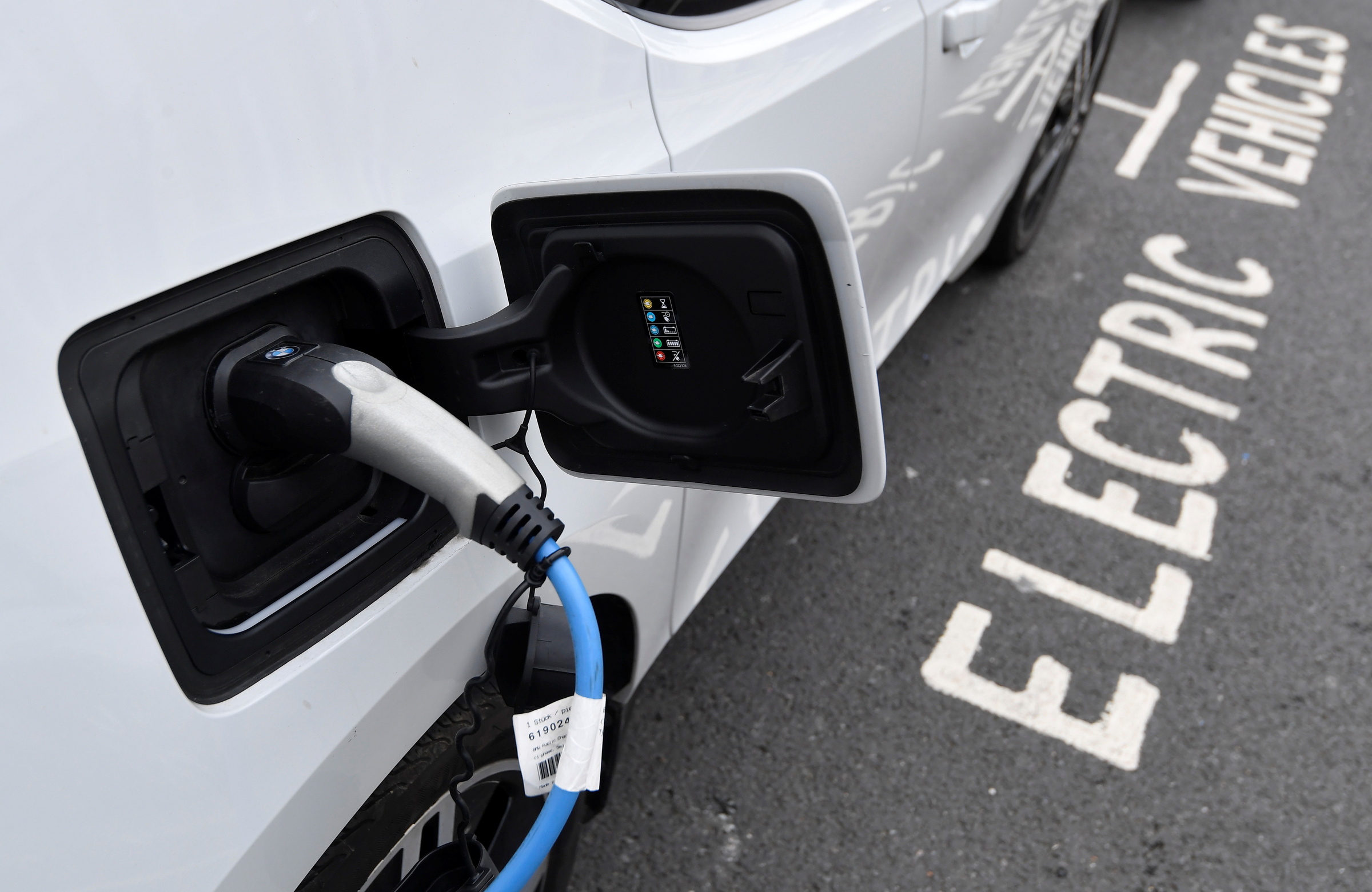 |
An electric vehicle charging point in London, UK, on 19/10/2021. *Reuters*
In Germany, traffic related to electric vehicles on the online car sales website MeinAuto has increased by 40% since the conflict. “Our consultations indicate that many people are now more focused on vehicle running costs”, the company stated.
German e-commerce platform Carwow reported that between 2/3 and 12/3, 66% of customers searched for electric vehicles, up from 55% in late February. A Carwow survey of 1.164 customers on 12/3 revealed that 48% admitted rising fuel prices “would influence their decision to consider buying an electric or hybrid vehicle”.
In the US, average gasoline prices have risen by 27% since last month, according to the Energy Information Administration (EIA). Earlier this week, the average price reached 3,76 USD per gallon (0,99 USD per liter), the highest since 10/2023, GasBuddy reported.
Zach Xavier was not willing to wait. On 13/3, he and his wife visited Recharged, a used electric vehicle dealership in Richmond, Virginia, to trade in their gasoline-powered SUV for an electric car and purchase another smaller one. “I am trying to buy before everyone else panics”, he said.
Despite some customers making quick decisions, the surge in fuel prices has not yet created a widespread boost in electric vehicle demand. The CarGurus platform has not observed a significant change in US electric vehicle searches. Similarly, Edmunds reported that the proportion of electric vehicle searches in the first week after the Middle East conflict rose only from 20,7% to 22,4%.
Analysts suggest that the recent sharp increase in fuel prices may not immediately lead to a significant change in new car buying habits. Kevin Roberts, Director of Industry Insights and Analytics at the online marketplace CarGurus, noted that consumers react quickly to gasoline prices, but typically only when prices reach a certain threshold. “A price threshold of 4 USD per gallon could be a key point to watch”, he said. On 18/3, the national average gasoline price in the US reached 3,84 USD per gallon, according to the AAA.
In the US market, industry experts believe a significant shift to electric vehicles is unlikely unless fuel prices increase further. Electric vehicle sales accounted for only 7,7% of total new car sales last year. Electric vehicle consumption even declined after the Trump administration rescinded a 7.500 USD tax incentive.
Research from Cox Automotive indicates that most US consumers would consider switching to an electric or hybrid vehicle if gasoline prices reach 6 USD per gallon. For now, rising fuel prices primarily risk impacting internal combustion engine vehicle sales, according to Stephanie Valdez-Streaty, Cox's Director of Industry Insights.
“Consumers might postpone car purchases right now, unless they urgently need a vehicle”, Stephanie commented.
By Phien An (according to Reuters)