


According to a White House announcement, more than 10 top US CEOs and business leaders accompanied President Donald Trump on his 14-15/5 visit to China. Unlike the 2017 visit which saw many large deals, this US business delegation is smaller, comprising companies aiming to advance business priorities in China, Reuters reported.
"Beyond Boeing and Cargill potentially announcing purchase contracts, other companies are primarily here to discuss essential supply chain needs," assessed Reva Goujon, a political strategist at Rhodium Group. This could reinforce the US message that for large-scale investment discussions, China must be a reliable partner.
US businesses hope the summit will foster goodwill to remove policy barriers, improve market access, and open investment opportunities. Jacob Thaysen, CEO of gene sequencing company Illumina, stated, "this is an opportunity for both countries to strengthen relations and shape the future of precision medicine."
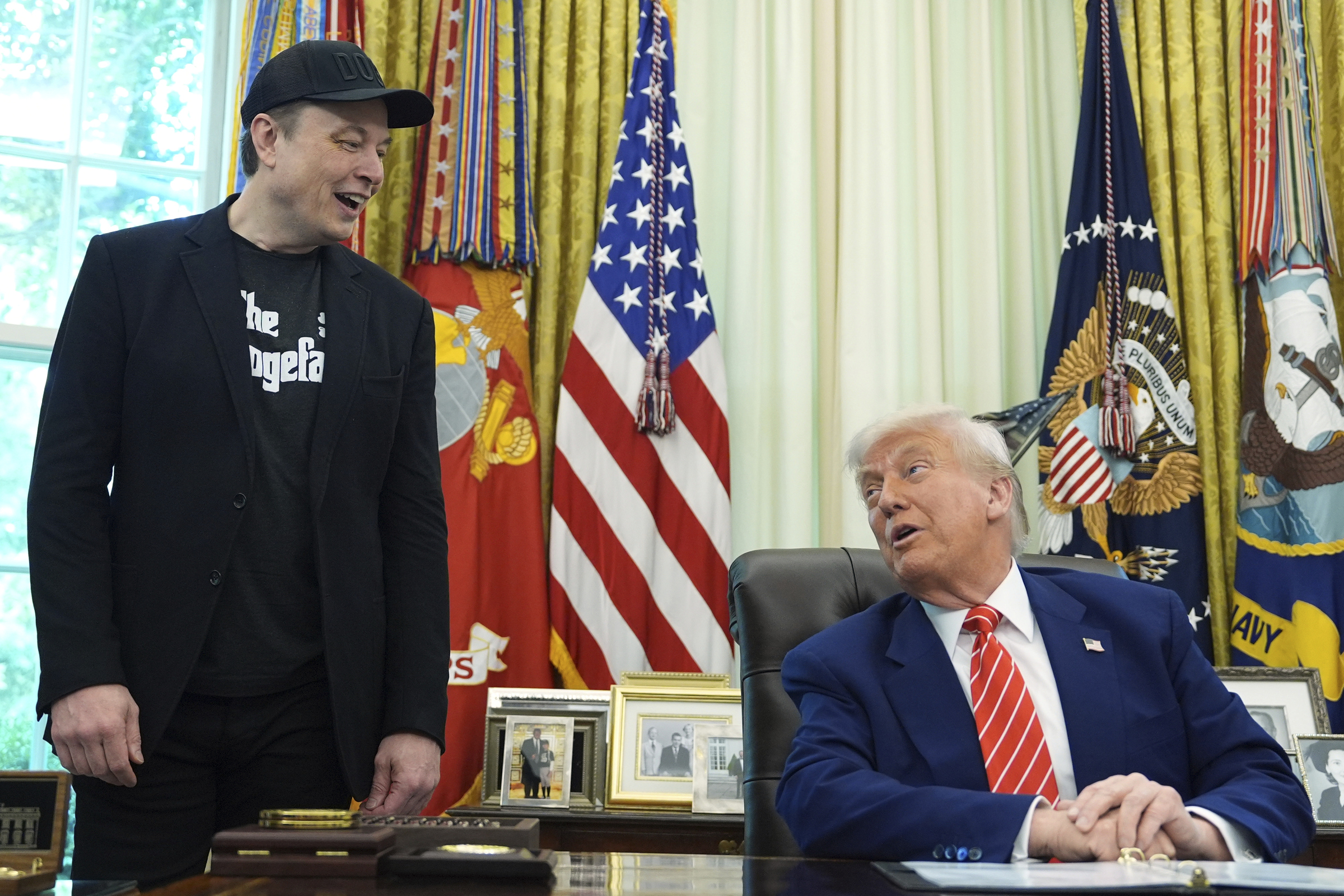 |
President Donald Trump speaks at a press conference with Elon Musk in the White House Oval Office in 5/2025. Photo: AP |
A key condition for businesses to join the trip was having "specific demands". They had to commit to achieving clear outcomes or an agreement during or after the conference, another source indicated. Many US businesses view this trip as a chance to accelerate ongoing discussions in China.
Several companies are seeking to resolve specific regulatory and market access issues. For example, Meta needs to address a request from Chinese officials last month to cancel its acquisition of AI startup Manus, valued at over 2 billion USD. Beijing has recently tightened US investment in its technology startups.
China is also considering tightening exports of solar battery manufacturing equipment to the US, which could threaten the plans of many US businesses, such as Tesla. The automaker needs to build new factories and expand existing ones to increase production. In 3/, Tesla sought to purchase 2,9 billion USD worth of solar battery manufacturing equipment from Chinese businesses, including Suzhou Maxwell Technologies. The company is still seeking export permits from the Ministry of Commerce. Tesla also wants Chinese officials to approve its full self-driving assistance system in the world's largest automotive market.
Larry Fink, CEO of asset management company BlackRock, also visited Beijing. A BlackRock-led consortium faces legal hurdles over its plan to acquire a 23 billion USD port system from CK Hutchison (Hong Kong), which includes two ports near the Panama Canal. Beijing has criticized this deal.
Optical component manufacturer Coherent faces export controls on indium and related materials, which are crucial for high-performance optical chips. Illumina joined the trip as the company seeks to rebuild its business after Beijing lifted an export ban on the firm last year.
Payment giants like Mastercard and Visa hope this trip will improve their standing in China's tightly regulated payment market. Mastercard, for instance, hopes the government will advocate for an increase in its ownership stake in its local joint venture. Unlike Mastercard and American Express, Visa has not yet been licensed to process domestic card transactions in the world's second-largest economy. Therefore, it aims to enter this market with a 100% ownership stake in a future joint venture license.
Citigroup CEO Jane Fraser and Goldman Sachs CEO David Solomon were also present, as banks continue to seek increased presence in China's capital markets. Citigroup is currently awaiting approval from China for its wholly-owned securities brokerage firm, having previously withdrawn from a joint venture.
Beyond these sectors, the US and China may reach an agricultural agreement to increase meat and grain exports to Beijing. However, observers do not expect Beijing to purchase significant additional soybeans beyond the volume agreed upon in last 10/'s deal.
Ha Thu (according to Reuters)


