The Bo Cong Thuong recently issued Decision 963, modifying the peak, off-peak, and normal hours for the national power system. This adjustment aims to reflect the evolving electricity supply and demand dynamics, particularly with the increasing proportion of renewable energy sources like solar and wind power.
Under the new regulations, peak hours apply on weekdays, excluding sunday, from 5:30 PM to 10:30 PM, totaling five hours daily. Normal hours are divided into two blocks: 6:00 AM to 5:30 PM and 10:30 PM to 12:00 AM, making up a total of 13 hours each day. Off-peak hours run from 12:00 AM to 6:00 AM daily. On sunday, there are no peak hours; normal hours run continuously from 6:00 AM to 12:00 AM.
These new timeframes represent a significant shift from the current schedule, which has been in place for 12 years. Previously, peak hours were split into two periods, covering both daytime and evening (9:30 AM to 11:30 AM and 5:00 PM to 8:00 PM). Off-peak hours were from 10:00 PM to 4:00 AM the next day, with the remaining time designated as normal hours.
Since 2019, the electricity supply and demand structure has changed considerably, driven by the rapid increase in solar power and other renewable energy. Industrial electricity consumption has risen from about 30% to over 50% of total demand, while residential use has decreased from approximately 50% to nearly 33%. These shifts have caused noticeable fluctuations in daily electricity demand, rendering the current timeframes increasingly unsuitable.
Electricity usage timeframes are crucial for calculating time-of-use electricity prices. Typically, peak hours have the highest rates, while off-peak hours have the lowest, encouraging customers to shift their electricity consumption. The agency believes that logically defining peak, off-peak, and normal hours will enhance the efficiency of the power system. Through time-of-use electricity pricing, customers are incentivized to adjust their consumption patterns, reducing electricity use during peak hours and shifting it to off-peak or normal periods, thereby optimizing costs and alleviating system pressure.
This regulation primarily applies to industrial and commercial customers using time-of-use tariffs. Approximately 1.25 million electricity meters across the system currently operate under this mechanism, directly impacting electricity measurement, billing, and payment.
Vietnam Electricity (EVN) is responsible for implementing these new timeframes across the entire system. Annually, by 15/12, or in cases of significant fluctuations in electricity demand, EVN must report to the Bo Cong Thuong to propose suitable adjustments. The National Power System Operation and Market Company (NSMO) will collaborate to provide data on capacity, output, and system operation. This data will serve as the basis for calculating and determining the timeframes. NSMO is also responsible for reporting and proposing adjustments when necessary.
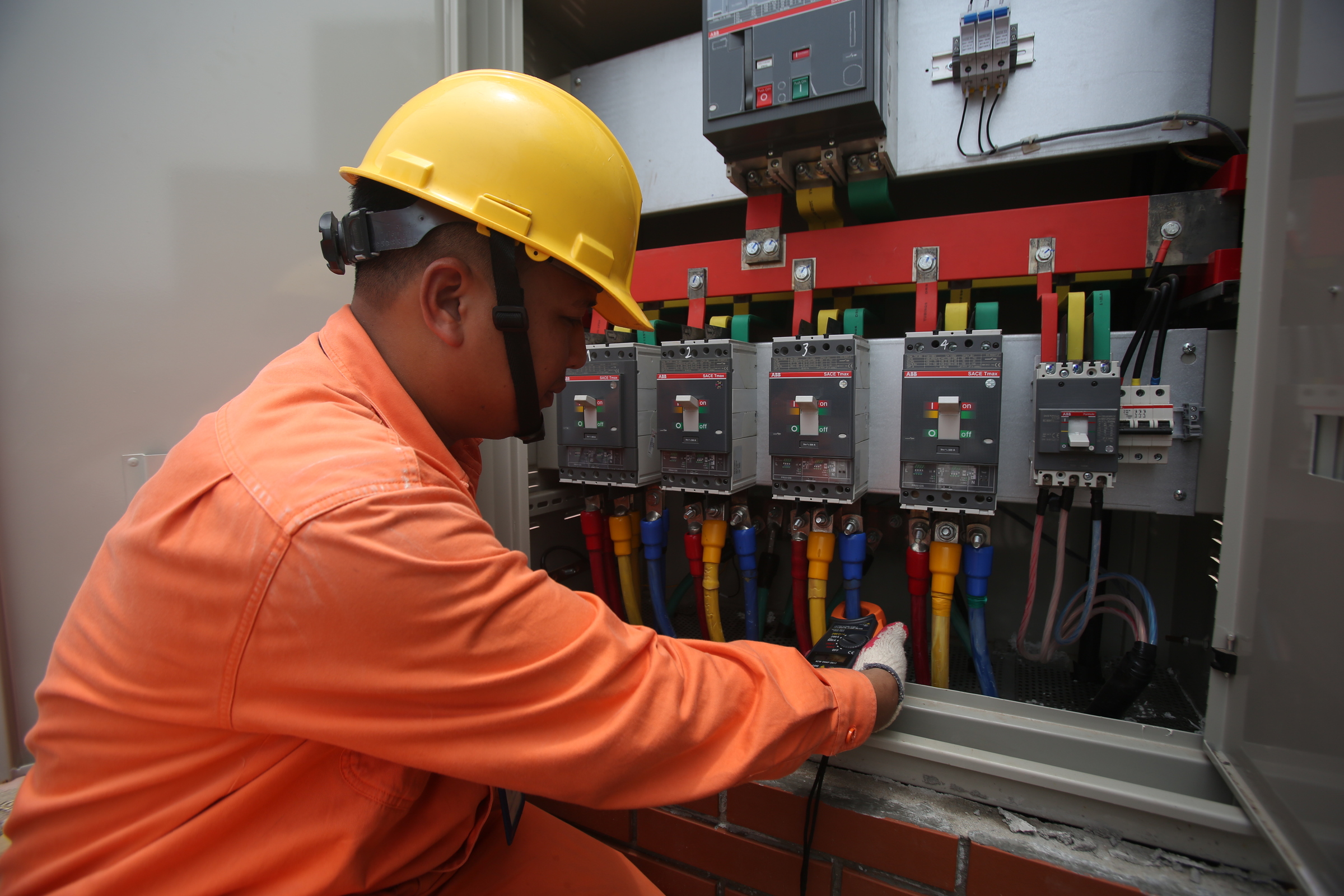 |
Power industry staff checking equipment. *Photo: Ngoc Thanh* |
Phuong Dung