Since march, poultry meat and egg markets in key farming regions like Dong Nai, Binh Duong, and Tay Ninh have seen sharp declines.
In Dong Nai, a major national livestock hub, chicken meat prices have consistently fallen. In early may, colored feather chickens at farms were only 42,000-45,000 VND per kg, a significant drop from around 48,700 VND at the beginning of the year and 15% lower than the same period last year. Industrial white feather chickens also remained low, commonly 25,000-27,000 VND per kg, close to production costs.
Fighting chickens were no exception, dropping to 45,000-48,000 VND per kg, about 20,000 VND lower than at the start of the year and down 27-30% compared to the same period. At traditional markets in Ho Chi Minh City (TP HCM), many vendors sold fighting chickens for just 60,000-65,000 VND per bird, their lowest price ever.
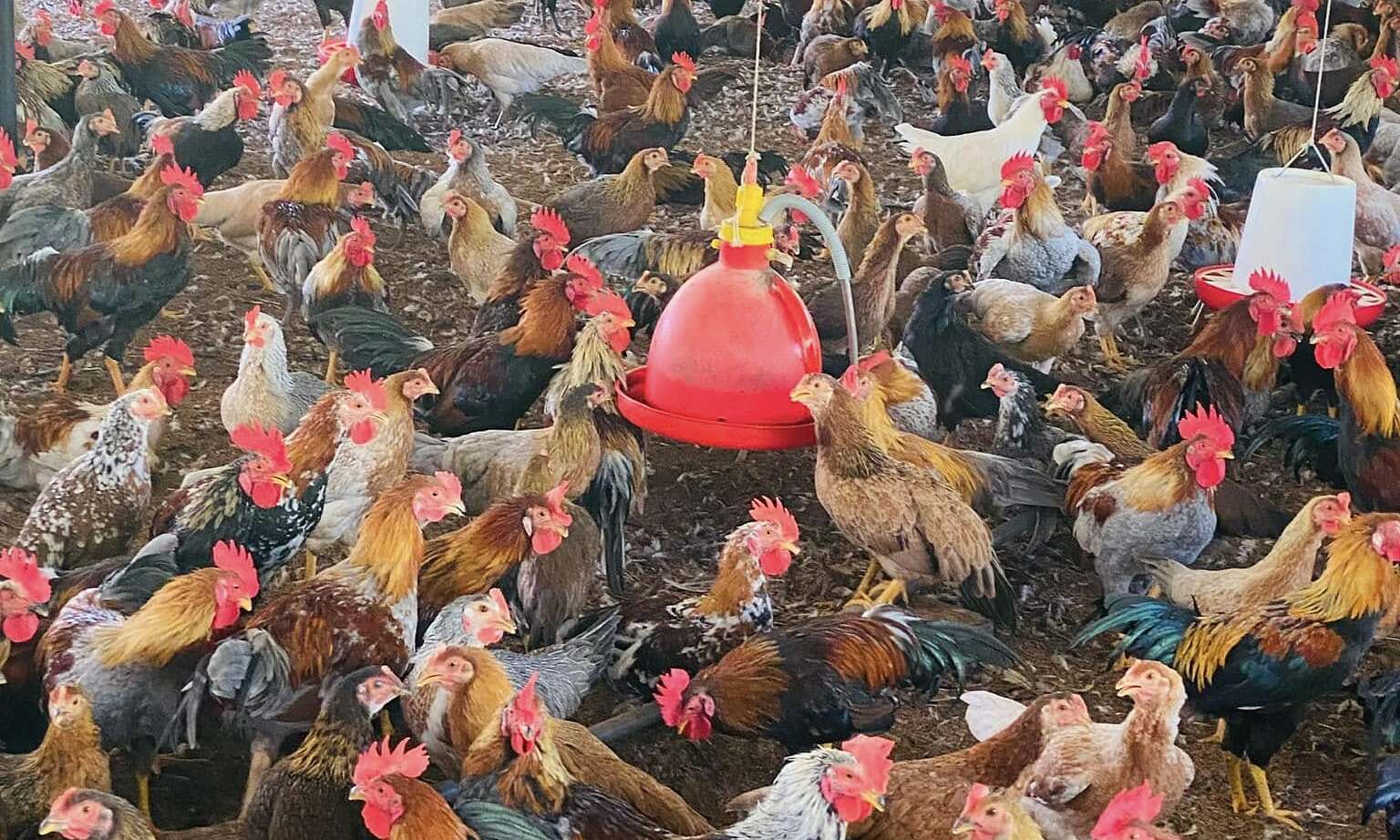 |
Fighting chickens at a farm in Long Thanh, Dong Nai. Photo: Vua ga Long Thanh. |
Mr. Thanh, owner of a chicken farm in Long Thanh, Dong Nai, stated he is raising over 1,000 fighting chickens and losing about 10,000-15,000 VND per bird when selling at 48,000 VND per kg. Meanwhile, feed costs have increased 10-15% since the beginning of the year, pushing production costs to 60,000-63,000 VND per kg. With this scale, he estimates losses of 10-15 million VND.
Beyond chicken meat, egg prices are also low. Ms. Huong, owner of a farm with 5,000 laying hens in Dong Thap, reported that since march, industrial chicken eggs have fluctuated between 1,600-1,700 VND per egg, occasionally dropping to 1,400 VND, while production costs are around 2,000 VND.
Several businesses face similar pressures. A representative from Mebi Farm Joint Stock Company noted that input costs, including feed and transport, have risen about 35%, but sales prices cannot be adjusted due to slow consumption, forcing the company to absorb losses. Similarly, a leader from Vinh Thanh Dat Joint Stock Company stated that exports to Cambodia are difficult, causing eggs to flood the domestic market and sharply increasing supply. Meanwhile, weak purchasing power and high inventory prevent price recovery, compelling businesses to boost promotions to stimulate demand.
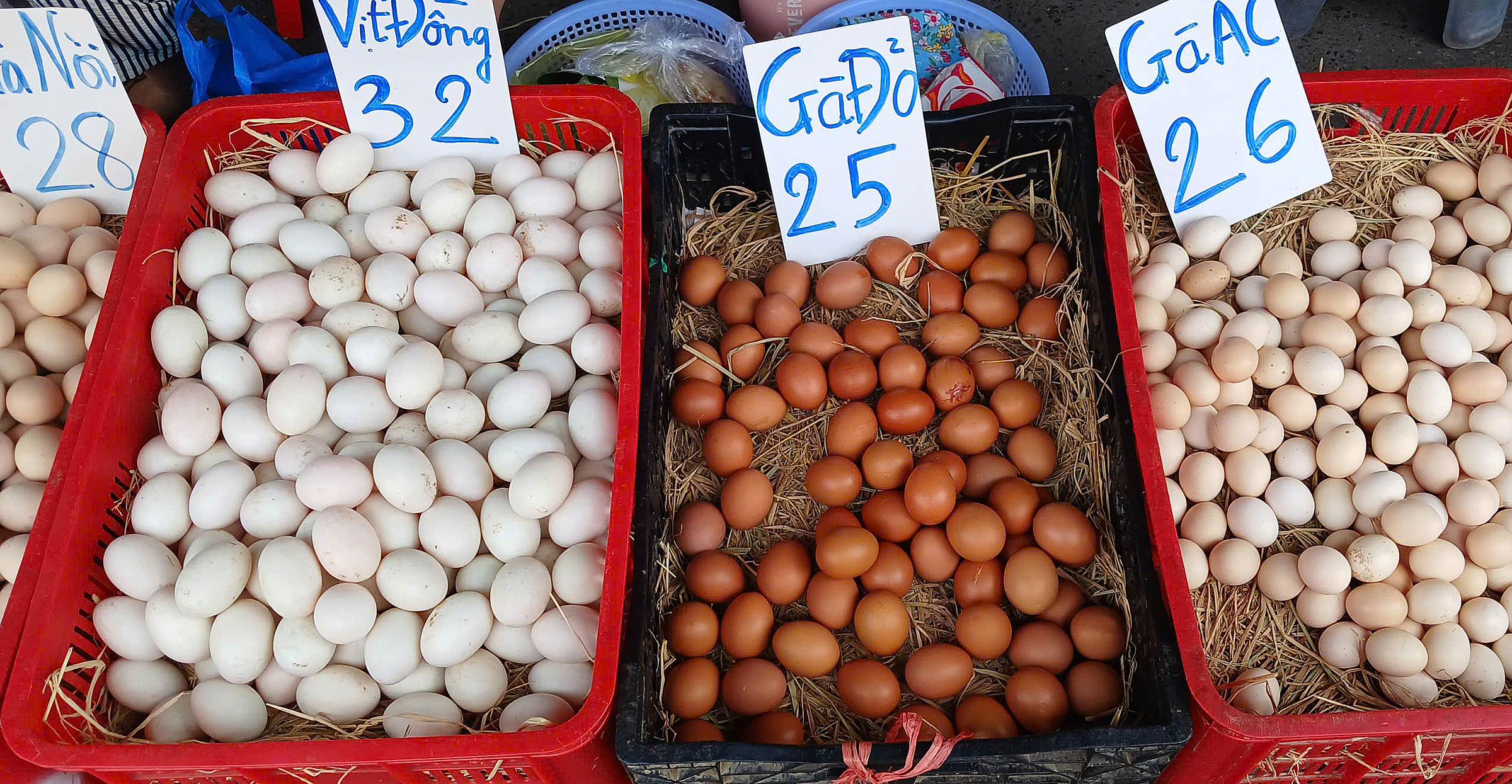 |
Retail chicken eggs at Xom Moi market, An Hoi Dong ward, Ho Chi Minh City. Photo: Thi Ha. |
Le Van Quyet, Deputy Chairman of the Southeast Poultry Association, also attributed the recent sharp drop in chicken and egg prices primarily to a surge in supply combined with slow post-Tet consumption recovery. In this environment, small-scale farmers suffer heavy losses, while closed industrial farming models remain profitable but with low margins.
Data for Q1/2026 also indicates increasing supply pressure as the national poultry flock grew by about 3,3% compared to the same period, leading to higher meat and egg production without a corresponding increase in purchasing power, resulting in localized oversupply.
From an industry-wide perspective, Nguyen Quy Khiem, Deputy Chairman and Secretary General of the Vietnam Poultry Association (VPA), believes that price reduction pressure stems from multiple converging factors. After Tet, a large surplus of poultry remained, and short farming cycles (38-43 days) led to continuous supply replenishment.
Concurrently, production costs are rising as feed prices have increased an additional 10-15% and could climb to 15-20% in the near future due to delays in imported raw materials. Furthermore, conflicts in the Middle East have driven up transport costs, and the domestic market faces additional pressure from imports, with about 300,000 tons of poultry brought in during the first four months of the year.
Given this situation, Mr. Khiem recommends that farmers adjust flock sizes, divide rearing into smaller batches to reduce risks, and improve quality while applying biosecurity standards to maintain stable output.
Thi Ha