On 22/7, SCMP reported on China's extensive efforts to electrify its truck fleet, accelerating its path towards carbon neutrality by 2060.
Cai Tuanjie, an official from the Ministry of Transport, stated that China targets at least 40% of heavy-duty trucks sold to be electric, with 1.6 million such vehicles on the road by 2030. As of May, this vehicle type accounted for 30% of new truck sales.
Beijing's subsidies are driving the shift to electric trucks. Under the old-for-new vehicle replacement policy, buyers of new energy trucks can receive subsidies of up to 140,000 yuan (approximately 544 million dong). The subsidy amount will depend on the vehicle type and replacement timing.
The government will allocate funding for the subsidies to local governments through ultra-long-term special treasury bonds. If the central budget is insufficient, local resources will supplement extra funds.
According to Cai, the government will use 22 billion yuan (3.25 billion USD) in ultra-long-term special treasury bonds this year to subsidize the elimination of old trucks, aiming to "provide more policy support to the market growth momentum."
Additionally, Beijing plans to build over 3,000 charging and battery swap stations to accelerate the transition. This push for road transport reform will boost China's electric vehicle industry, reduce carbon emissions, and lower logistics costs.
Demand for electric trucks is surging in this market. Last year, sales of this vehicle type increased by 182% compared to the prior year. This growth momentum continued in the first half of this year, with sales rising 80%. "We should leverage the current growth momentum to accelerate the broad transition," Cai said.
China will also encourage freight companies, express delivery services, and large heavy-duty truck fleet operators to lead the electrification process along major transport corridors.
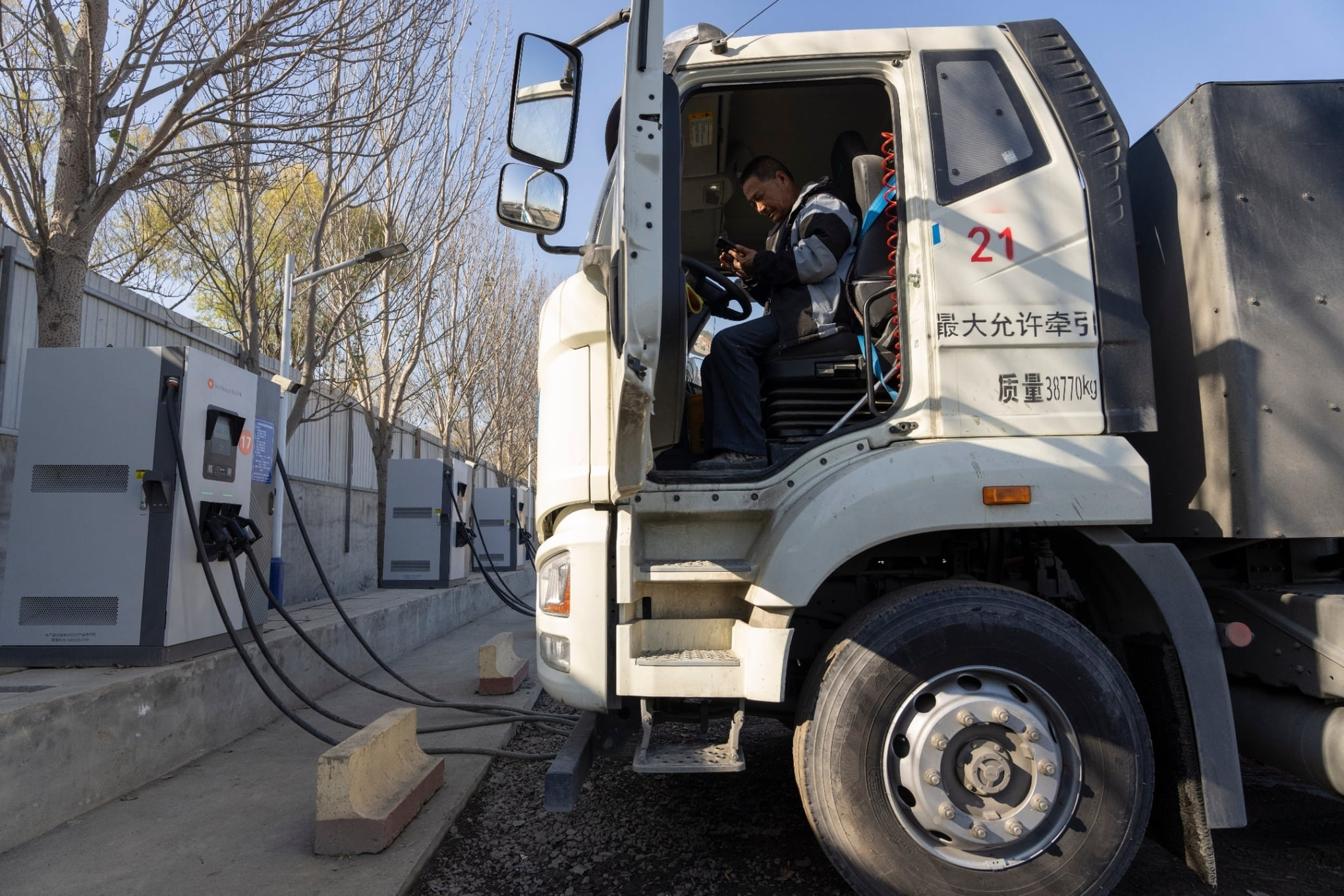 |
A driver charges an electric truck in Beijing, 14/11/2025. Photo: AP
Last week, Beijing unveiled a decarbonization roadmap, with transport identified as a priority sector for emission reduction. The government called for a higher proportion of freight transport by rail and water, as well as the use of new energy transport vehicles.
The transport sector accounts for approximately 10% of China's total carbon emissions, with heavy-duty vehicles accounting for nearly 40% of the sector's emissions.
Bao Bao (according to SCMP, China Daily)