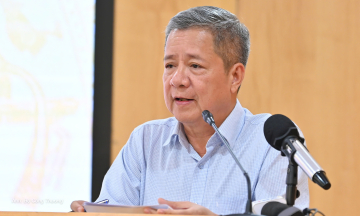
Nguyen Hoang Hiep, Deputy Minister of Agriculture and Rural Development, announced this information during a working visit to Dak Lak on the afternoon of 7/7. He stated that Decree 38, which regulates cultivation area codes, came into effect early this year but its implementation has revealed inconsistencies. The Prime Minister has directed the Ministry to promptly study and amend this decree.
Under current regulations, a cultivation area code is a mandatory requirement for many agricultural products exported to markets such as China, the US, Australia, New Zealand, South Korea, and the European Union.
To receive a code, cultivation areas must meet requirements for pest management, food safety, traceability, production logbook maintenance, and specific regulations of each importing market. Once a code is granted, the cultivation area remains under supervision and may face suspension or revocation if it fails to maintain the stipulated conditions.
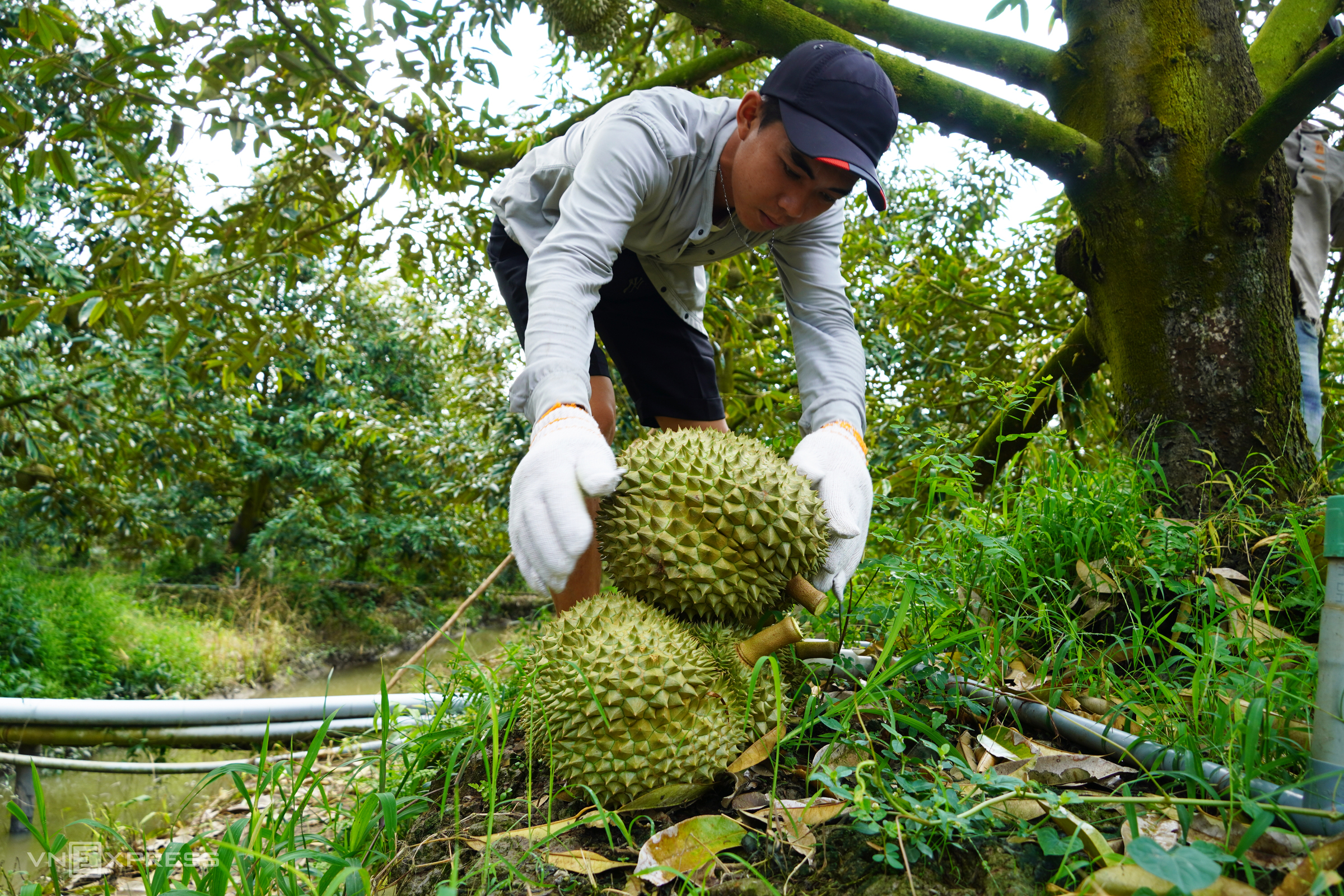 |
Harvesting durian in Dong Thap. *Photo: Hoang Nam*
However, according to Ministry officials, Vietnam's agricultural production primarily relies on small-scale households with fragmented land, and many areas practice intercropping. Meanwhile, constantly evolving market standards make the process of obtaining cultivation area codes time-consuming and costly for farmers and businesses.
In this revision, the Ministry plans to remove the rigid area requirement for a cultivation area code. Currently, Decree 38 stipulates a minimum area of 10 hectares for a cultivation area code. Specific regulations for specialized and intercropped areas will also be clarified to better reflect actual production practices. The process for issuing cultivation area codes is expected to be implemented online.
"This revision aims to simplify procedures as much as possible, reduce costs for farmers and businesses, while still meeting the requirements of importing markets", Deputy Minister Hiep stated.
Additionally, the Ministry will shift significantly from pre-inspection to post-inspection. Businesses will self-declare, with functional agencies monitoring and strictly addressing violations, focusing on supporting production linkages instead of prior controls.
According to Deputy Minister Hiep, the revision of regulations and digitization of the code issuance process comes as many localities enter the export fruit harvest season, especially for durian. In Dak Lak, with 41,000 hectares of durian, 30,000 hectares are currently being harvested, yielding an estimated 500,000 tons. The province will enter its peak season in 15 days, extending until September.
To support product consumption, the Ministry will work with China next week to expedite the granting of cultivation area codes and packing facilities for applications from Dak Lak. According to the Ministry's calculations, if approved, over 50% of the province's durian cultivation area will qualify for export. The Ministry also encourages the locality to boost frozen durian exports, expand markets beyond China, and increase domestic consumption to alleviate seasonal pressure.
In the long term, this revision aims to streamline procedures, fostering a responsible agricultural sector where all products have traceable origins and clear accountability. This forms the foundation for enhancing the reputation of Vietnamese agricultural products in the international market.
Gia Chinh