According to the latest data from the Customs Department, durian exports in 2025 reached approximately USD 3.86 billion, increasing over 20% from the previous year. This figure represented over 45% of total fruit and vegetable export value. This impressive growth made durian the primary driver, boosting Vietnam's overall fruit and vegetable export turnover to USD 8.56 billion, a rise of nearly 20% compared to 2024.
The fruit and vegetable export structure also showed a clear shift. Fresh coconut, for the first time, surpassed dragon fruit to secure the second position, with turnover reaching approximately USD 534 million, an increase of 36.6%. In contrast, dragon fruit exports experienced a slight 1.5% decrease, totaling around USD 526 million, moving it to third place after many years as a primary export item.
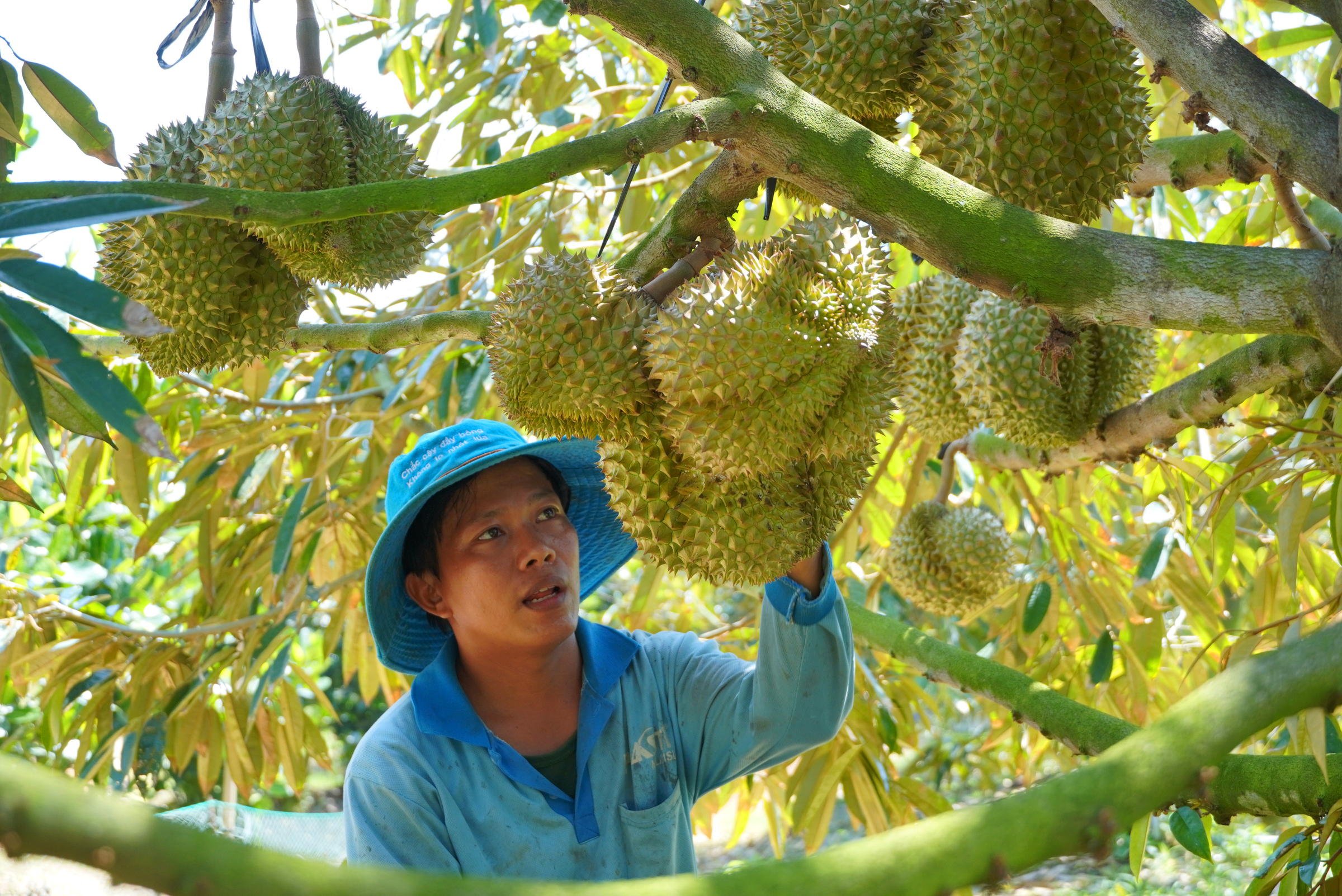 |
A durian garden in Long An (now Tay Ninh). Hoang Nam. |
A durian garden in Long An (now Tay Ninh). Hoang Nam.
Dang Phuc Nguyen, Secretary General of the Vietnam Fruit and Vegetable Association, stated that these results demonstrate businesses' adaptability, especially in early 2025 when durian exports faced difficulties due to tightened technical regulations and import control measures. He believes the sector has overcome its most challenging period and is entering a new growth cycle, with both traditional and high-demand markets expanding. However, he emphasized that sustainable growth requires standardized growing regions, strict quality control, and continued diversification of export markets.
An assessment by the Import-Export Department, under the Ministry of Industry and Trade, also indicated a positive shift in the 2025 fruit and vegetable export market structure. China remained the largest market, with turnover exceeding USD 5.5 billion. This was largely due to the signing of additional protocols for frozen durian and fresh coconut, alongside a concerted effort to transition from informal cross-border trade to official channels, which stabilized order values.
Additionally, fruit and vegetable exports to high-demand markets like the US, Japan, South Korea, and the European Union saw positive growth. The EU market alone increased by approximately 58% compared to the previous year, primarily by leveraging tariff incentives. Notably, processed fruits and vegetables now account for over 30% of the export product structure, enhancing added value and gradually reducing dependence on a single market.
Building on the achievements of 2025 and expectations for key products, Vietnam's fruit and vegetable exports are projected to maintain growth in 2026, aiming for a turnover target of USD 9-10 billion. However, to ensure sustainable growth and uphold official export channels, the sector must closely monitor and proactively adapt to new import policies, especially China's Decree 280.
Thi Ha