A survey at durian collection points in the Mekong Delta shows that monthong grade A, which had fallen to 70,000 dong per kg in september-october due to inspection disruptions, has now recovered to 110,000-125,000 dong. Ri6 also increased from 40,000 to 67,000-70,000 dong per kg.
For grade B durians (2,5 lobes), monthong prices range from 97,000-100,000 dong per kg, and Ri6 is around 50,000-55,000 dong, 30-50% higher than in october.
Mr. Thanh, an off-season durian farmer in Tien Giang, stated that while prices have risen, profits remain lower due to reduced yields and a 10-15% increase in off-season investment costs compared to last year. "This year, my garden's yield decreased by about half a ton, to just 3,5 tons," he said.
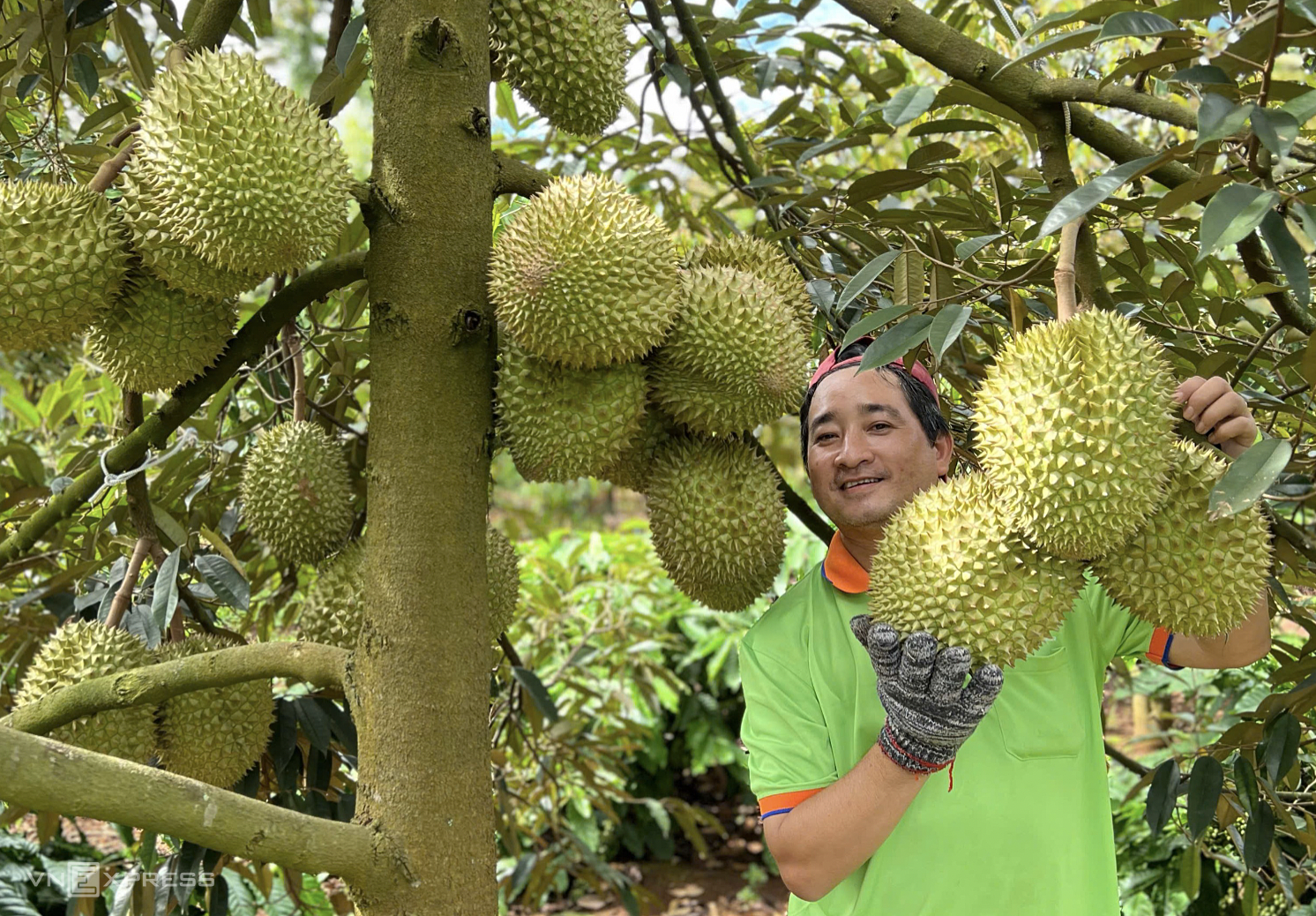 |
Durian harvest in Can Tho. Photo: Manh Khuong |
In the Mekong Delta, trader Manh Khuong noted that the price increase is primarily due to the normalization of export customs clearance. With the off-season leading to scarce supply and durians from the Central Highlands already out of season, the market relies mainly on produce from the Western region. This situation has significantly driven up prices.
The Vietnam Fruit and Vegetable Association assessed that the market is experiencing a shortage due to the off-season, and this scarcity could extend until next march. In previous years, off-season supply was already limited, but this year it decreased even more sharply because many gardens in the Western region were flooded. Additionally, the low durian prices during last year's off-season led many farmers to forgo off-season flowering treatments, allowing trees to fruit naturally and awaiting harvest in the main season from april.
Despite the strong overall price increase, some market areas still sell durians at lower prices. According to the Fruit and Vegetable Association, these are "reject goods" with a high proportion of substandard fruit. This reality indicates that cultivation techniques still need improvement to enhance quality, meet export requirements, and serve domestic consumption.
The latest data from the Vietnam Fruit and Vegetable Association shows that fruit and vegetable export turnover in november reached approximately 754 million USD, an 18,7% decrease from the previous month due to seasonality, but a 65% increase compared to the same period in 2024. For the first 11 months, fruit and vegetable exports exceeded 7,8 billion USD, an 18% increase, yielding a trade surplus of nearly 5,4 billion USD. Durian alone contributed over 3 billion USD, maintaining its key role in the China market, which remains the largest customer for Vietnamese agricultural products.
With off-season supply not abundant and export demand remaining positive, domestic durian prices are forecast to remain high in the near future.
Thi Ha