The Middle East conflict, now in its second month, has disrupted the Strait of Hormuz, a vital waterway for 30% of global fertilizer trade. This supply scarcity has driven urea prices outside China up by about 70%.
Urea fertilizer is synthesized from carbon dioxide (CO2) and ammonia (NH3), which are produced from natural gas or coal. While many countries use natural gas as a raw material, China relies on its abundant domestic coal resources, with 80% of its urea produced from this fuel. This allows Beijing to maintain fertilizer self-sufficiency, mitigating the impact of the Middle East conflict and global market price shocks, according to Reuters.
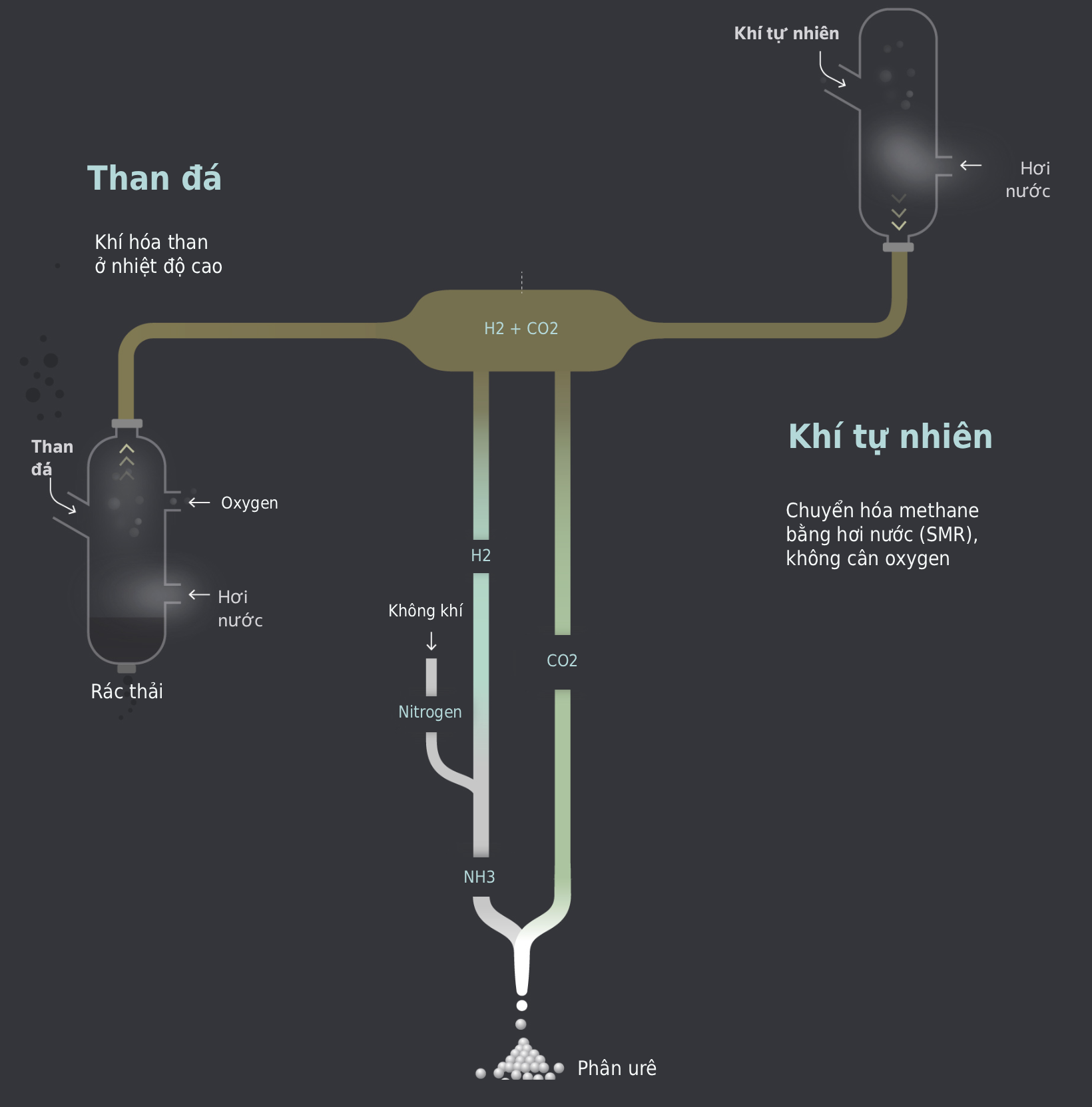 |
Urea fertilizer production using coal and gas. *Graphic: Reuters*. |
Urea is a nitrogen-rich inorganic fertilizer, one of three essential nutrients for plant growth, alongside phosphorus and potassium. Annually, the global agricultural sector uses nearly 200 million tons of fertilizers containing these three nutrients. Nitrogen accounted for the largest share, at 58% in 2023.
Last year, China exported 13 billion USD in fertilizers, accounting for about one-fifth of the imports by Brazil, Indonesia, and Thailand. This amount also equaled one-third of Malaysia's and New Zealand's imports, according to the International Trade Center.
Before the Middle East conflict, multiple sources indicated that China had reduced its export quotas by 50-80% to protect its domestic market. A fertilizer company executive based in New Delhi, India, stated that this decision further tightened supply, putting pressure on the global market.
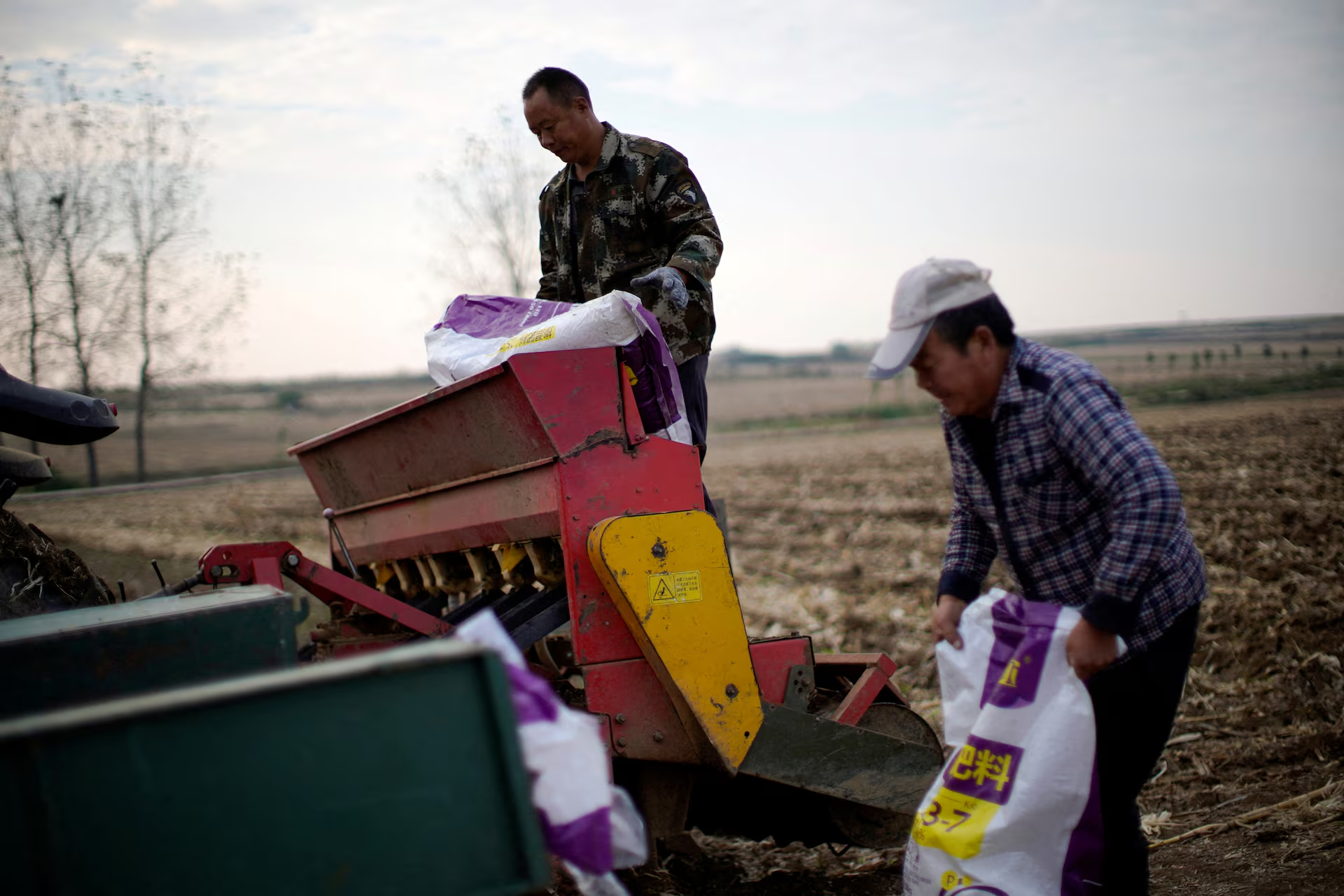 |
Farmers load bags of fertilizer into a sowing machine in a field in Nanyang, Henan province, China, on 13/10/2021. *Photo: Reuters*. |
While coal-based fertilizer production enhances self-sufficiency, this method significantly impacts the climate. According to data from the German non-profit organization Urgewald, which provides a global coal company database, ammonia production from coal emits three times more CO2 than using natural gas.
This technology is also water-intensive. According to a Greenpeace investigation, a plant in Inner Mongolia belonging to the Shenhua Group requires 10 cubic meters of water to produce one ton of finished fertilizer.
Furthermore, strict environmental policies concerning carbon emissions from coal processing pose significant challenges for this technology. Many countries implement carbon taxes or cap greenhouse gas emission quotas, increasing production costs.
Nevertheless, some coal-rich countries are still experimenting with this method to achieve supply self-sufficiency. In India, coal gasification is considered a strategic solution to replace imported natural gas, but new projects are in their initial stages.
In Indonesia, some businesses are forming joint ventures with China to optimize production, according to research firm Intel Market. Conversely, this model is difficult to replicate in Australia due to conflicting with emission reduction targets and the cost burden from carbon pricing taxes.
By Bao Bao (according to Reuters, Urgewald, Intel Market)