The international coffee conference and the launch ceremony of the Vietnam - World Coffee Alliance (Global Coffee Alliance - GCA) took place on 22/12 in Da Lat city. The event was held within the framework of the "Coffee Heritage Festival", co-organized by Lam Dong province and King Coffee.
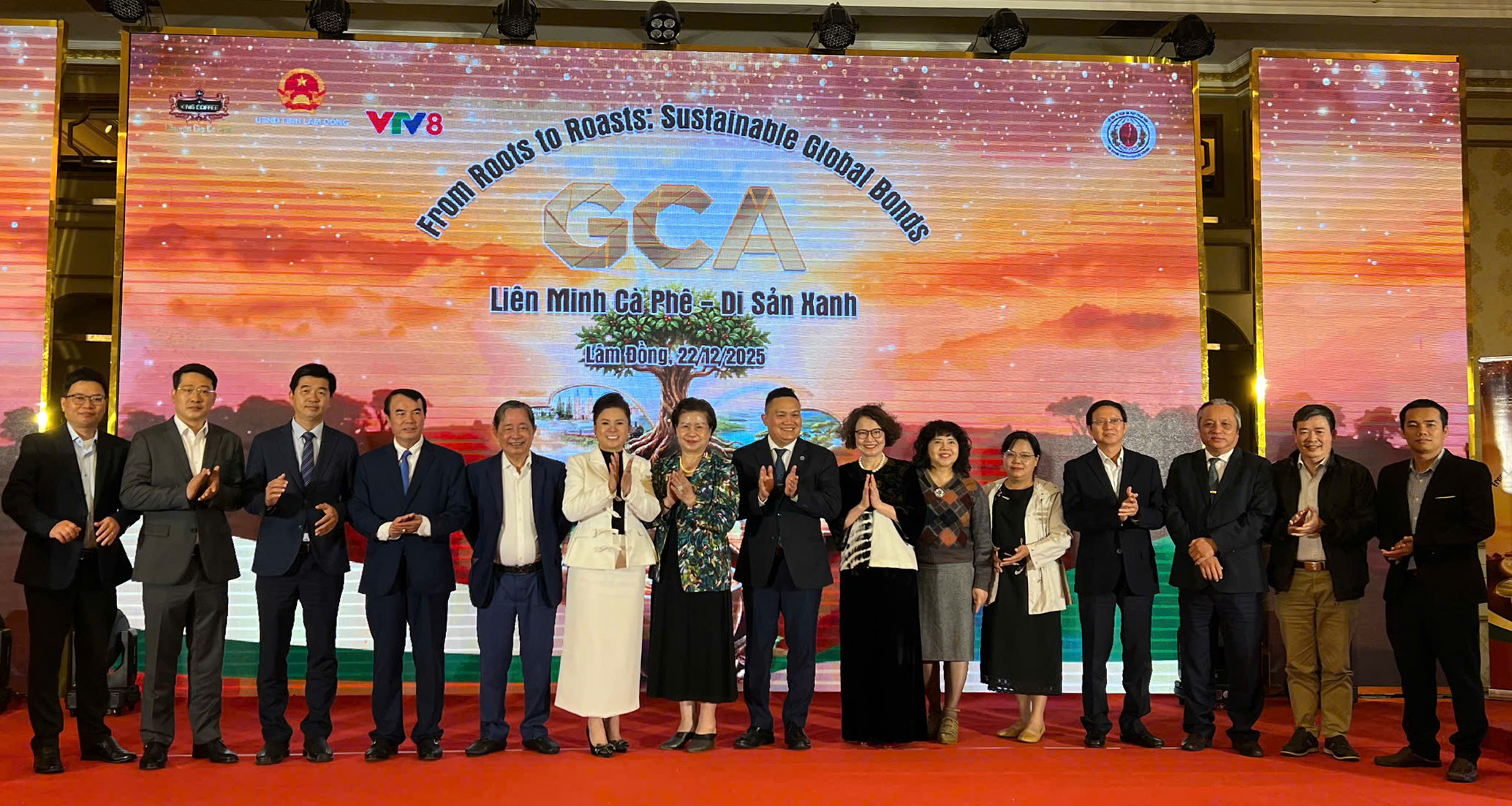 |
Managers, experts, and representatives of coffee industry associations at the event. Photo: King Coffee
At the event, managers, experts, and representatives of coffee industry associations emphasized GCA's responsibility for the future of the Vietnamese and global coffee industries. According to experts, coffee is one of the largest supply chains globally, providing livelihoods for over 125 million people, but it faces many serious challenges. Climate change, for instance, is reducing productivity by up to 50% in some regions. Coffee prices fluctuate sharply due to inflation, geopolitical conflicts, and an imbalanced value chain, where farmers receive only 10% to 20% of the retail price.
Nguyen Nam Hai, Chairman of the Vietnam Coffee Cocoa Association, stated that political instability, conflicts, and embargoes are disrupting supply chains, causing significant fluctuations in global energy, financial, and trade markets. The US has imposed reciprocal tariffs on all countries with trade transactions, including coffee from leading producing nations such as Brazil, Vietnam, Colombia, and Indonesia. Additionally, prolonged heatwaves and droughts are severely impacting productivity in Arabica regions of Brazil and Robusta regions of Vietnam. In the 2024 - 2025 crop year, successive storms in Vietnam caused floods, delaying harvest and damaging many coffee farms.
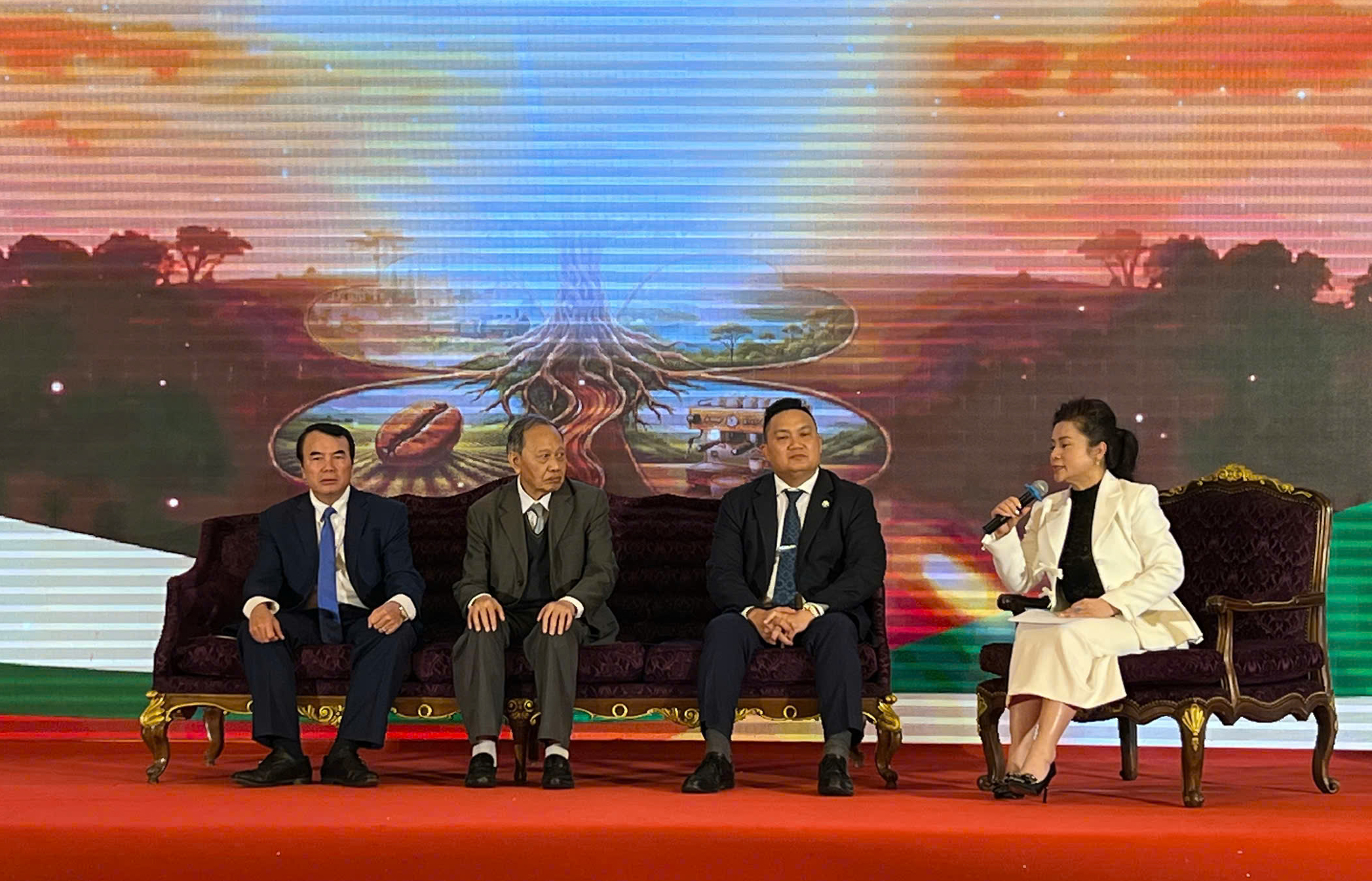 |
Experts during the discussion session. Photo: King Coffee
Many opinions also highlighted the challenge of replanting as coffee trees age. Experts believe that instead of exporting low-value raw beans, "deep processing" is essential to elevate the Vietnamese coffee brand. Furthermore, with its advantage as the "kingdom of Robusta coffee", Vietnam holds a key role in the global strategy and needs to develop a vision until 2050. This vision includes increasing export turnover from 4 billion USD to 10 billion USD; building the national brand "Vietnam Coffee Excellence"; developing coffee tourism; promoting instant and specialty coffee; dedicating 20% of production to the high-end segment; reducing reliance on raw exports; and creating jobs for approximately 5 million workers.
Experts argue that for sustainable development, the efforts of farmers and the State are not enough. A close linkage between businesses and farmers helps stabilize supply and demand, facilitates technology transfer, standardizes cultivation according to international standards, and reduces intermediary layers. In this context, the role of leading businesses like King Coffee is considered key.
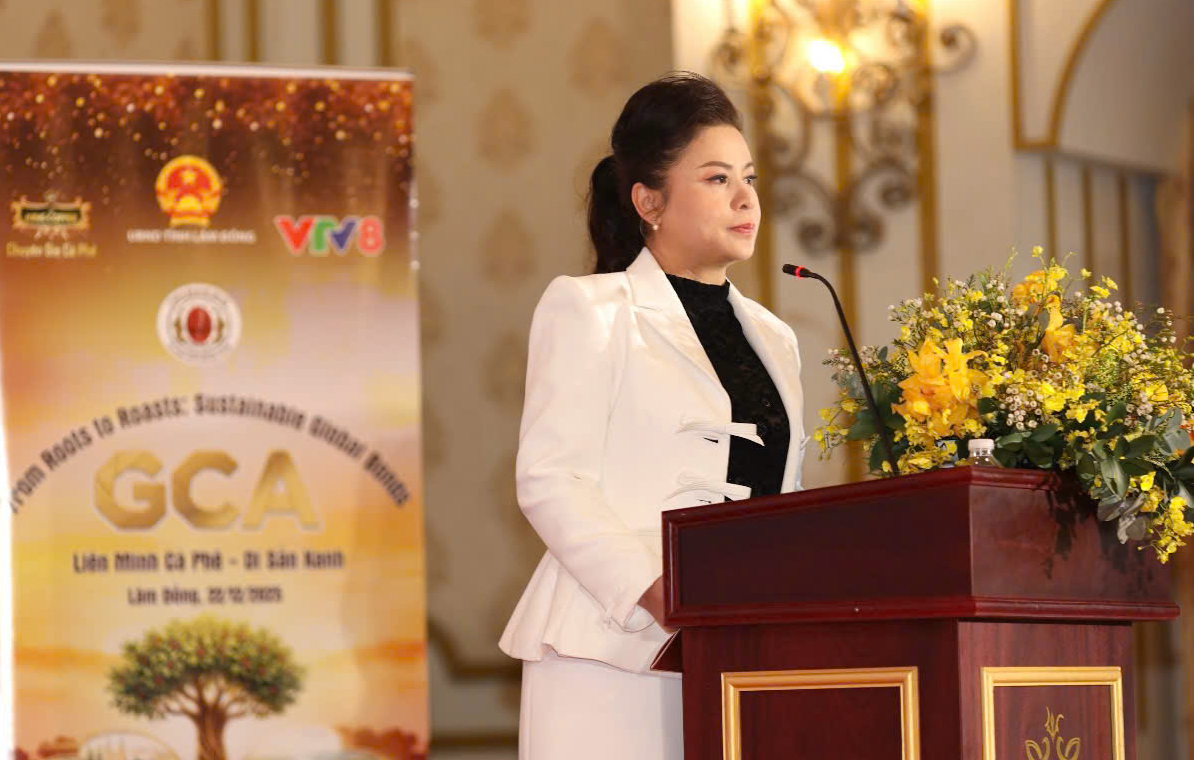 |
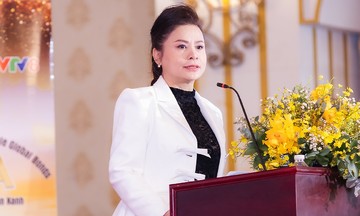
Le Hoang Diep Thao, founder and CEO of TNI King Coffee, speaks at the event. Photo: King Coffee
Le Hoang Diep Thao, founder and CEO of TNI King Coffee, emphasized the leading role of the Vietnam - World Coffee Alliance in "transforming challenges into opportunities". She proposed a global coffee strategy for the 2025 - 2050 period based on three pillars: sustainability, technology, and equity.
Accordingly, GCA will implement the "Green Coffee 2050" program, aiming to reduce supply chain carbon emissions by 50% by 2030 and achieve carbon neutrality by 2050. It will support farmers in transitioning to organic farming, drought-resistant varieties, and smart irrigation. The alliance will also collaborate with Nestle and Starbucks to ensure 100% of export production achieves Rainforest Alliance certification.
The alliance also aims to apply artificial intelligence (AI) and blockchain from 2025 to trace products from seed to cup. It plans to establish a global farmer support fund worth one billion USD to increase farmer income by at least 50%, promote fair trade, reduce poverty, and advance gender equality.
On the same occasion, King Coffee proposed the project "The Global Coffee Heritage - Vietnam Coffee Industry Development Strategy 2025 - 2040" under a public-private partnership model. The project comprises six components: a Coffee Heritage City in Ho Chi Minh City; a Global Coffee Alliance and a Vietnam - Brazil coffee exchange; an environmental, social, and governance (ESG) green technology coffee growing area in Da Lat; a high-end heritage and resort complex at Dinh II; a conference and wellness center at Tuyen Lam Lake; and an AI Coffee Academy project.
(Source: King Coffee)