Last week, global gold prices fluctuated around 5,000-5,240 USD an ounce. The metal rose during the first two trading sessions of the week, then gradually declined until Friday as investors grew concerned about the potential for a prolonged and more complex war in the Middle East.
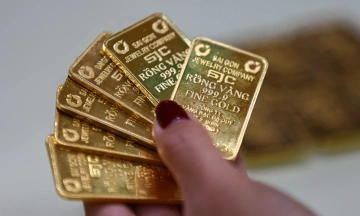
Domestically, at the close of the trading session on 14/3, SJC gold bars were listed at 179,6 - 182,9 million dong per tael, a decrease of 2,4 million dong compared to the previous day. Plain gold rings were also traded by brands at similar price levels.
According to a Kitco survey, 40% of the 15 analysts, or 6 individuals, predicted an increase in gold prices. Another 40% of experts anticipated a decline, while the remaining three believed the metal would trade sideways.
Among the 270 investors who participated in the online poll, approximately 73% (169 individuals) were optimistic that the market would rise next week. 16% of traders predicted gold would continue to fall, while the remaining 11% expected prices to trade sideways.
 |
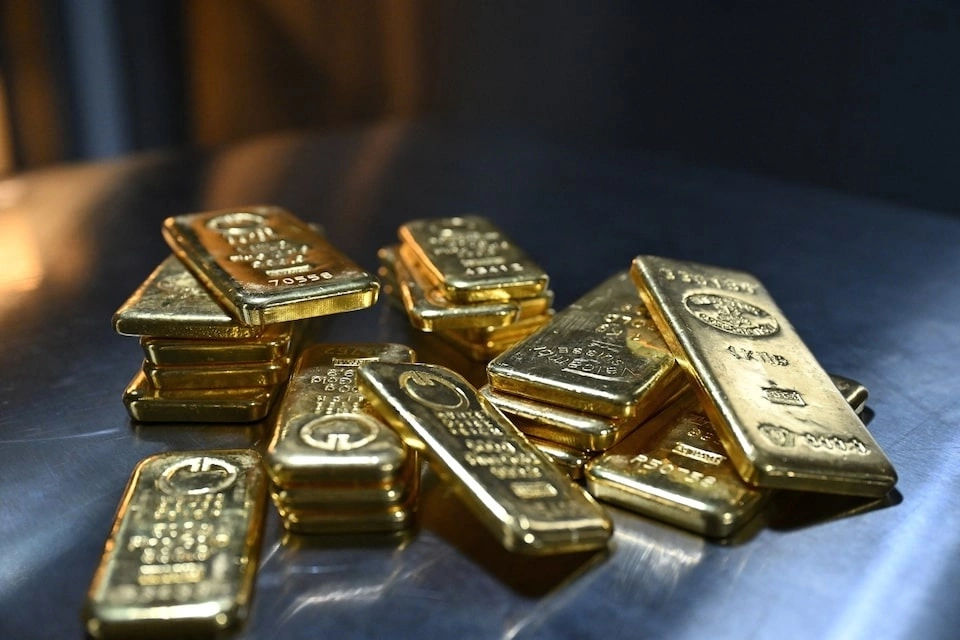
One-kilogram gold bars at the Argor-Heraeus gold refinery in Mendrisio, Switzerland. *Photo: Reuters* |
James Stanley, a senior market strategist at Forex.com, believes gold prices will continue to rise. According to him, gold holding the 5,000 USD per ounce mark is a crucial signal, indicating that the market is gradually accepting this new price level. "The opportunity for buyers to push prices higher remains wide open", Stanley stated.
Sharing this view, Adrian Day, Chairman of Adrian Day Asset Management, believes that monetary factors are once again becoming the primary drivers of the market. While acknowledging that the conflict in Iran could cause short-term fluctuations, the expert believes geopolitics typically plays a secondary role compared to monetary policies after the market's initial reaction subsides.
"Over the past two weeks, since the airstrikes began, gold has moved as an inverse reflection of the USD", Day said.
Conversely, Rich Checkan, President of Asset Strategies International, predicts a short-term decline in gold prices. Although the current environment supports an upward trend, the expert noted that next week is the Federal Open Market Committee (FOMC) meeting, and interest rates are likely to remain unchanged.
With current interest rates around 3,5% and actual inflation at approximately 2,5%, a real return of 1% should not impact gold. "However, the market often perceives unchanged interest rates as 'bad news' and could cause gold prices to adjust immediately after the announcement", the Asset Strategies International expert commented.
Offering a more pessimistic scenario, Daniel Pavilonis, a senior commodities broker at RJO Futures, suggested that gold could retreat to the 4,200 USD region. He stated that the precious metal is under significant pressure from 10-year US government bond yields.
Furthermore, the expert posited that if interest rates continue to rise – amidst increasing oil and energy prices due to supply disruption risks to Europe and Asia – gold could continue to be sold off. "As long as interest rates are rising, gold and silver will be under downward pressure", he explained.
By Trong Hieu (Source: Kitco)