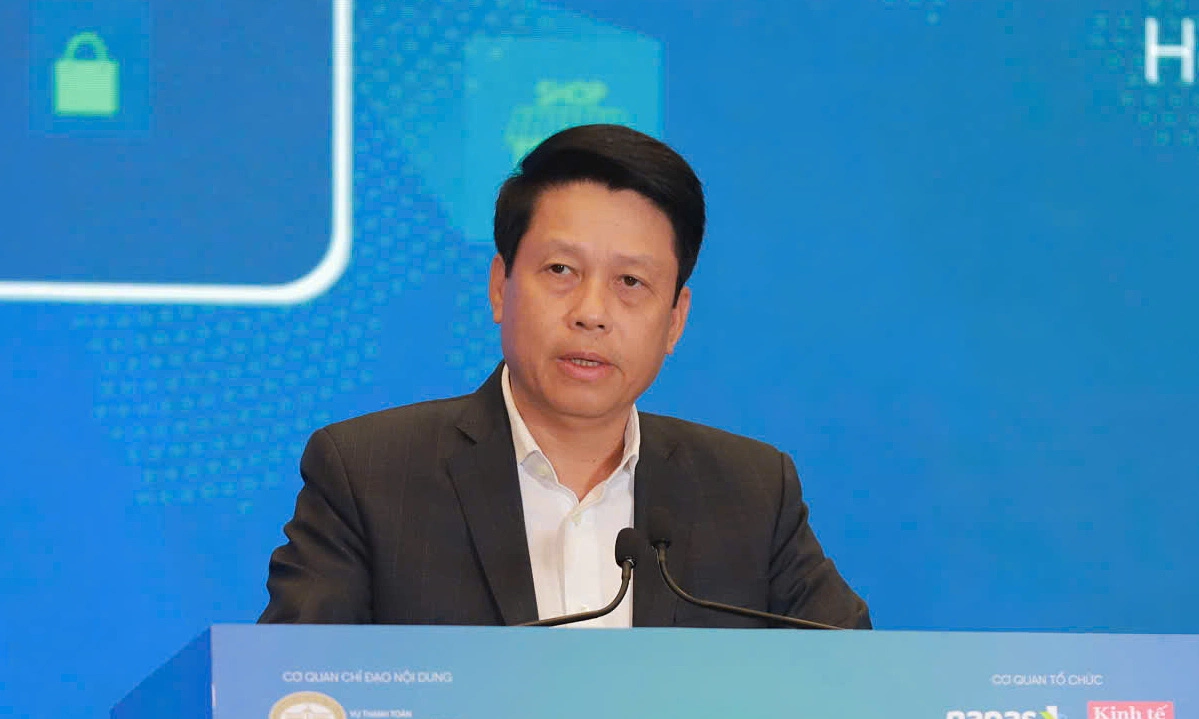
The Vietnam Insurance Summit 2026, held on 31/7 in Da Nang, gathered over 600 leaders from life and non-life insurance companies, along with many policymakers. At the event, Deputy Minister of Finance Le Tan Can and Director of the Insurance Management and Supervision Department Ngo Viet Trung visited FPT's exhibition booth to learn about the latest technology solutions.
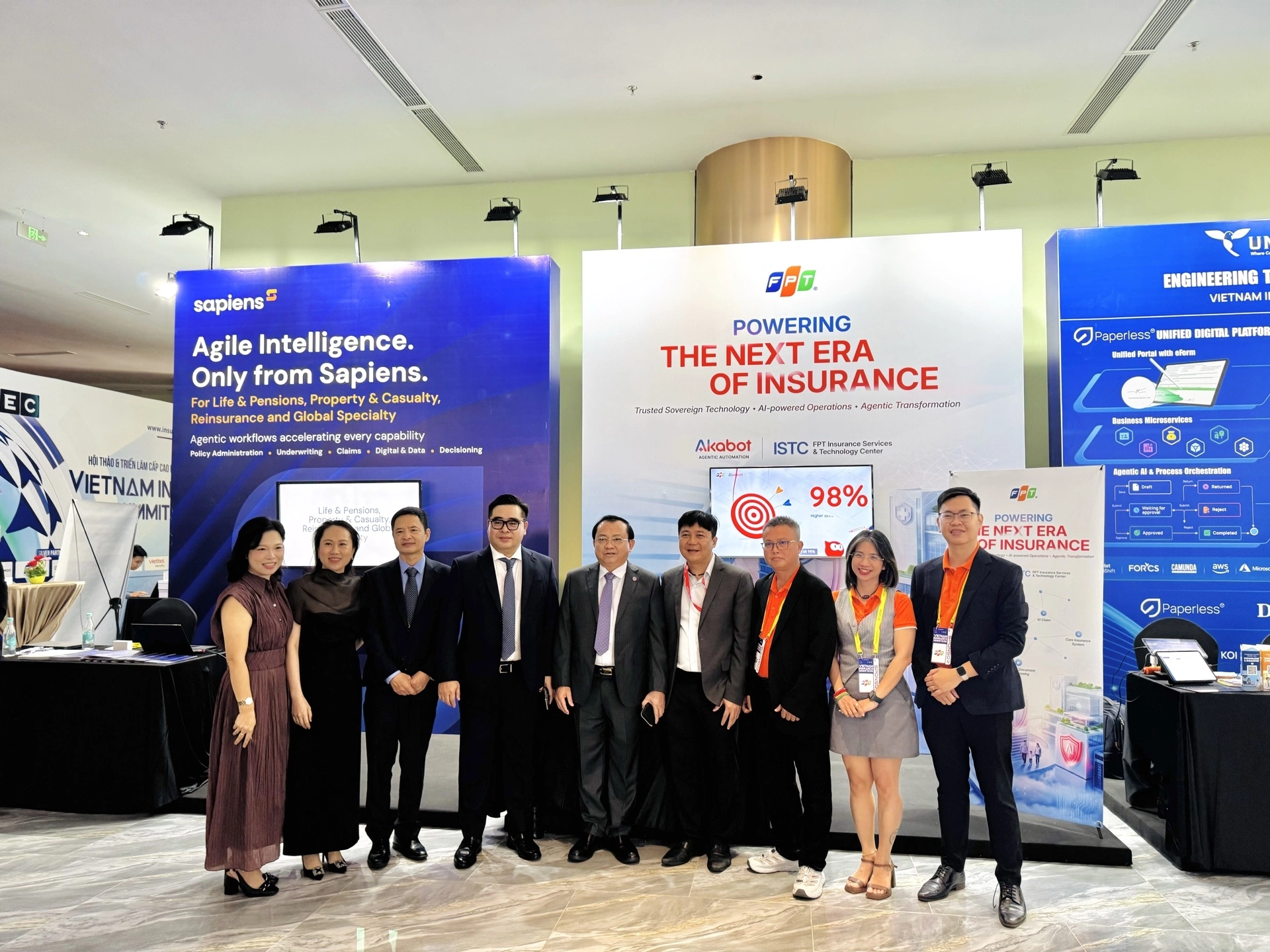 |
Deputy Minister Le Tan Can and Director Ngo Viet Trung at FPT's exhibition booth. Photo: FPT. |
Sharing FPT's long-term strategy, Tran Hong Hai, Director of the Technology and Insurance Services Center, FPT IS, stated that Vietnamese insurance companies need to gradually enhance their technological self-reliance. He noted the insurance industry's unique nature, requiring adherence to international standards for connectivity while also meeting local legal regulations and cultural norms.
"Technological sovereignty does not mean building closed systems. The important thing is for businesses to control their data, infrastructure, and core personnel," Hai emphasized. He explained that mastering these three layers of capability helps businesses leverage global achievements while remaining proactive against security risks and reducing dependence on external providers.
In recent years, FPT has consulted on and implemented numerous core-insurance systems, the FPT.InsuranceX multi-channel distribution platform, and digitized claims services. These solutions aim to build a flexible ecosystem, allowing for scalable growth according to business needs without requiring changes to the entire underlying platform.
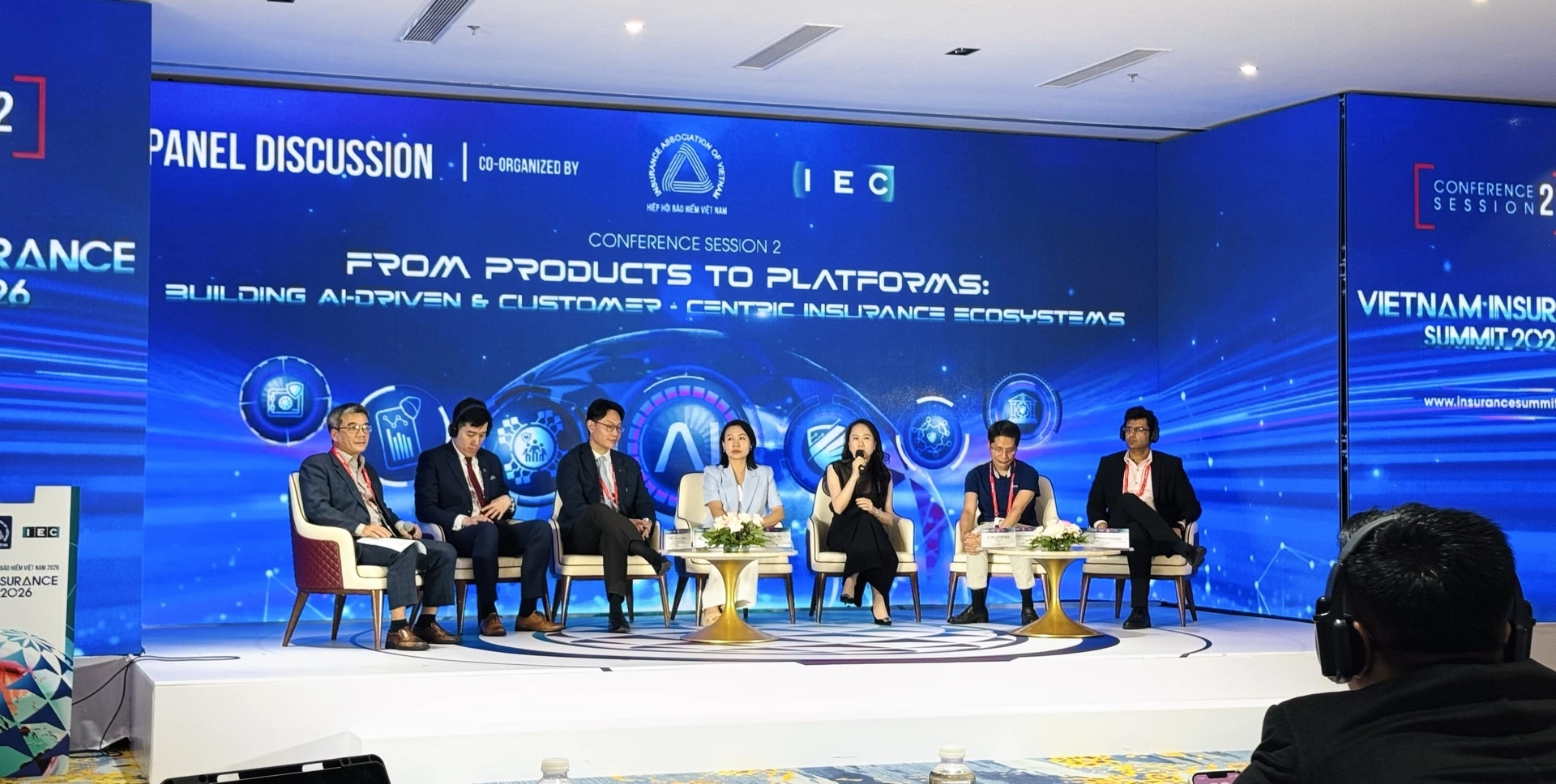 |
Nguyen Minh Nguyen Thanh, Sales Director, Akabot, FPT Group (third from right) at a conference discussion session. Photo: FPT. |
Beyond infrastructure, experts also focused on the practical application of AI in operational processes. During a discussion session on customer-centric ecosystems, Nguyen Minh Nguyen Thanh, Sales Director of Akabot (FPT), raised concerns about operational pressure from a surge in contract numbers. She highlighted that behind each contract lies a significant volume of work, including document verification, data entry, and information reconciliation. "If AI is only applied to sales or customer service (front-office) and ignores the back-office operations, businesses will soon face bottlenecks," Thanh affirmed.
Drawing from Akabot's implementation experience at entities such as Bao Viet Nhan Tho, PJICO, and Prudential, Thanh proposed an "AI workforce" model. In this model, software robots and AI Agents handle repetitive tasks and process large volumes of records under human supervision. "AI does not completely replace human personnel. This technology supports data processing and provides initial suggestions, allowing specialists to focus on tasks requiring experience, judgment, and direct customer interaction," the Akabot representative shared.
To support businesses, FPT develops the Akabot ecosystem in two ways: providing an automation platform that supports natural language and AI features for businesses to quickly build virtual assistants; and offering pre-packaged AI Agents for specific functions such as accounting, finance, and sales support. This pre-packaging helps insurers reduce trial time and easily assess effectiveness before scaling up.
However, Thanh also noted that AI's effectiveness depends on the quality of the core system and data cleanliness. Therefore, technological self-reliance and the development of an AI workforce must progress simultaneously.
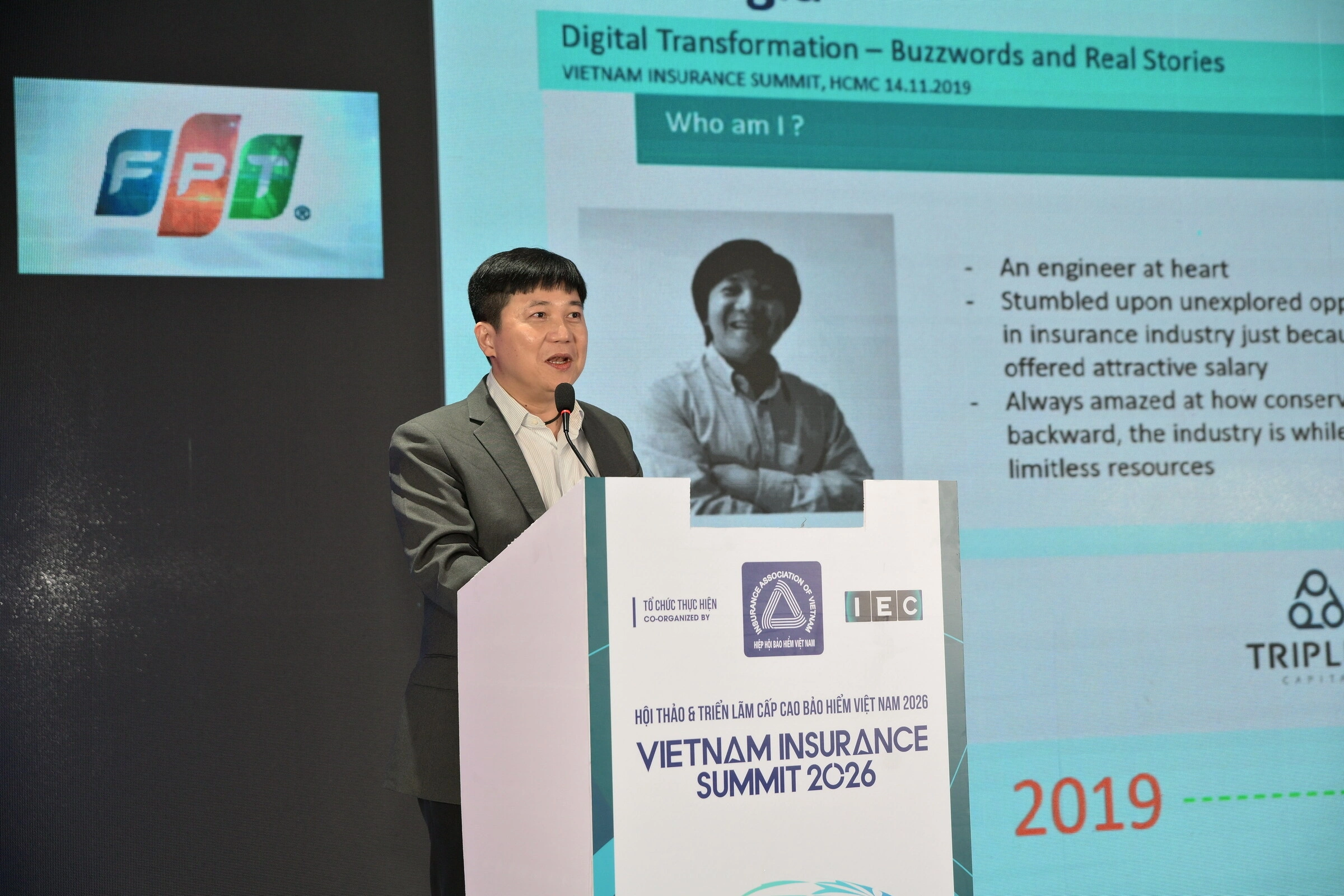 |
Tran Hong Hai, Director, Technology and Insurance Services Center, FPT IS, FPT Group sharing at the conference. Photo: FPT. |
FPT representatives believe that in the near future, the measure of success will no longer be whether a business uses AI, but rather how deeply AI is integrated into processes and the actual value it delivers. Mastering technology does not necessarily mean developing the entire system independently; it also involves clearly defining which capabilities need direct control and establishing mechanisms for secure data usage.
The practical approach FPT proposed at the conference is to start with specific problems, build a solid foundation, and then gradually integrate AI into the entire business cycle. FPT experts stated that with human supervision and a robust infrastructure, AI will become a powerful tool, helping the insurance industry enhance operational efficiency and adapt quickly to market fluctuations.
Thanh Thu