Closing the trading session on 5/6, spot gold prices fell by 146 USD to 4,328 USD per ounce. This marks the lowest level since 24/4, bringing the total weekly decline to 4.3%.
The decline was primarily driven by a stronger-than-expected US May jobs report, which reinforced the likelihood of the Federal Reserve (Fed) maintaining high interest rates for an extended period. Global inflation concerns are also escalating due to the ongoing Middle East conflict.
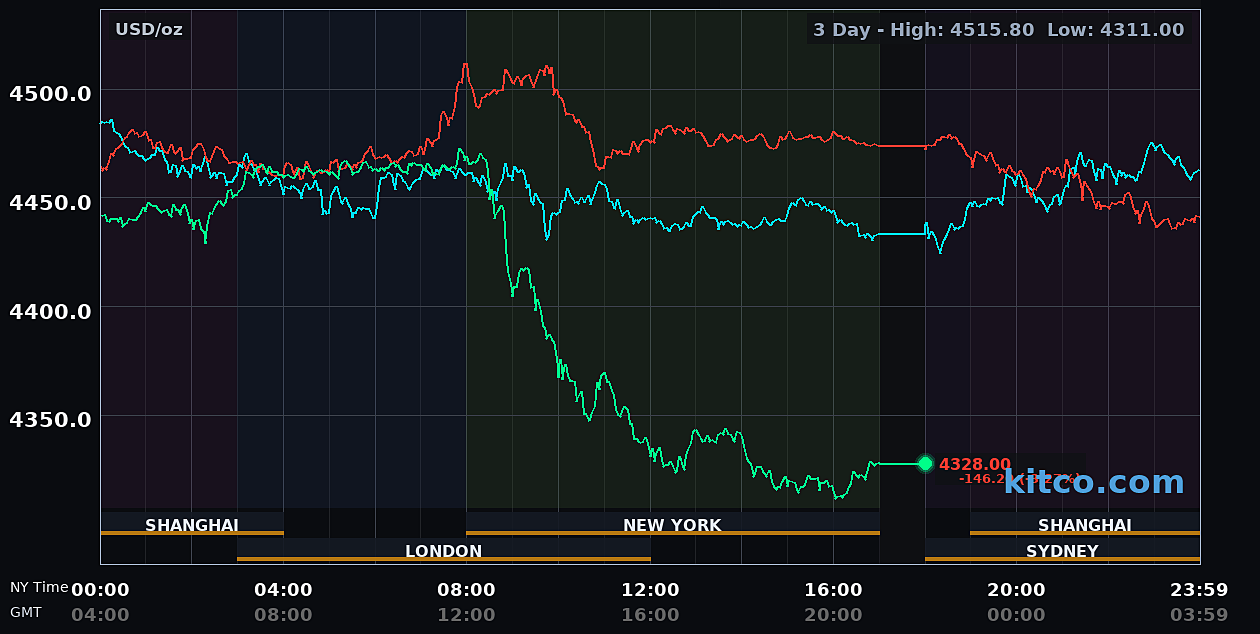 |
World gold price plunged on 5/6. Chart: Kitco |
According to the US Bureau of Labor Statistics, the country added 172,000 new jobs in May. This figure was double the forecast by analysts in a Reuters survey and also surpassed April's preliminary data.
"The new data significantly exceeded expectations. With ongoing conflict, persistent inflation pressure, and high energy prices, the Fed is unlikely to cut interest rates. Gold prices will therefore remain under pressure," commented Bart Melek, global commodity strategist at TD Securities.
US government bond yields also accelerated following the jobs report. This development further increased the opportunity cost of holding non-yielding assets such as gold.
Since the Middle East conflict erupted in late February, gold prices have fallen by nearly 20%. The conflict has driven up crude oil prices, sparking concerns about rising inflation and interest rates.
While gold traditionally serves as an inflation hedge, high interest rates typically put pressure on the precious metal. Markets are now forecasting a 72% chance of a Fed rate hike in December. Before the jobs report was released, this probability stood at only 50%.
Beyond gold, other precious metals also experienced declines. Silver fell over 8% to 67.7 USD per ounce, while palladium and platinum closed the week down over 6%. Overall for the week, all three metals saw their prices drop.
Ha Thu (according to Reuters, Kitco)