The latest weekly Kitco gold survey reveals Wall Street analysts are hesitant ahead of the U.S. Federal Reserve (Fed) meeting. Individual investors, meanwhile, have turned pessimistic after gold prices dipped near the 4,000 USD an ounce mark.
Among the 17 Wall Street experts surveyed, only 4 forecast a rise in gold prices, while 2 predicted a decline. The majority, 11 experts, opted to observe and await signals from the Fed.
Conversely, an online survey of individual investors recorded 70 votes. Of these, 39% forecast an increase in gold prices next week, while 49% anticipate a continued decline. The remaining 13% believe the market lacks a clear trend.
According to Marc Chandler, Managing Director at Bannockburn Global Forex, the recent multi-day rally has helped gold recover more than 38% from its late May decline. Momentum indicators are currently oversold but do not yet signal a reversal.
Chandler noted that next week will feature several G10 central bank meetings, with only the Bank of Japan (BOJ) expected to raise interest rates. Additionally, the Fed will hold its first meeting under new Chairman Kevin Warsh. Chandler suggests he tends to increase gold holdings if prices establish a new low.
Adrian Day, Chairman of Adrian Day Asset Management, forecasts an increase in the metal's price. He believes the probability of gold having bottomed out is relatively high. If the Iran conflict concludes, the USD may lose some of its safe-haven role, allowing gold to recover. Furthermore, cooling oil prices will ease pressure for interest rate hikes. While not expecting an immediate sharp surge, he believes the likelihood of gold prices rising is currently higher than falling.
Conversely, David Morrison, senior market analyst at Trade Nation, remains cautious. He suggests that if the U.S. and Iran reach a peace agreement, leading to a weaker USD, gold could benefit. However, at present, the precious metal remains in a risk zone despite a strong recovery session.
Daniel Pavilonis, senior commodity broker at StoneX Group, warns that gold prices could still fall to the 3,800 USD range before forming a sustainable upward trend. He notes that the market is currently reversing continuously as it approaches key technical levels, similar to trends observed in the stock market.
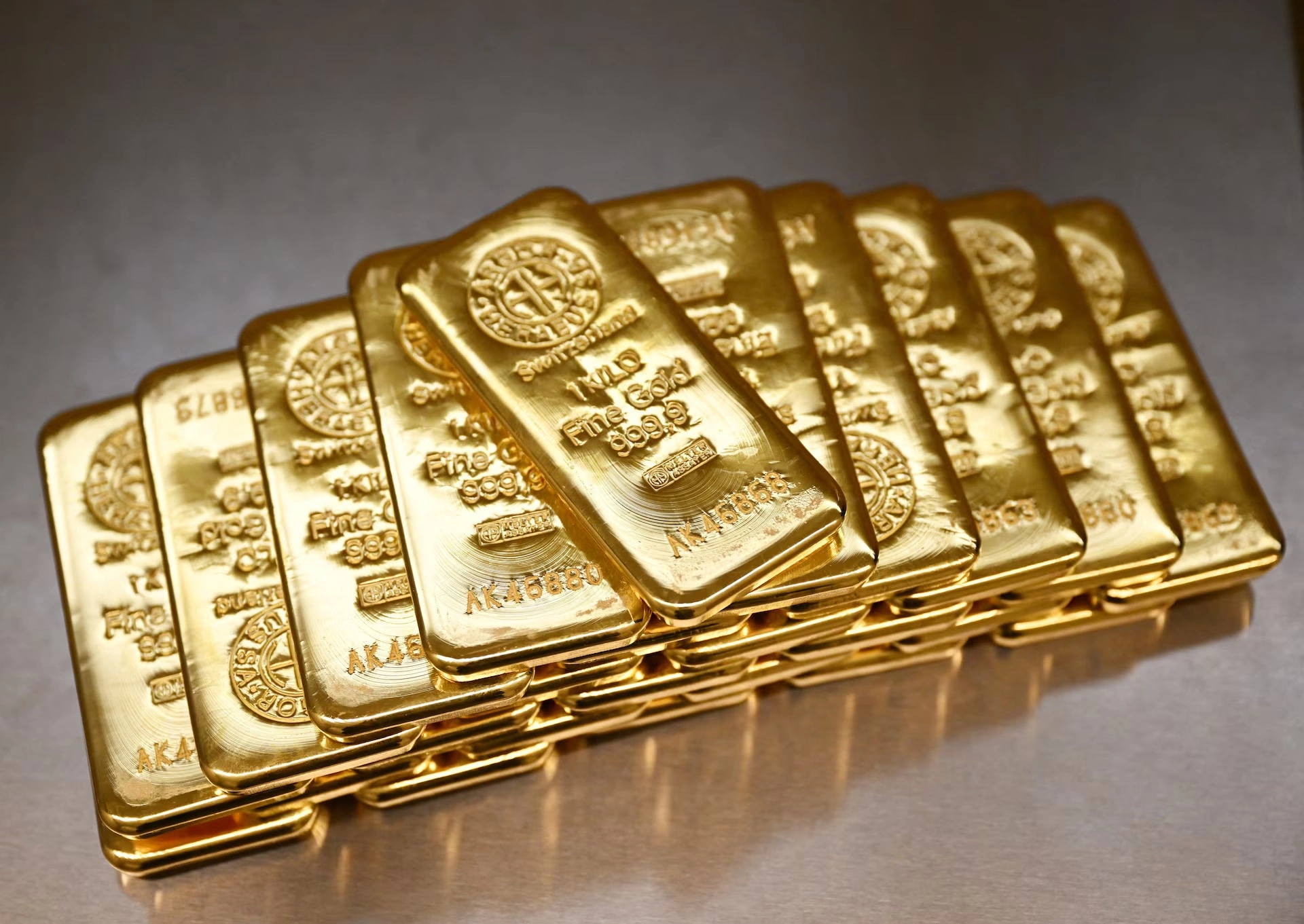 |
Gold bars stacked in the vault of German gold dealer Pro Aurum, 1/2025. Photo: Reuters |
Darin Newsom, senior market analyst at Barchart, considers forecasting gold's direction in the current environment almost impossible. The market no longer operates according to technical analysis or traditional fundamental factors but behaves like a "completely different entity." Central banks continue to buy, while investors and traders consistently sell despite geopolitical uncertainties.
Gold, traditionally seen as a safe-haven asset, is not currently reacting in that manner. Inflation data released last week should have supported prices, but gold only rose when oil prices fell, and oil declined primarily due to media reports from the U.S. President.
Newsom states that the market is not driven by fundamental or technical factors but primarily dominated by trading algorithms. Therefore, it is no longer a matter of fundamental or technical analysis. The crucial question is what triggers these algorithms to execute buy and sell orders daily. This expert points out that it is the news appearing in the market.
"What I am currently seeing is capital flowing out of gold, while central banks take advantage to buy whenever prices fall. This creates a tug-of-war in the market," the expert added.
Tieu Gu (according to Kitco)