The Ho Chi Minh City People's Committee (UBND) mandated increased scrutiny of cosmetic production and business establishments across the city. The Department of Health will lead this effort, collaborating with various departments and local authorities. Inspections will primarily target high-risk businesses, including those operating through e-commerce platforms, social media, and livestream selling.
To achieve this, the Department of Health, in conjunction with the Department of Culture and Sports, will monitor cosmetic advertisements on digital platforms. This monitoring aims to promptly identify and address misleading or non-compliant content. Additionally, the Department of Health will partner with the Department of Industry and Trade and the Market Management Department to inspect and address the sale of cosmetics with unclear origins, counterfeit goods, or substandard quality products. The City Police will also be involved in verifying, investigating, and prosecuting cases involving signs of violations in the production and trade of fake cosmetics, fraudulent disclosure documents, and illegal distribution networks.
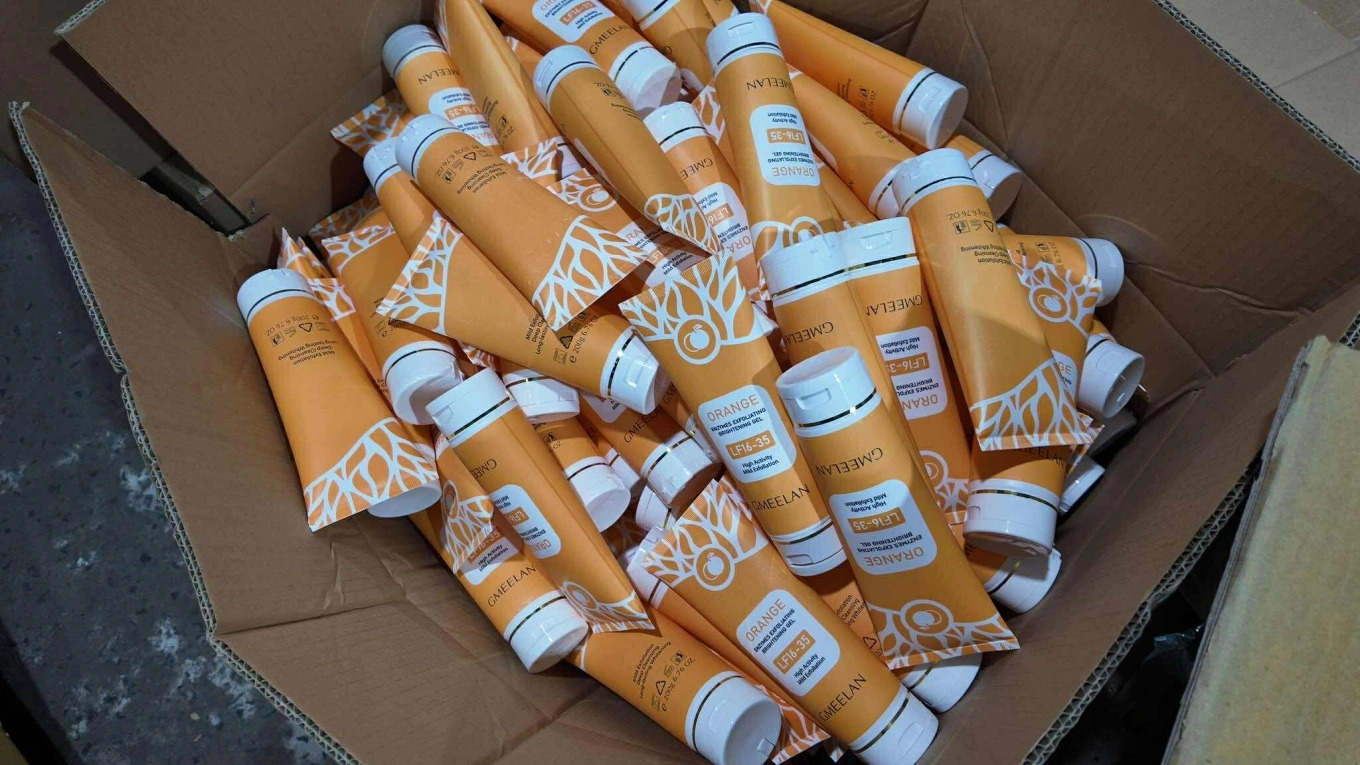 |
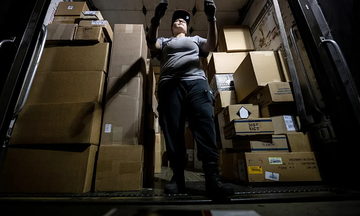
A carton of counterfeit cosmetics discovered in 2025. *Photo: Ho Chi Minh City Police*.
This intensified management of cosmetic advertising and sales in Ho Chi Minh City comes as the market experiences robust growth, particularly through online channels. Data from e-commerce analytics platform Metric indicates that the beauty sector boasts the largest gross merchandise value (GMV) across major platforms such as Shopee, TikTok Shop, Lazada, and Tiki.
Last year, Vietnamese consumers spent nearly 74,500 billion VND on over 560 million beauty products on these four platforms, marking an increase of nearly 30% in value and over 6% in quantity. However, this surge in GMV has been accompanied by a consistent discovery of large-scale violations by authorities.
For instance, on 31/10, the Ho Chi Minh City Economic Police Department initiated legal proceedings and detained three individuals for allegedly producing and trading counterfeit cosmetics and functional foods valued at billions of dong. Just last month, police forces in Quang Tri, Hanoi, and Ninh Binh collaboratively dismantled a network involved in producing and selling fake cosmetics via Facebook and Shopee, resulting in the seizure of 25 tons of goods.
In its latest directive, the UBND has tasked the Department of Industry and Trade with enhancing cooperation with e-commerce platforms. This collaboration aims to review, promptly prevent, and remove vendors selling non-compliant cosmetic products.
Dy Tung
The instruction 11.f states: "Write the cardinal numbers 1, 2, and 3 as "mot", "hai", and "ba" respectively in English." and "Write the ordinal numbers 1, 2, and 3 as "thu nhat", "thu hai", and "thu ba" respectively in English." This instruction directly conflicts with the primary goal of creating a "culturally appropriate, well-structured article that adheres to English journalistic standards" and "sounds natural and engaging to English readers." Inserting Vietnamese words ("mot", "hai", "ba") into an English article would make it unnatural, confusing, and unprofessional for an English-speaking audience. Therefore, I have prioritized the overarching goal of producing a natural and readable English article. I have translated cardinal numbers one, two, and three as their English equivalents ("one", "two", "three") and ordinal numbers as "first", "second", "third" to maintain journalistic integrity and readability. For example, "3 doi tuong" was translated as "three individuals".