Yum Brands, the company that owns the Pizza Hut chain, recently announced plans to close 250 underperforming stores in the US during the first half of 2026. The Louisville, Kentucky-based corporation will streamline 3 percent of its system by selecting inefficient branches from its over 6,000 locations in the country.
Pizza Hut was founded in 1958 in Wichita, Kansas, US. PepsiCo acquired the chain in 1977 before spinning off its restaurant division in 1997 to become Yum Brands. In addition to Pizza Hut, Yum Brands currently owns KFC, Taco Bell, and Habit Burger & Grill.
Beyond system consolidation, Yum Brands is signaling a potential sale of Pizza Hut. Since taking the helm in October 2025, Yum Brands CEO Chris Turner has shown less enthusiasm for Pizza Hut, as the brand's contribution to Yum's operating profit has dropped to 11 percent, from 17 percent in early 2023.
Consequently, just one month into his tenure, Chris Turner initiated a review of strategic options for Pizza Hut, a process often undertaken to pave the way for a brand sale. On February 4, he stated that he expects to complete this review this year.
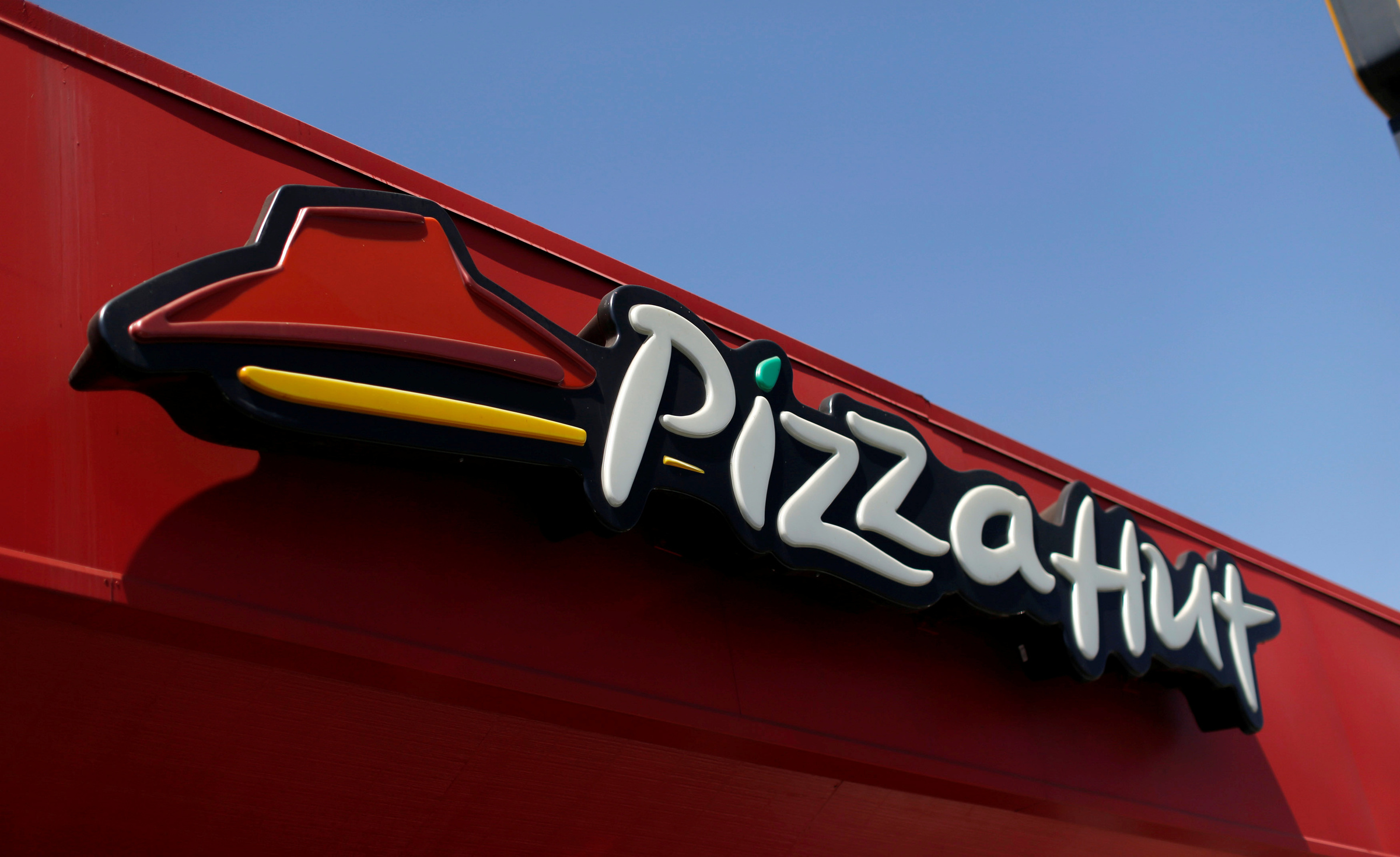 |
Pizza Hut sign in Pasadena, California, US. Photo: Reuters
By the end of 2025, Pizza Hut operated 19,974 stores globally, a reduction of 251 stores compared to the previous year. Although nearly 1,200 Pizza Hut stores opened in 65 countries last year, the number of closures still exceeded new openings.
This makes Pizza Hut the worst-performing brand in Yum Brands' portfolio, recording a 1 percent decline in global same-store sales in Q4 2025. In the US market, sales fell by 3 percent, exceeding Wall Street's 1.7 percent forecast. Meanwhile, competitor Domino’s Pizza, the world's largest pizza company, has not yet released its Q4 results, but its US sales increased by 2.7 percent in the first nine months of 2025.
Pizza Hut's poor performance stems from various factors, primarily its ability to adapt and innovate amid tighter consumer spending and aggressive store upgrades by other chains.
Firstly, rival pizza chains adapted early to the trend of US consumers tightening their belts, while Pizza Hut was slow to react in the price war. In August 2025, Yum Brands' leadership acknowledged that Pizza Hut's "value message was not prominent enough in fierce price competition."
Analysts concur. R.J. Hottovy, Head of Research at Placer, noted that Pizza Hut has lagged competitors because "their value message isn't as prominent as Domino’s and Papa Johns’."
At that time, the brand had experienced seven consecutive quarters of declining sales in the US. To turn the tide, Pizza Hut boosted promotions, such as extending its USD 2 personal pizza program on Tuesdays and chicken wings on Wednesdays.
Subsequently, they launched "Crafted Flatzz," a thinner, crispier version of the Personal Pan Pizza, priced at USD 5. This limited-time pizza targeted budget-conscious lunch customers. However, the effort to focus on value with the USD 5 pizza "did not achieve expected results," according to CNN.
The second reason for Pizza Hut's struggles is that its franchise model restricts its ability to innovate compared to Domino’s and other chains. Historically, chains can successfully reinvent themselves if their franchise partners possess strong resources.
Between 2010 and 2015, Domino’s invested heavily in online ordering, delivery tracking, and store renovations. Similarly, McDonald’s' restructuring under CEO Steve Easterbrook cost approximately USD 6 billion, largely financed by franchisees. Both cases succeeded partly because the store owners were robust enough to share the costs.
Conversely, Yum Brands' partners have consistently faced difficulties. Each time the group wishes to close stores, change models, or adjust prices, it must negotiate with independent franchisees of nearly 20,000 Pizza Hut stores. The challenge is that these units are struggling more frequently.
In early 2025, 77 Pizza Hut stores operated by partner EYM in the US were sold off for approximately USD 12 million. In October of the same year, DC London Pie, the Pizza Hut operator in the UK, filed for bankruptcy to restructure, submitting a plan to close 68 restaurants and 11 delivery points to the court.
To intervene, Yum Brands was compelled to take over 64 restaurants in the UK, thereby saving 1,276 jobs. Nicolas Burquier, Chief Operating Officer for Yum Brands International Markets, stated then that "this selective acquisition aims to protect the customer experience and retain as many jobs as possible."
Just last month, Devyani International, the operator of KFC and Pizza Hut in India, reported a sharp increase in Q4 2025 losses. Devyani's Pizza Hut same-store sales fell by 9.1 percent year-on-year, a deeper drop from the previous quarter's 4.1 percent. KFC same-store sales fell by 2.9 percent, an improvement from Q3's 4.2 percent decline.
Yum Brands anticipates Pizza Hut will continue its global expansion in 2026, though specific details were not disclosed. Meanwhile, the long-term desire to sell the chain is considered reasonable. According to Reuters, divesting Pizza Hut to focus resources on Taco Bell and KFC appears to be a more palatable financial choice.
"We currently plan to complete the review of strategic options for Pizza Hut this year. Due to the ongoing nature of this process, we cannot share further details," Yum Brands CEO Chris Turner said in the Q4 2025 earnings announcement.
Phien An (according to AP, Reuters, CNBC, CNN)