Amidst a warming global climate, many countries are seeking to reduce emissions and implement greenhouse gas absorption solutions. Blue carbon ecosystems are gaining increasing attention as a vital part of climate strategies due to their immense carbon sequestration capabilities and the numerous other benefits they provide.
This integration is evident in Nationally Determined Contributions (NDCs), which outline each nation's commitments under the Paris Agreement. NDCs are documents detailing a country's emission reduction targets and solutions for climate adaptation. As of late September 2023, 168 NDCs, representing 195 parties to the Paris Agreement, had been submitted to the Secretariat of the United Nations Framework Convention on Climate Change (UNFCCC). An analysis by the German Environment Agency (UBA) of 148 new or updated NDCs revealed that 97 of them mention blue carbon or related ecosystems such as mangroves, seagrasses, and tidal flats.
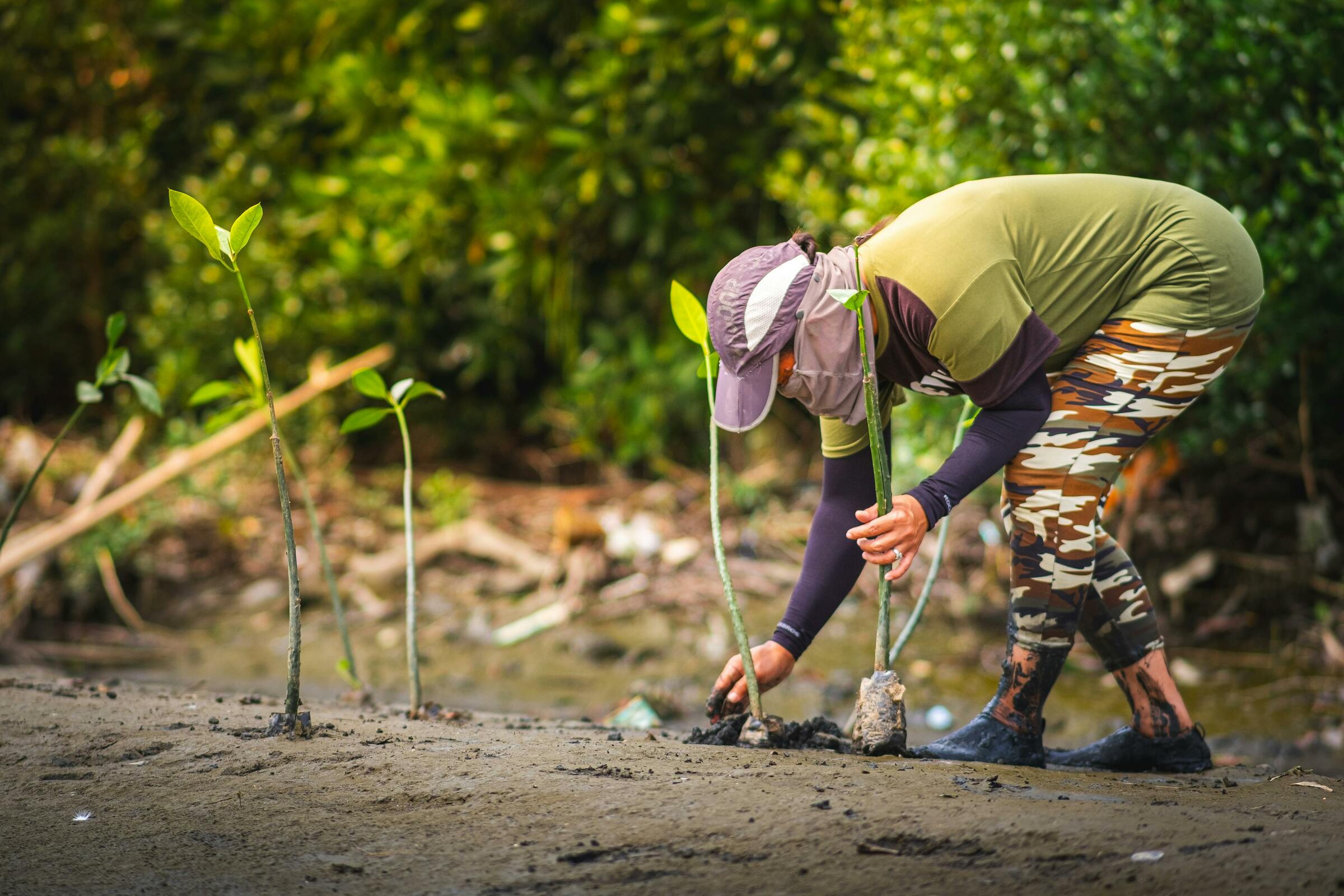 |
Local residents participate in mangrove planting and restoration in a coastal area. Photo: Pexels |
Approximately 62 NDCs specifically include blue carbon in their emission reduction targets, or combine both reduction and adaptation efforts. Beyond NDCs, several countries are also integrating blue carbon into their net zero targets, climate adaptation plans, biodiversity conservation strategies, and marine spatial planning. This provides a foundation for blue carbon ecosystems to be recognized more explicitly in policy, paving the way for access to climate finance and international investment for their protection and development.
Policies from Indonesia and Philippines
In Southeast Asia, Indonesia is among the pioneers in developing national-level blue carbon policies. The archipelago currently boasts approximately 3,45 million hectares of mangroves and around 660.000 hectares of seagrass beds.
In February, Indonesia unveiled its National Action Plan for the Protection and Management of Blue Carbon Ecosystems for the 2025-2030 period, known as RENAKSI. This plan focuses on the protection, restoration, and sustainable management of mangroves and seagrass beds. The document also identifies 21 priority action groups, ranging from baseline surveys and mapping to perfecting the legal framework and mobilizing climate finance.
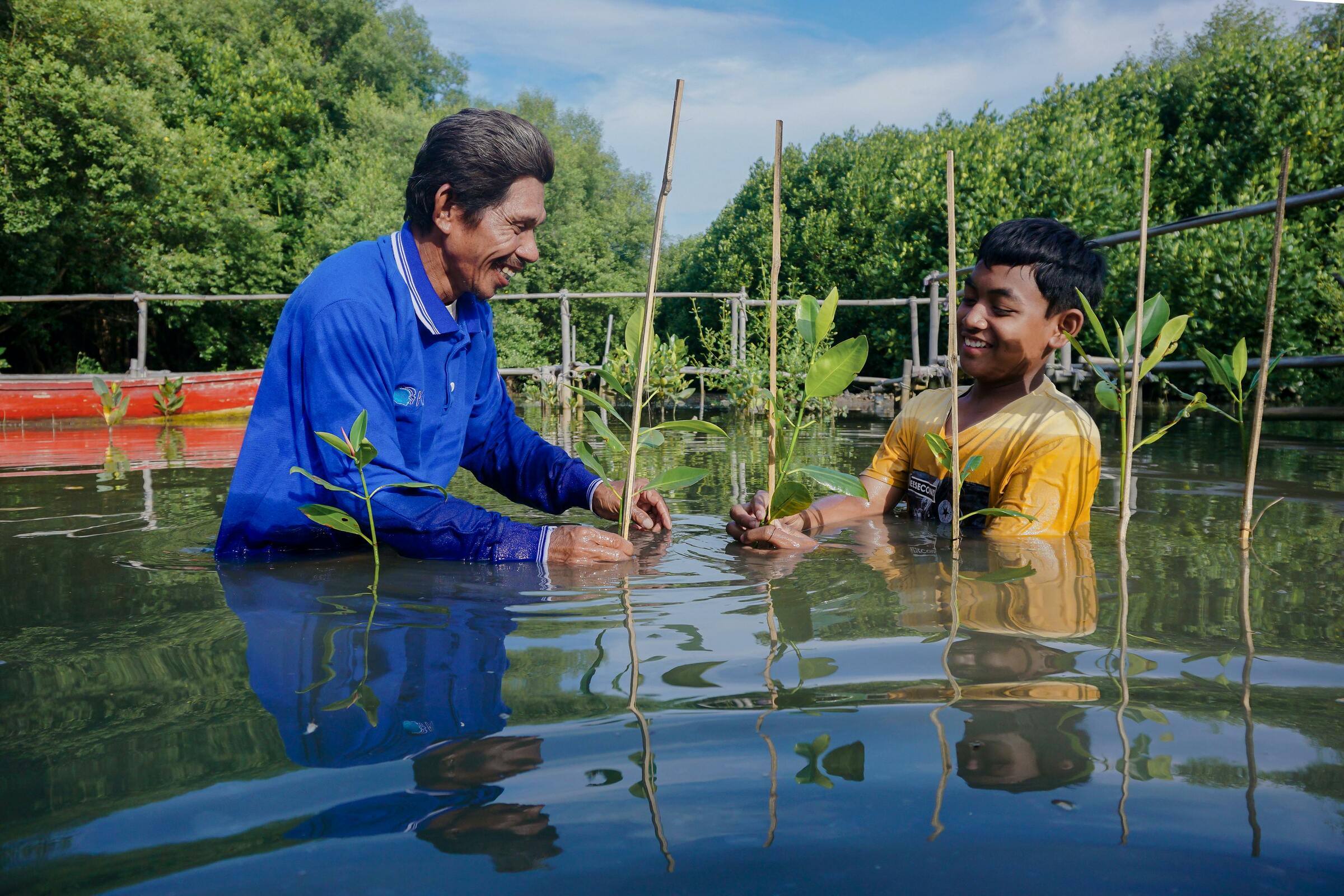 |
Mangrove protection and restoration activities with local community participation. Source: Pexels |
A notable aspect of Indonesia's approach is the development and implementation of blue carbon actions within a national program framework. Blue carbon is not viewed merely as isolated conservation projects but is integrated into a coordinated plan involving ministries, local authorities, research institutes, and development partners.
The Philippines is also advancing the development of national guidelines and mechanisms for blue carbon. On 26/3, the Philippines’ National Blue Carbon Action Plan (NBCAP) was handed over to the country's Ministry of Natural Resources and Environment at the Philippines Mangrove Conference 2026.
This roadmap focuses on four key areas: science, technology, and innovation; policy and governance; community communication; and sustainable finance and livelihoods. The ecosystems covered include mangroves, seagrass beds, and tidal flats.
A highlight of the Philippines' strategy is the development of a "National Blue Carbon Quantification Standard." This technical foundation aims to standardize the measurement and assessment of carbon stocks in coastal ecosystems, before progressing towards registration mechanisms and voluntary carbon markets.
Lessons from Indonesia and the Philippines reveal a common theme: for blue carbon to advance, countries must begin by establishing robust database systems, standardizing measurement methodologies, finalizing legal frameworks, and setting up transparent financial mechanisms. Without these foundations, blue carbon's potential may struggle to translate into tangible projects capable of attracting investment.
Vietnam's strategy
Vietnam possesses a coastline stretching over 3.200 km and diverse coastal ecosystems. In recent years, Vietnam has updated its NDC, committed to achieving net-zero emissions by 2050, and implemented the Strategy for Sustainable Development of the Marine Economy until 2030, with a vision to 2045. The updated NDC in 2022 also references nature-based adaptation models, coastal ecosystems, and communities.
 |
The Ministry of Agriculture and Environment chairs a meeting to propose the implementation plan for the National Blue Carbon Action Program in Vietnam (NBCAP), 20/1. Photo: UNDP |
According to the Ministry of Agriculture and Environment, blue carbon could contribute to a reduction of approximately 3 million tons of CO₂ in Vietnam's upcoming NDC target by 2035. However, this is an initial calculation. Current assessments primarily provide preliminary estimates of mangrove potential; tidal flats and seagrass beds still require further research and inventory.
The Ministry of Agriculture and Environment has collaborated with domestic and international partners to promote the National Blue Carbon Action Program in Vietnam (NBCAP Vietnam). This platform connects knowledge, finance, and innovation to conserve and restore blue carbon ecosystems. Concurrently, Vietnam is finalizing its legal framework related to blue carbon ecosystem management, such as: the Environmental Protection Law 2020, the Forestry Law 2017, the Biodiversity Law 2008. Regarding the domestic carbon market, Decree 29/2026/ND-CP on carbon exchanges, effective from 19/1, regulates activities for registration, coding, transfer of ownership, custody, trading, and settlement of greenhouse gas emission quotas and carbon credits. In the future, credits from blue carbon projects may participate in the market if they meet the conditions for measurement, appraisal, recognition, and trading as stipulated.
From policy to implementation
Blue carbon is gradually transitioning from a research concept to a policy agenda. However, this is not a solution that can be implemented with mere slogans. Each project requires clear data, standardized measurement methods, transparent monitoring mechanisms, and benefit-sharing arrangements with local communities.
Lessons from countries in the region show that blue carbon policies often begin with three key steps: building databases and mapping ecosystems, developing measurement standards, and designing appropriate financial mechanisms.
The value of blue carbon ecosystems extends beyond the amount of carbon stored. Mangroves, seagrass beds, and tidal flats also help protect coastlines, sustain fisheries resources, and support the livelihoods of coastal communities. Therefore, blue carbon projects should be designed with multiple objectives in mind: climate, ecology, and local economic development.
Van Ha