IEA executive director Fatih Birol announced this on 23/3. He stated, "If necessary, of course, we will act. We monitor conditions, analyze and assess the market, and discuss with member countries about further reserve releases." Birol made these remarks at the National Press Club of Australia in Canberra, marking the start of his global tour.
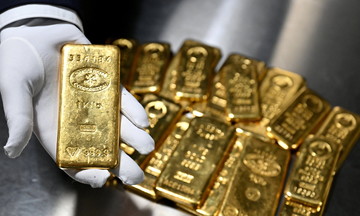
Birol clarified that there would be "no specific oil price" to trigger the next release. He emphasized that while releasing reserves helps calm the market, it "is not a solution. It only helps ease pressure on the economy." This follows a previous agreement on 11/3, when IEA member countries committed to releasing a record 400 million barrels of oil. This earlier release, a response to the energy crisis caused by the conflict in the Middle East, represented approximately 20% of their total oil reserves.
The IEA head's tour began in Canberra because the Asia-Pacific region is particularly vulnerable to the current oil crisis. Birol explained that this region heavily relies on oil transported through the Strait of Hormuz. He described the Middle East crisis as "very serious," even suggesting it is worse than the combined impact of the 1970s oil shocks and the Russia-Ukraine war. The ongoing conflict in the Middle East has already disrupted approximately 11 million barrels of oil per day from the global supply.
After meeting Australian Prime Minister Anthony Albanese, the IEA executive director will travel to Japan later this week, ahead of the G7 meeting.
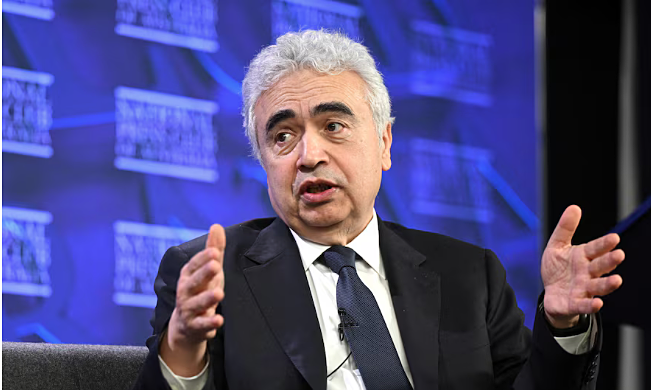 |
IEA executive director Fatih Birol at an event at the National Press Club of Australia in Canberra, on 23/3. *Photo: Reuters*
Birol asserted that "the most important solution right now is to reopen the Strait of Hormuz." He also indicated that policymakers worldwide have not fully appreciated the severity of the issue. He explained that releasing reserves is only one of the tools available to the IEA. Last week, the agency issued 10 recommendations for countries, businesses, and individuals to respond to the situation, including working remotely, limiting air travel, and reducing driving speeds. Despite these suggestions, Birol advised that each country should determine the appropriate methods to save energy.
At midday on 23/3, Brent crude was trading around USD 108 per barrel, nearly a 50% increase. US WTI crude was close to USD 100, making it 47% more expensive than in late February, when the conflict in the Middle East began.
By Tu Anh (according to Reuters)