These recommendations were highlighted by experts at the "Greening Industrial Parks in Vietnam" workshop on 7/7.
Phan Thu Hang, Chairwoman of the Vietnam Green Building Council (VGBC), emphasized that climate change significantly affects Vietnam. Extreme heat waves, storms, and floods directly impact production and business operations.
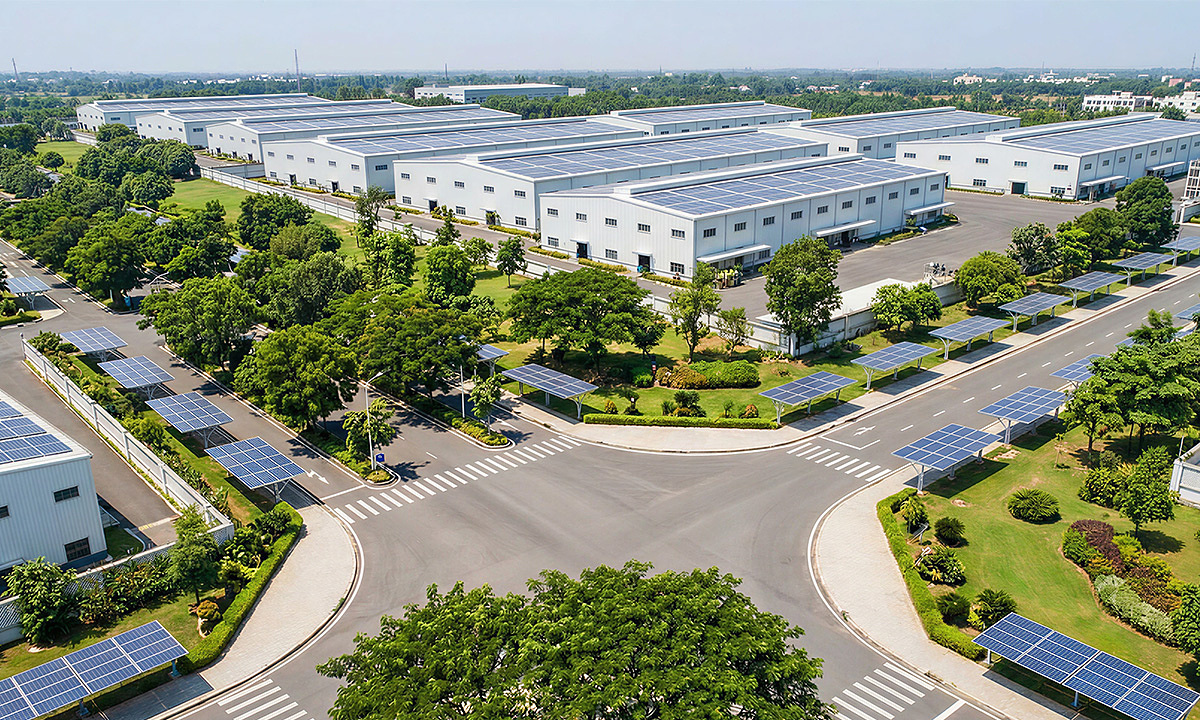
"Future green industrial parks must not only save energy and reduce carbon emissions but also utilize natural infrastructure for disaster resilience," Hang stated.
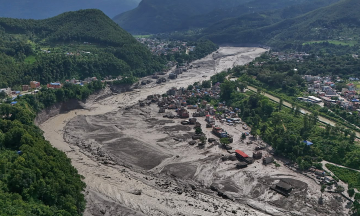
According to data from the Ministry of Agriculture and Environment, Vietnam typically experiences dozens of natural disasters annually. Last year alone, the country recorded 22 storms and tropical depressions, resulting in over 85 trillion VND in damages.
VGBC CEO Douglas Snyder warned that severe flooding could force industrial parks to close for weeks, causing equipment damage and substantial economic losses. He added, "Disaster resilience is becoming an essential requirement for green industrial park design and climate change risk management."
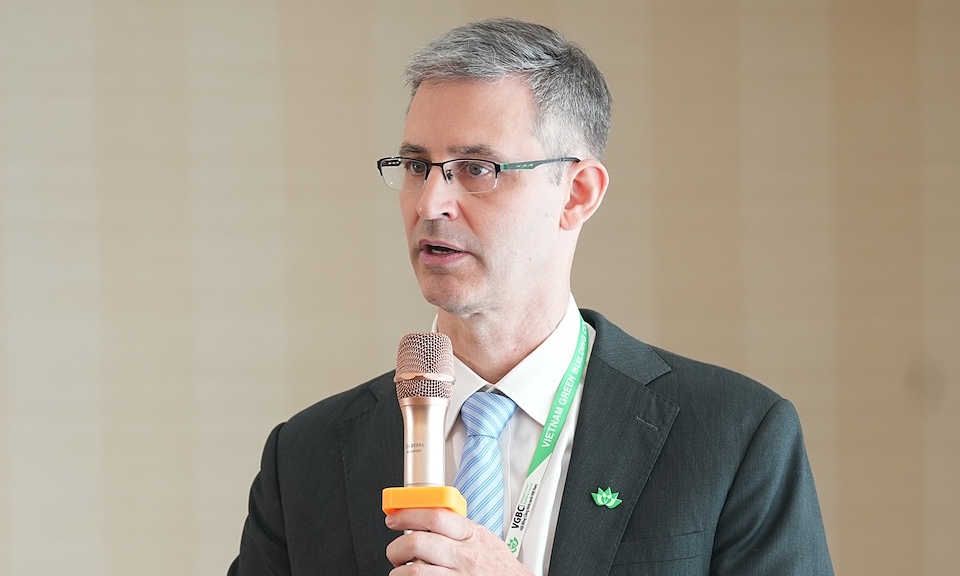 |
Douglas Snyder, VGBC CEO, speaking at the workshop on the morning of 7/7. Photo: VGBC |
Douglas Snyder, VGBC CEO, speaking at the workshop on the morning of 7/7. Photo: VGBC
Furthermore, Vietnam's and ASEAN's sustainable finance classification systems incorporate criteria for climate change adaptation and resilience. This implies that an industrial park with strong disaster resilience can reduce damage to production facilities and enhance access to green capital.
Torsten Illgen, Chairman of Inros Lackner Vietnam, who participated in the Silverlake biotech high-tech park project in Hanoi, noted that the investor considered storm and flood resilience from the outset. Consequently, this 199-hectare complex features a nearly 25-hectare retention lake at its center to collect and treat rainwater – a key component of its "sponge city" strategy.
According to Illgen, this model reduces flooding, increases green space, enhances climate resilience, and replenishes groundwater sources.
"For newly constructed industrial parks, resilience should be designed from the initial stages, within the 1/2000 master plan. Investors should specifically account for the landscape, water sources, and even the types of trees planted," Torsten Illgen advised.
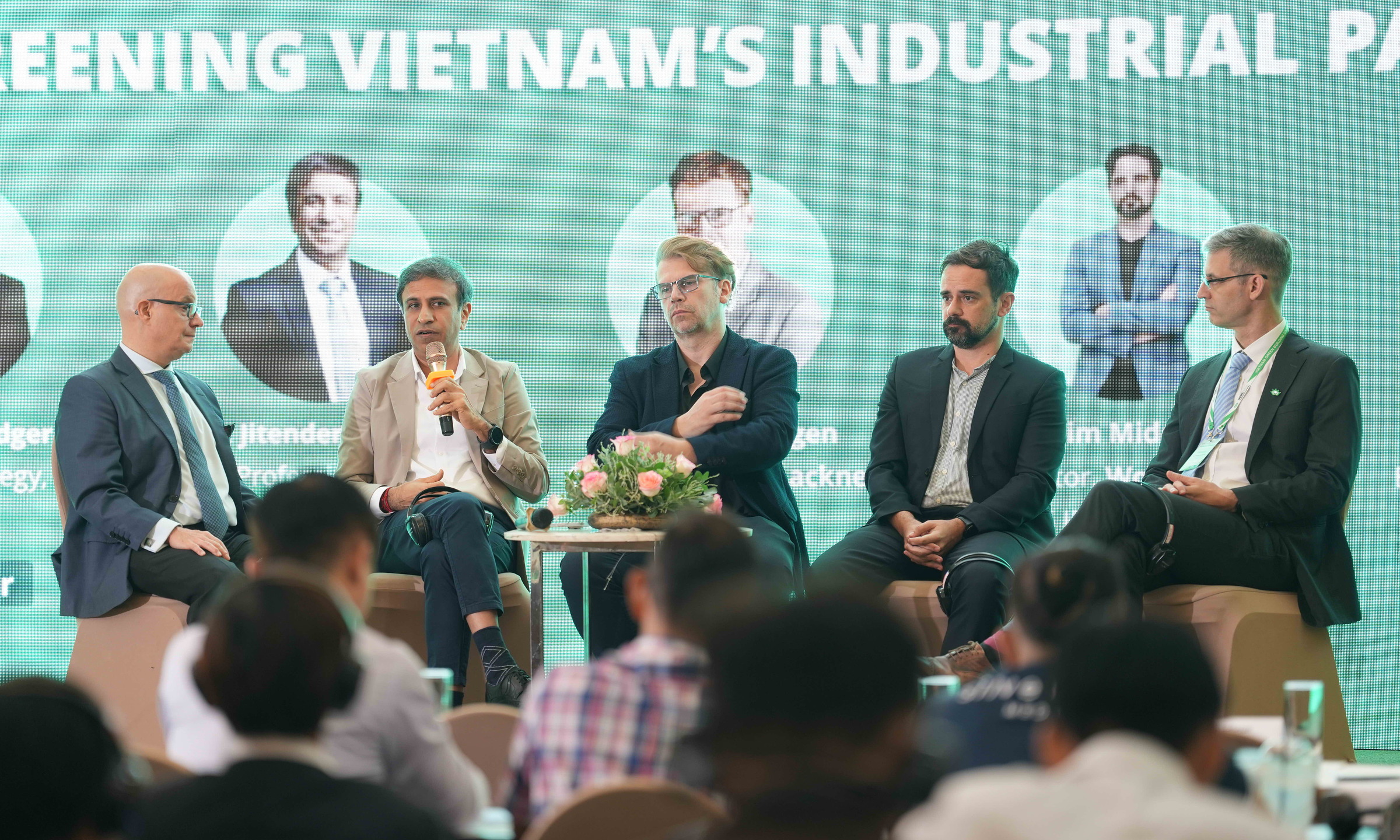 |
Experts discussing at the workshop on the morning of 7/7. Photo: VGBC |
Experts discussing at the workshop on the morning of 7/7. Photo: VGBC
Experts believe that the green transition has become a "mandatory requirement" for the future development and competitiveness of Vietnam's manufacturing sector. If the industrial sector does not achieve net-zero emissions, Vietnam risks seeing manufacturers relocate to other countries.
Douglas Snyder emphasized that green design for industrial parks should be integrated from the concept stage to save costs and enhance efficiency. He stated, "The entire project lifecycle costs should be considered. Without upfront design, conversion costs can be high, and implementation becomes more complex."
Vien Thong