Tripod design company's "Ku-An" laboratory, located on a hillside in Hitachi-ota town, Ibaraki prefecture, Japan, glows brightly at night. The lab's lighting is powered by electricity generated from 1,500 wooden boxes containing soil and organic fertilizer.
Engineer and designer Satoshi Nakagawa, 72, director of Tripod, is passionate about micropower collection, generating small electrical currents from everyday items like soil, tomatoes, bread, and wine.
Despite facing skepticism, Nakagawa believes this technology plays a vital role in solving humanity's energy challenges, especially as the global population approaches 10 billion. At that point, electricity demand will be as crucial as food supply.
"Even if it's a small contribution, I want people to be able to generate their own electricity by utilizing the soil around them", said Satoshi Nakagawa. His technology is also visually appealing and draws attention.
His system employs the same mechanism as the Voltaic pile, the world's first electric battery to produce a continuous current, invented by Count Alessandro Volta in 1800. By inserting electrodes made of conductive materials like zinc and copper into substances containing moisture or ions, the system collects small but stable electrical currents.
Last year, Nakagawa built the "Lu-An" laboratory, near "Ku-An", using 2,000 plastic cylinders filled with soil and organic fertilizer, generating 100 W of power. According to Nakagawa, this technology is suitable for off-grid regions or disaster-prone areas. The system can also power low-wattage devices such as agricultural pest sensors, flood and landslide warning systems, or anti-theft systems.
He also applies this technology to art installations. When flexible power-collecting rods are inserted into the soil, their tips glow in the dark, resembling fireflies on grass blades.
Once installed, this technology produces no carbon dioxide (CO2) emissions. It also operates independently of weather conditions, unlike wind or solar power.
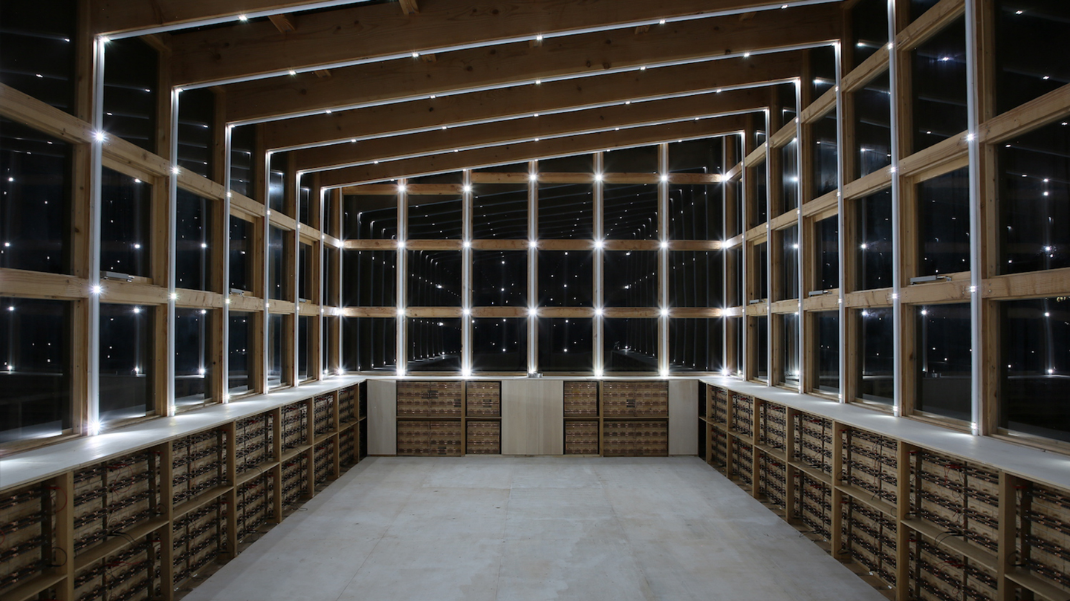 |
Tripod's Ku-An laboratory in Hitachi-ota town, Ibaraki prefecture, Japan. *Photo: Tripod* |
Engineers acknowledge Nakagawa's creations are "deeply moving" but deem them impractical. Masayuki Nakao, an emeritus professor of engineering at the University of Tokyo, stated that the initiative generates significantly less power than a conventional battery.
Responding to this perspective, Nakagawa suggests engineers should leverage this technology to develop new, appropriate applications.
"We should consider combining different energy harvesting technologies as a key element in an overall energy strategy. Their potential is limitless", he said.
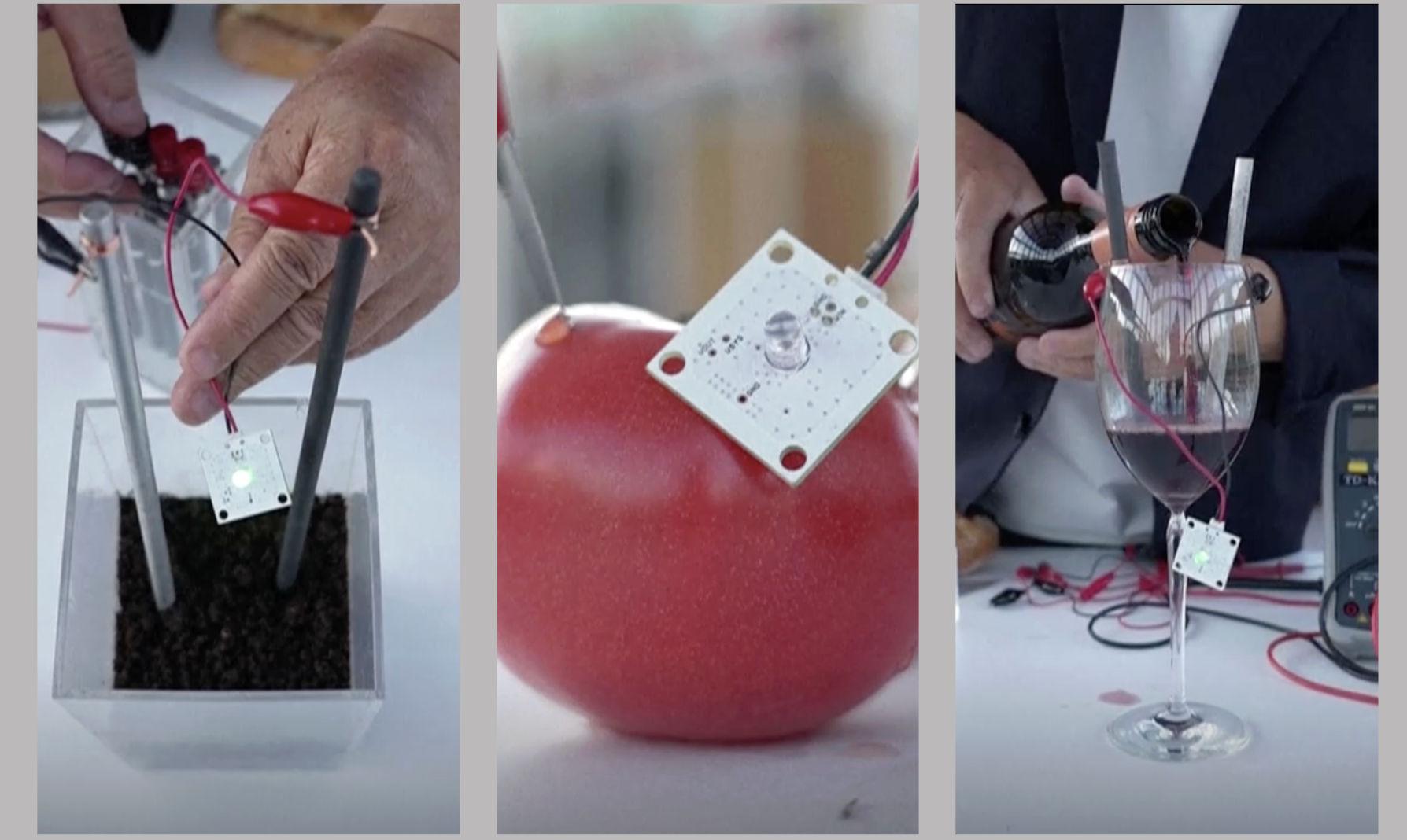 |
Various power sources for Tripod's system. *Screenshot from AFP video* |
Bao Bao (via AFP)