On 22/2, the world's tallest recycled mural was unveiled at building number 88 in the Zacamil neighborhood of San Salvador, El Salvador's capital. Venezuelan artist Oscar Olivares created the 13-meter high artwork from over 100,000 plastic bottle caps. Inspired by Italian artist Leonardo da Vinci's Mona Lisa, this version embodies a distinct Latin American style, aiming to raise environmental awareness and engage the local community.
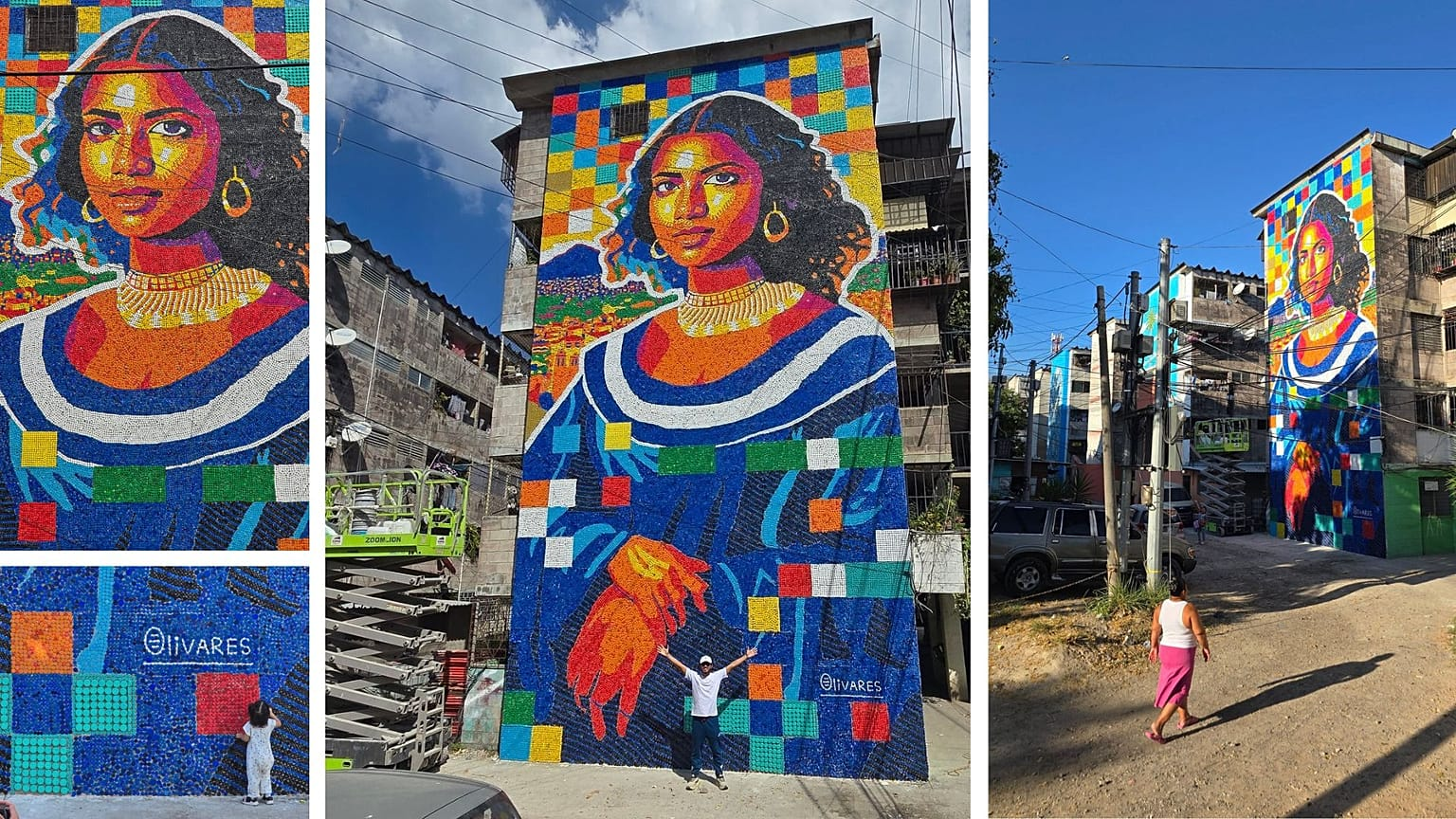 |
Mosaic image of the Latin American Mona Lisa mural made from plastic bottle caps. *Source: Euronews*.
El Salvador, lacking its own oil reserves, imported 1,2 billion tons of plastic last year for manufacturing, with plastic bottles being the largest segment at a 23% market share. This high consumption, coupled with weak waste management, contributes to severe plastic pollution. A two-year study by the University of Barcelona and the Catholic University of the North (Chile) revealed last year that Central American beaches, including El Salvador's, are the "dirtiest" in the Pacific due to plastic waste, primarily from soft drink, energy drink, and bottled water containers.
Artworks made from plastic waste serve a dual purpose: they enhance aesthetics and significantly raise community awareness about the detrimental effects of this pollution. Olivares's mural exemplifies this approach, transforming discarded materials into a powerful visual statement.
The creation of the 13-meter mural involved an extensive community effort. Over 100,000 plastic caps were meticulously collected and cleaned by residents of the Zacamil neighborhood alongside waste pickers from the National Association of Collectors and Recyclers of El Salvador (ASONARES). The artist, born in 1996, deliberately used the original colors of the caps, making the selection and sorting of materials an integral part of his creative process. This collection and sorting phase took several months, while the final assembly of the mural required three weeks.
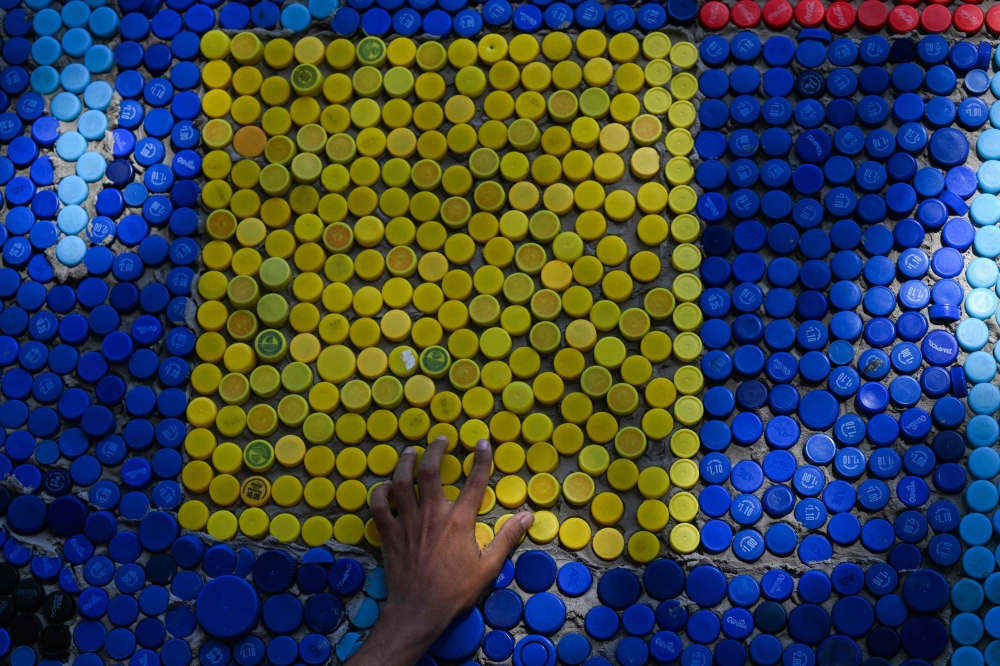 |
Oscar Olivares inspects the plastic bottle cap mural in San Salvador, El Salvador, on 20/2. *Photo: AFP*.
Olivares explained that the mural's central figure is not an exact replica of Leonardo da Vinci's Mona Lisa. He re-imagined her with darker skin, curly hair, and attire featuring the colors of El Salvador's national flag. He refers to her as the "Latin American Mona Lisa," emphasizing that she represents an everyday citizen rather than a specific individual. This choice underscores why the massive mural graces a working-class neighborhood on the capital's outskirts, rather than the walls of an opulent art museum.
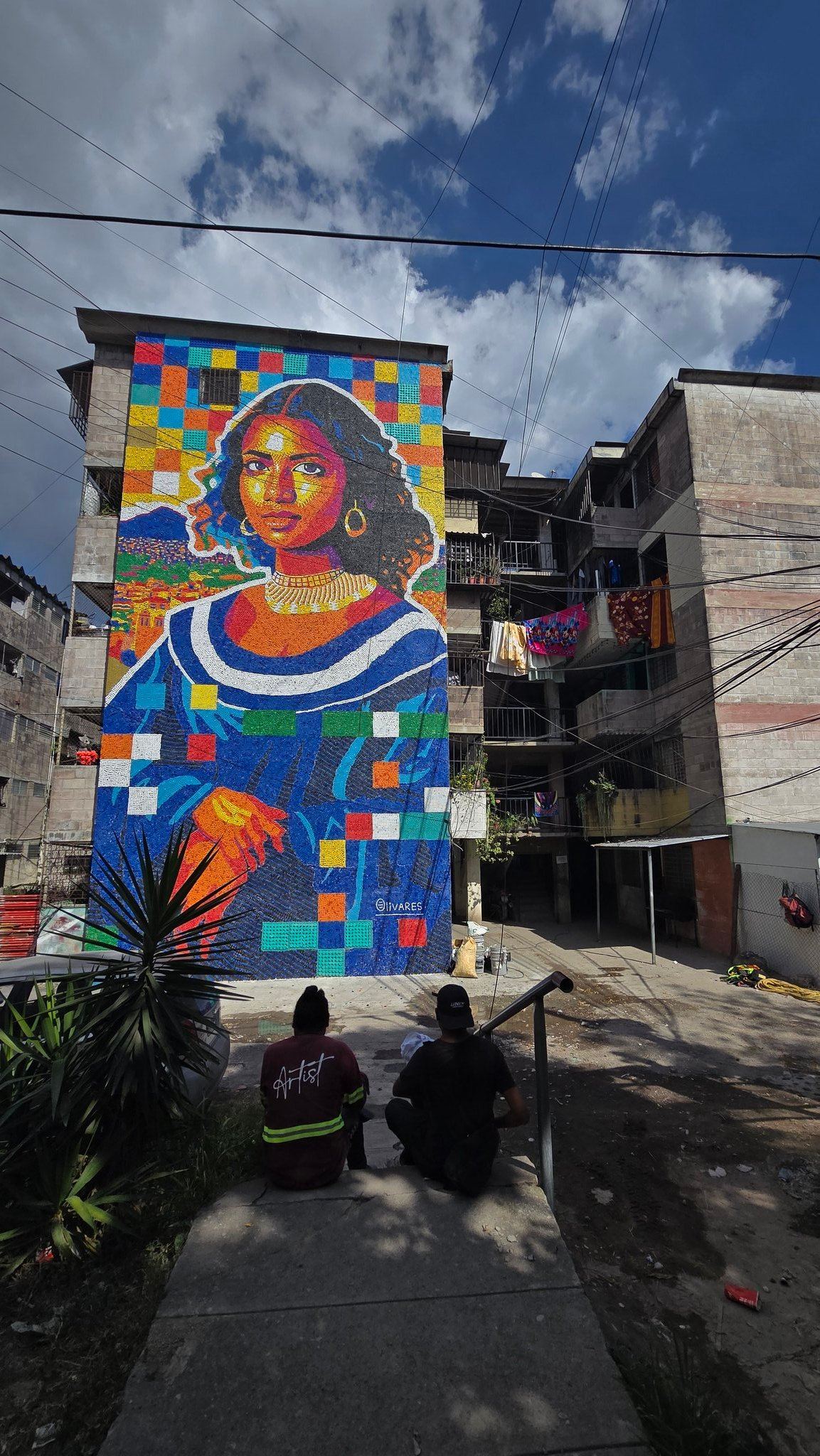 |
Panoramic view of the plastic bottle cap mural. *Photo: Oscar Olivares*.
While this artwork sets a size record, Zacamil is not Olivares's first venture into this form of art. He has created large-scale works using plastic waste in various countries over many years. His first notable project, the Oko-Mural, was completed in 2020 in El Hatillo, Caracas (Venezuela). This project paved the way for similar initiatives in at least six other countries, including Mexico, Italy, Panama, France, and Saudi Arabia. In total, he has completed over two dozen murals, incorporating approximately two million plastic bottle caps. For the El Salvador project, Olivares's vision extends beyond the mural itself. He foresees the area transforming into an open-air museum, with his artwork being a crucial part of this transition. He stresses that local community participation is not merely symbolic but an essential component of his working method, collaborating at every stage of the artwork's development.