The European Commission (EC) is seeking "clear, full" details from Washington regarding its planned actions following a US Supreme Court ruling last weekend. The EC stated that products from the European Union (EU) must continue to benefit from the most competitive policy, without any tariff increases above the clearly agreed-upon ceiling.
Last year's trade agreement established a 15% tariff on European goods entering the US, with exceptions for products subject to specific industry tariffs, such as aluminum and steel. The agreement also allowed for a 0% tariff on certain products, including aircraft and parts. In return, the European Union agreed to lift import tariffs on many US goods and withdrew its threat of retaliatory tariffs.
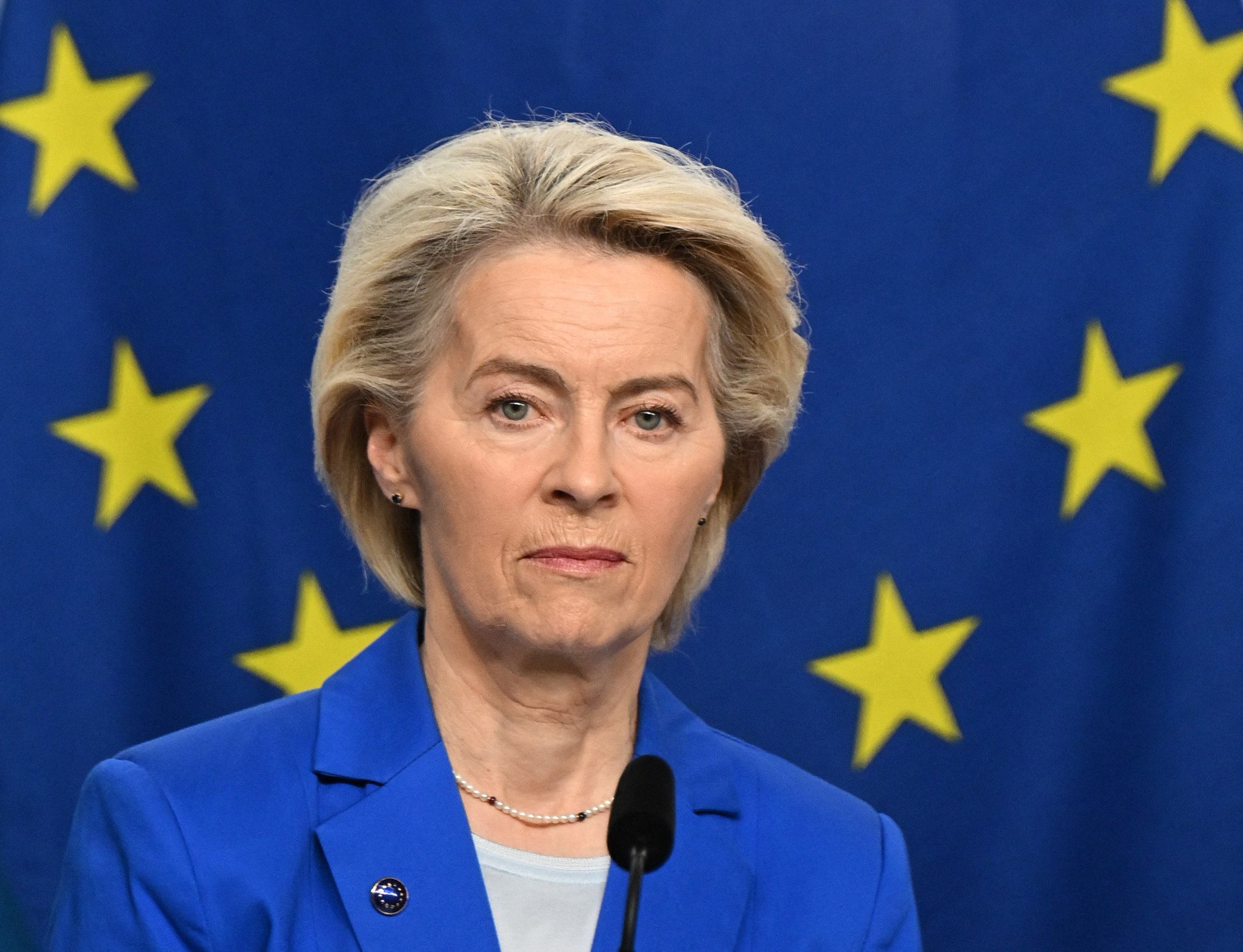 |
EC President Ursula von der Leyen speaks in Stockholm, Sweden in 10/2025. Photo: *AFP* |
This statement from the EC came two days after the US Supreme Court rejected various import tariffs imposed by President Donald Trump. In response, Trump signed an executive order last weekend imposing temporary 10% tariffs on all trade partners for 150 days. Just one day later, he increased this rate to 15%.
Despite these changes, the US President affirmed that trade and investment agreements with nearly 20 countries would remain in effect. Most tariff rates within these existing agreements are higher than 10%.
The EC, which is responsible for negotiating trade policy on behalf of the 27 member states, emphasized the need for stability. "The current situation does not facilitate the implementation of transatlantic trade and investment in a 'fair, balanced, and mutually beneficial' manner as agreed last year. An agreement is an agreement," the EC stated.
This declaration represents a significantly firmer stance compared to the EC's initial reaction on 20/2. At that time, the body merely stated it was studying the Supreme Court's ruling and maintaining communication with the US administration.
The EC argues that unpredictable tariff policies disrupt and erode confidence in global markets. European Union Trade Commissioner Maros Sefcovic discussed this issue with US Trade Representative Jamieson Greer and US Secretary of Commerce Howard Lutnick on 21/2.
Wendy Cutler, a former US trade official, observed that President Trump's authority has been limited by the Supreme Court's ruling. The temporary tariffs are valid for only 150 days, after which any extension requires Congressional approval. Conversely, new tariffs implemented under different laws would take longer to deploy.
Nevertheless, Cutler believes this development does not end the instability for US trade partners. President Trump's frequent policy changes consistently leave other economies in a reactive position. Cutler explained, "Beyond import tariffs, the President believes that instability also provides significant leverage because everyone is concerned about what he might do."
"Perhaps the most important impact of the Supreme Court's ruling is limiting the President's ability to threaten or use import tariffs as a preferred punitive tool for issues outside the scope of trade," concluded Michael Froman, director of the CFR policy think tank.
Ha Thu (according to *Reuters*)